
There’s nothing quite like biting into a perfectly crafted hamburger patty—one that’s juicy on the inside, with a nice crust on the outside, and bursting with flavor. Making these patties at home isn’t rocket science, but it does require paying attention to a few key details. Let’s walk through everything you need to know to nail it.
Picking the Right Meat: Where It All Starts
Before you even think about mixing or shaping, you’ve got to start with good meat. The ratio of meat to fat makes all the difference between a burger that’s juicy and one that ends up dry and disappointing.
Aim for ground beef that’s 80/20. That means 80% lean meat and 20% fat. Yeah, 20% fat sounds like a lot, but here’s the thing—that fat is where the flavor and juiciness come from. Go too lean, say 90/10 or 95/5, and your patty will turn into a dense puck no matter what you do.
Hit up your local butcher if you can. Ask them to grind the meat fresh for you. Freshly ground beef tastes better and gives you way better results than pre-packaged stuff. Once you get home, use it within a day or two. The fresher it is, the better your burgers will turn out.
What You’ll Need: The Ingredient List
You don’t need a ton of stuff to make killer burger patties. Here’s everything for about eight patties:
The Main Stuff:
- 2 pounds of ground beef (that 80/20 blend)
- 1 teaspoon of kosher salt
- ½ teaspoon of freshly ground black pepper
- ½ cup of onion, finely minced
- 2 tablespoons of Worcestershire sauce
- 1 tablespoon of fresh garlic, minced
- ½ cup of breadcrumbs (or crushed saltine crackers work too)
- ¼ cup of ice-cold water
For Cooking:
- A bit of butter or oil for the grill or pan
- Extra salt and pepper to finish
Each ingredient pulls its weight here. The Worcestershire adds flavor depth without being obvious. The onion brings sweetness and keeps things moist. Breadcrumbs act as a binder without making things heavy. The ice water? That keeps everything tender and stops you from overworking the meat.
Making Your Patties: The Process
Step 1: Get Everything Ready
Before touching the meat, set up your space. Grab a big mixing bowl and stick it in the freezer for five minutes while you prep everything else.
Get your knife going and mince up the onion nice and fine—a food processor works great if you’ve got one. Chop up your garlic. Measure out your Worcestershire sauce. Have your breadcrumbs sitting there ready to go.
Why chill the bowl? Ground beef gets messed up when it warms up. The fat starts melting and spreading unevenly, which gives you tough, dense patties. A cold bowl keeps everything at the right temperature and helps you get that tender texture you’re after.
Step 2: Mix Your Seasonings First
Before you throw anything in with the meat, get your seasonings ready in a separate bowl. This matters more than you’d think.
Combine your kosher salt, black pepper, Worcestershire sauce, minced garlic, and minced onion in a small bowl. Let it sit for about a minute. This gives the flavors a chance to get to know each other, which means they spread way more evenly through the meat.
In another bowl, mix your breadcrumbs with the ice-cold water. You’re making a paste here—it’s called a panade, and it’s a secret weapon. This paste helps bind everything together without you having to squeeze and mash the meat to death.
Step 3: Mix the Meat (But Not Too Much)
This is where most people mess up. You can’t just attack ground beef like you’re making meatloaf. Overworking it ruins everything.
Take your cold bowl out of the freezer. Break up your ground beef into chunks about the size of walnuts right into the bowl. Don’t go crazy trying to break it down completely—chunky is what you want here.
Pour your breadcrumb paste on top of the meat. Add your seasoning mix. Now here’s the move: use your fingers to gently fold everything together. Pretend you’re being super careful, like you’re folding something delicate. Just fold it over on itself, turning it gently.
Stop as soon as the meat looks evenly mixed. This should take about 30 seconds. The second you don’t see any more streaks of plain meat, you’re done. Don’t keep going. This is the biggest mistake people make, and it’s why their burgers come out tough.
Step 4: Shape Your Patties
Divide your meat mixture into eight equal chunks. Grab a kitchen scale if you’ve got one and aim for about 4 ounces each—that gives you a nice ⅓-pound patty. Same-sized patties cook evenly, which is key.
Take one chunk and gently roll it into a ball. This shouldn’t be aggressive—just let your hands do the work without squeezing. Put it on some parchment paper.
Using your fingertips, gently flatten it into a disc. You’re looking for something about ¾ inch thick. Don’t press down hard—let your fingers guide it. Here’s a pro move: make a little dent in the middle with your thumb. This stops the patty from puffing up like a balloon while it cooks, which means it cooks evenly.
That ¾-inch thickness is the sweet spot. Too thin and it dries out. Too thick and the outside gets charred before the inside is done.
Step 5: Chill Them Out
This step makes a huge difference. Lay your shaped patties on a parchment-lined tray and stick them in the fridge for at least 30 minutes—an hour is even better. The cold time lets the meat relax and lets that breadcrumb binder do its thing properly. Plus, cold patties hold together way better when they hit the heat.
If you’re making these ahead, wrap them individually in plastic wrap and freeze them. They’ll keep for up to three months. When you want to cook them, throw them straight on the grill or in the pan from frozen. Just give them a couple extra minutes.
Cooking Them Right
On the Grill
Preheat your grill to medium-high—around 375 to 400°F. You want it hot enough to get a good crust going, but not so crazy hot that the outside burns while the inside is still raw.
Oil up your grill grates so nothing sticks. Pull your patties out of the fridge right before they hit the grill—you want them as cold as possible.
Put them on the grill and then just… leave them alone. Don’t poke them. Don’t flip them early. Let them sit there undisturbed for 3 to 4 minutes (or 4 to 5 if they’re frozen). This is how you get that nice crust.
Flip once. Cook for another 3 to 4 minutes for a medium burger. If you like them more done, give them another minute or so. They should hit 160°F on a meat thermometer when they’re safe to eat.
In a Skillet
A cast-iron skillet is your friend here. Get it good and hot over medium-high heat. Add a little butter or oil.
Cook the patties the same way you would on the grill: don’t mess with them for 3 to 4 minutes on the first side, then flip and give them another 3 to 4 minutes. A skillet actually makes an even better crust because the heat is so direct.
Let Them Rest
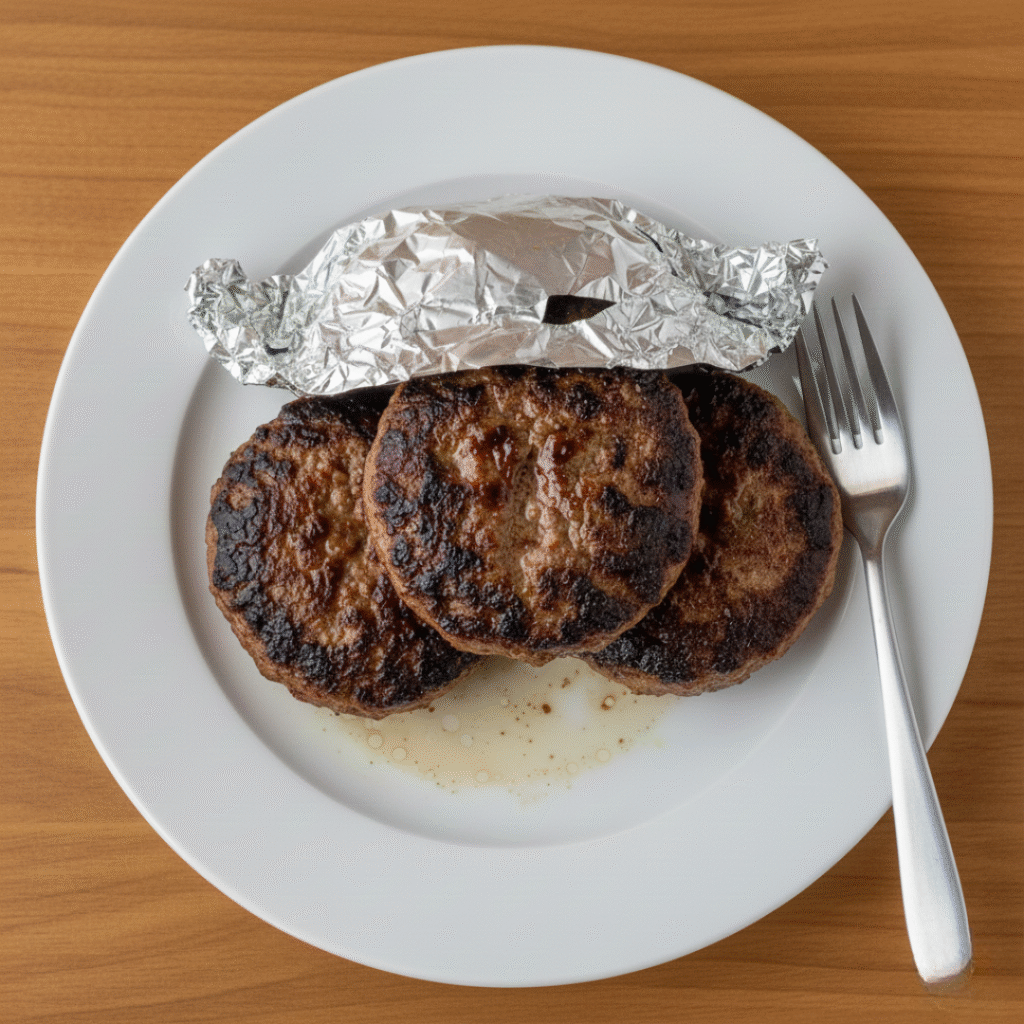
This is super important and a lot of people skip it. Once your patties come off the heat, let them sit for 3 to 5 minutes before you serve them. This gives all the juices a chance to settle back into the meat instead of running all over your plate the second you bite into it.
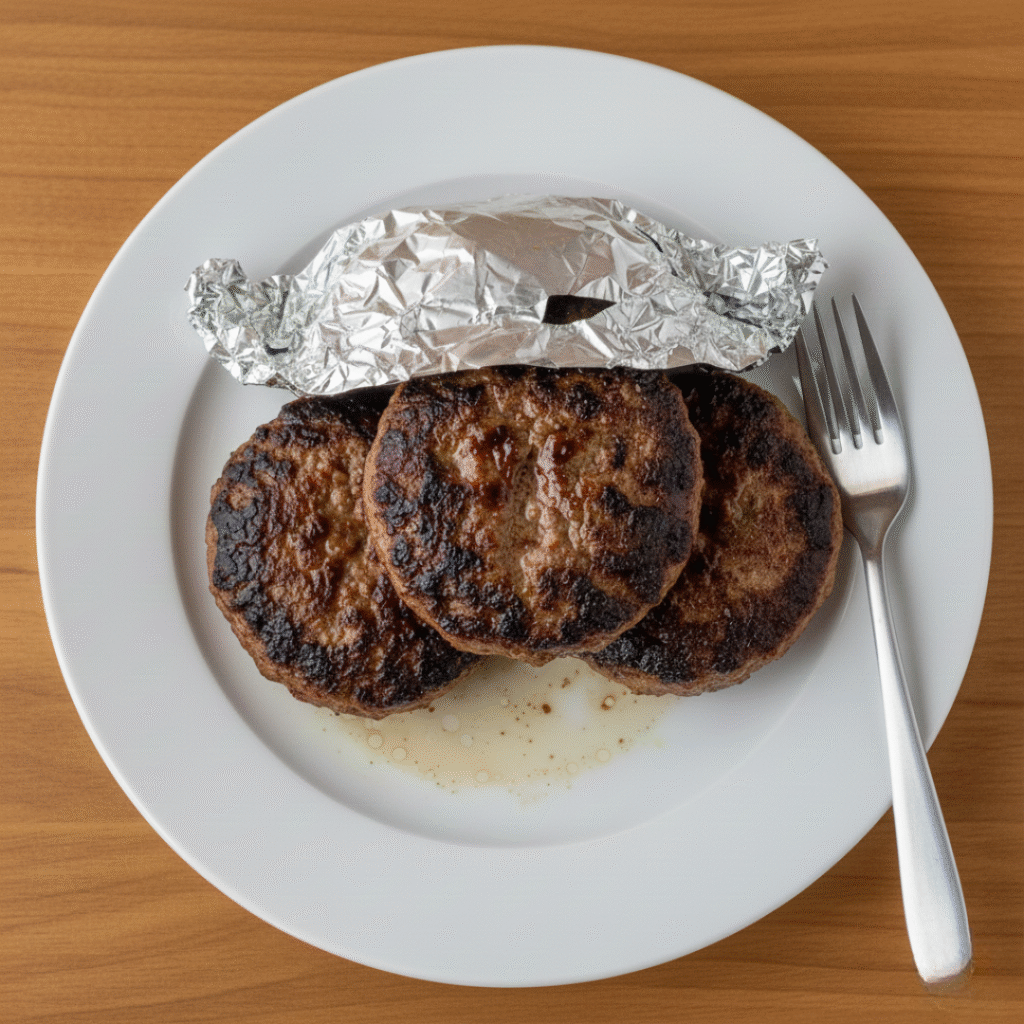
Pop them on a plate, throw some foil over the top loosely, and let them chill out for a few minutes. You’ll taste the difference.
Tips That Actually Work
Toast your buns: Seriously, do this. Butter the insides and throw them on the grill or in a skillet for a minute or two until they’re golden. This keeps them from getting soggy and adds a nice touch.
Stop pressing the patties: Using your spatula to press down on the patties while they cook? That’s squeezing out all the good juice. Just let them cook. They’ll be fine.
Get a meat thermometer: This takes the guesswork out completely. 160°F is where ground beef needs to be for safety.
Hit them with fresh seasoning: As each patty comes off the heat, sprinkle a tiny pinch of salt and pepper on top. This freshens everything up.
Make them a little bigger than your buns: They’ll shrink a bit while cooking, so aim for patties that are slightly bigger than your buns. They’ll fit perfectly when you’re done.
Keep your toppings cold: Cold lettuce, tomato, and pickles taste way better against a warm patty. Keep everything in the fridge until you’re ready to build the burger.
Questions People Ask All the Time
Can I make these patties the night before?
Yeah, absolutely. Shape them up, wrap them individually, and stick them in the fridge overnight. The flavors actually develop a little as they sit. If you’re going longer than a day, throw them in the freezer instead.
My patties keep falling apart. What’s going on?
Usually that means they weren’t cold enough before cooking, or you worked the meat too much when mixing. Make sure you’re chilling for at least 30 minutes, and keep your hands gentle when you’re combining everything.
Should I mix cheese into the patty?
You can, but it’s honestly better to put cheese on after cooking. When cheese is mixed into the raw meat, it messes with how the meat binds together and cooks. Just put a slice on the hot patty right off the grill and let it melt on top.
What’s the best meat-to-fat ratio again?
80/20 is the way. It’s got enough fat to keep things juicy and flavorful without being greasy. Go leaner and your burgers dry out. Go fattier and things get heavy.
How do I know when it’s actually done?
Use a meat thermometer. Ground beef needs to hit 160°F to be safe. If you like it a little less cooked, aim for 150-155°F, but just know that’s below the official safety number.
Can I use ground turkey or chicken?
Yep, but you’ve got to be careful because it’s way leaner. Add an egg or an extra tablespoon of oil to keep things from drying out. The cooking time might be a little shorter too.
Why do burger place burgers taste so much better than mine?
Most restaurants use better quality beef and they don’t mess it up by overworking it. They also season right and cook on super hot grills. If you do those same things at home—fresh beef, good seasoning, proper heat—you’ll get really close to that restaurant quality.
Is there a difference between a patty and a burger?
A patty is just the meat. A burger is the whole thing—bun, meat, toppings, all together. This guide is all about nailing the patty part, which is really the foundation of a great burger.
Wrapping It Up
Making great burger patties at home isn’t complicated. You don’t need fancy equipment or weird ingredients. What you do need is good beef, a gentle touch, proper seasoning, and the patience to do things right.
Follow these steps, and you’re going to make burger patties that are genuinely delicious. Your friends and family will notice. That juicy, flavorful patty—that’s what it’s all about. Get out there and make some burgers.
Leave a Comment