
Okay so you want real karahi. Like the kind from the streets of Peshawar and Islamabad. Not some recipe from a cookbook written by someone who never actually made it. The actual thing that tastes insane. Here’s what nobody tells you – karahi is stupidly simple but you gotta know what you’re doing. High heat. Fresh tomatoes. Proper chicken. That’s it. But somehow people mess it up constantly.
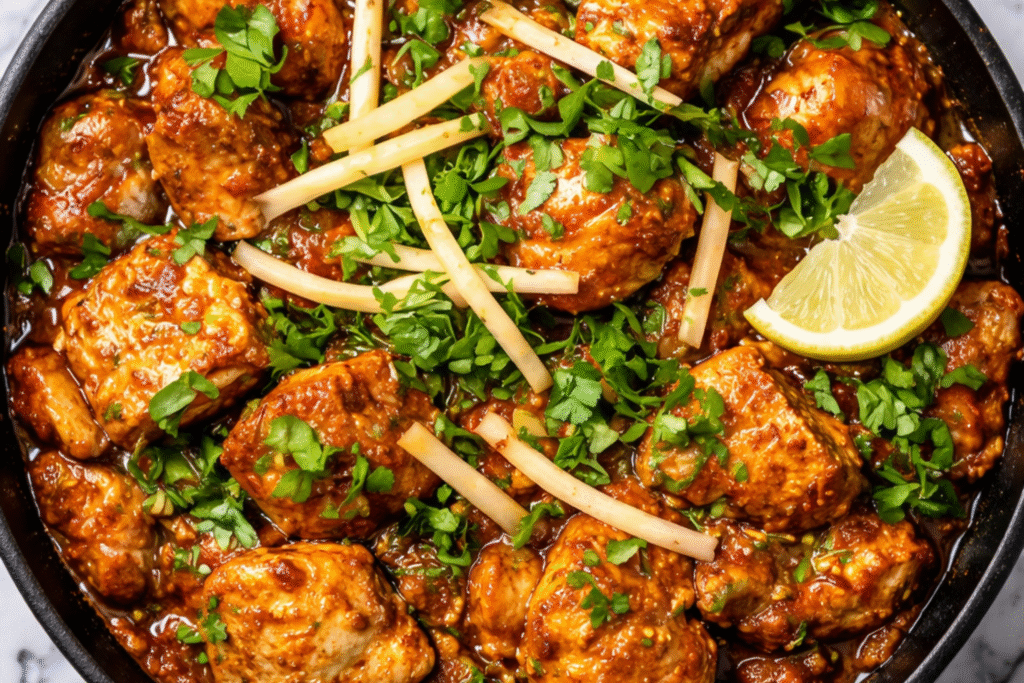
I’ve seen people add onions to their karahi. Nope. I’ve seen people make it watery. Nope. I’ve seen people use chicken breast. Double nope. Once you get the basics right though, this is literally 30 minutes to restaurant-quality food that costs like nothing. This is how to make actual authentic Pakistani chicken karahi that tastes like the real deal.
Why Karahi Is Different From Other Curries
Most curries are built on onions. Onions are the base. Everything starts with onions. Not karahi. Karahi doesn’t have onions. That’s literally the first thing people get wrong.
Karahi is tomato-based and ginger-based. That’s the whole foundation. You’re cooking on high heat. You’re breaking down fresh tomatoes into this thick jammy sauce. You’re not simmering slowly. You’re stir-frying hard. That’s what makes it different and why it tastes so bold.
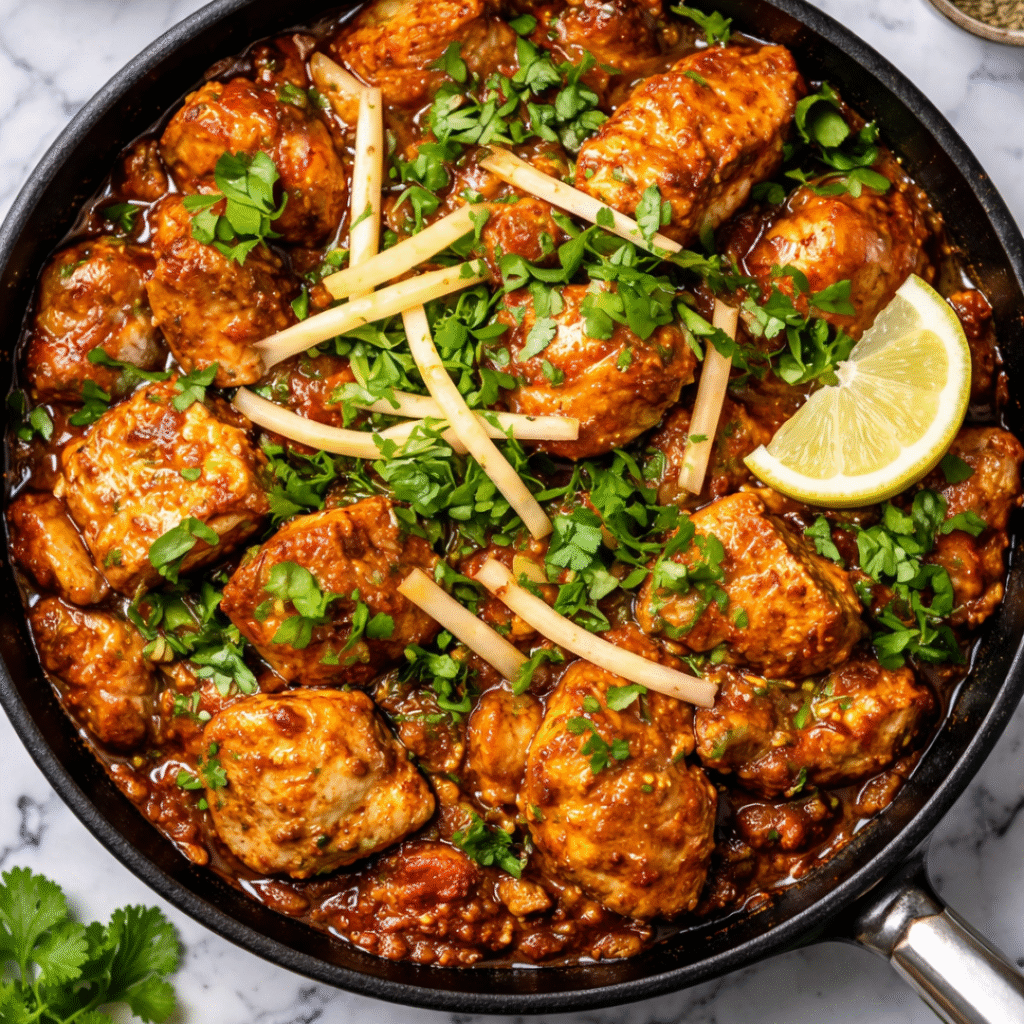
The other thing is it’s semi-dry. Not soupy. Not thick like butter chicken. It’s in the middle. The sauce coats the chicken. It’s thick and concentrated and all the flavors are just punching you in the face. That’s what you want.
The Chicken Situation
Don’t use chicken breast. Seriously. Chicken breast gets dry and boring. Use thighs. Use drumsticks. Use bone-in pieces.
Cut one whole chicken into like 16 pieces or so. That’s the size you want. Small enough that they cook fast. Big enough that you can actually pick them up and eat them. Small pieces mean they cook in like five minutes.
Get a smaller chicken too. Like 2 to 2.5 pounds. Bigger birds have tougher meat. Smaller ones are more tender. The bones stay in because bones are flavor. That’s the whole point.
If your butcher can cut it karahi-style perfect. If not just tell them you want small pieces from a whole chicken. They’ll get it.
The Tomato Thing Matters Way More Than You Think
Use fresh tomatoes. Roma tomatoes are perfect. Not those huge beefsteak tomatoes. Not those tiny cherry tomatoes. Roma tomatoes. Three or four of them.
Don’t peel them first. Don’t do any prep. Just cut them in half and throw them in the pan. That’s it. When they cook they’re gonna break down naturally and release all their juice and flavor. That’s what creates the sauce.
Some people use canned tomatoes. That works in a pinch but fresh is so much better. Fresh tomatoes have more body and texture. They break down into this rich jammy thing that canned tomatoes just don’t do.
The tomatoes are literally the star of the show. Don’t skimp on this part.
What You Actually Need
Chicken – One whole chicken, 2-2.5 pounds, cut into small pieces with bones.
Ghee or oil – About 3-4 tablespoons. Ghee tastes better but regular oil works.
Ginger-garlic paste – Two tablespoons. Fresh is way better than the jarred stuff. You can make your own or buy it.
Fresh ginger – A thumb-sized piece. You’re gonna julienne it thin for the end.
Green chilies – Two or three serrano or bird’s eye chilies. Sliced lengthwise. Don’t remove the seeds unless you want it less spicy.
Fresh tomatoes – Three or four Roma tomatoes. Cut in half. Don’t peel them yet.
Red chili powder – Two teaspoons. This is the base spice.
Cumin powder – One teaspoon. Adds earthiness.
Coriander powder – One teaspoon. Brings freshness.
Turmeric – Half a teaspoon. Just a touch.
Black pepper – Half a teaspoon or more if you want it peppery.
Garam masala – One teaspoon. Add at the end.
Salt – One teaspoon to start. You’ll adjust it.
Fresh cilantro – A big handful chopped. For the top.
Lime or lemon – One for juicing at the end.
Optional – Dried fenugreek leaves (methi) if you can find it. Maybe a tablespoon. It gives it that Lahori restaurant taste but it’s totally optional.
That’s everything. Nothing crazy. Nothing hard to find.
How To Actually Cook This
Step One: Brown The Chicken
Heat ghee or oil in your pan over high heat. This is important – high heat. Medium heat doesn’t work here.
Once the oil is hot and shimmering throw in the chicken pieces. Let them sit for like two minutes without messing with them. You want them to develop color and stick to the pan a tiny bit. That’s flavor development.
Then stir it around and keep cooking for another three to four minutes. The chicken is gonna be light brown on the outside and the raw pink is gonna be gone. It’s not fully cooked yet. That’s fine. We’re just developing flavor.
Take the chicken out and set it aside. Don’t wash the pan. Leave all that brown stuck-on stuff. That’s flavor.
Step Two: The Aromatics
In the same pan with the oil and drippings, add your ginger-garlic paste. Just dump it in. Cook it for like 30 seconds to one minute. Stir it around so it doesn’t burn. You want it to smell amazing not burnt.
Add your sliced green chilies. Stir everything together. This is your flavor base coming together. It should smell spicy and gingery and good.
Step Three: Spice It Up
Add all your spices at once. Red chili powder, cumin, coriander, turmeric, black pepper, salt. Dump them all in and stir like crazy for like a minute.
The spices are gonna hit the hot oil and release all their essential oils and flavors. This is where the magic happens. But if you don’t keep stirring they’ll burn and taste bitter. So keep moving them around.
Step Four: The Tomatoes
Throw your tomato halves into the pan. Cut side down if you want but honestly it doesn’t matter. Just get them in there.
Put a lid on the pan. Lower the heat a tiny bit to medium-high. Let them cook covered for like 10 to 12 minutes. The tomatoes are gonna release juice and start breaking down. You’re gonna see steam coming out.
After 10 minutes take the lid off. The tomatoes should be falling apart basically. Use a wooden spoon and break them down. Pull off the skin if you want but honestly it’s fine to leave it. Break everything down into the oil and spices. You’re making a thick jammy sauce.
Step Five: Chicken Goes Back
Add the chicken back to the pan. Mix everything together so the chicken is coated in the tomato masala. Now crank the heat back up to high.
Cook it like this for another 10 minutes. You’re evaporating the extra liquid. The sauce is getting thicker and more concentrated. You’re stir frying basically. Keep it moving.
The chicken should be fully cooked through by now. The sauce should look thick and jammy and coat the chicken. If it still looks watery keep cooking. High heat will dry it out.
Step Six: Finish It
Take it off the heat. Taste it. Is it good? Too spicy? Too bland? Too salty? Now’s the time to adjust. Add more garam masala if you want. Add more salt if you want.
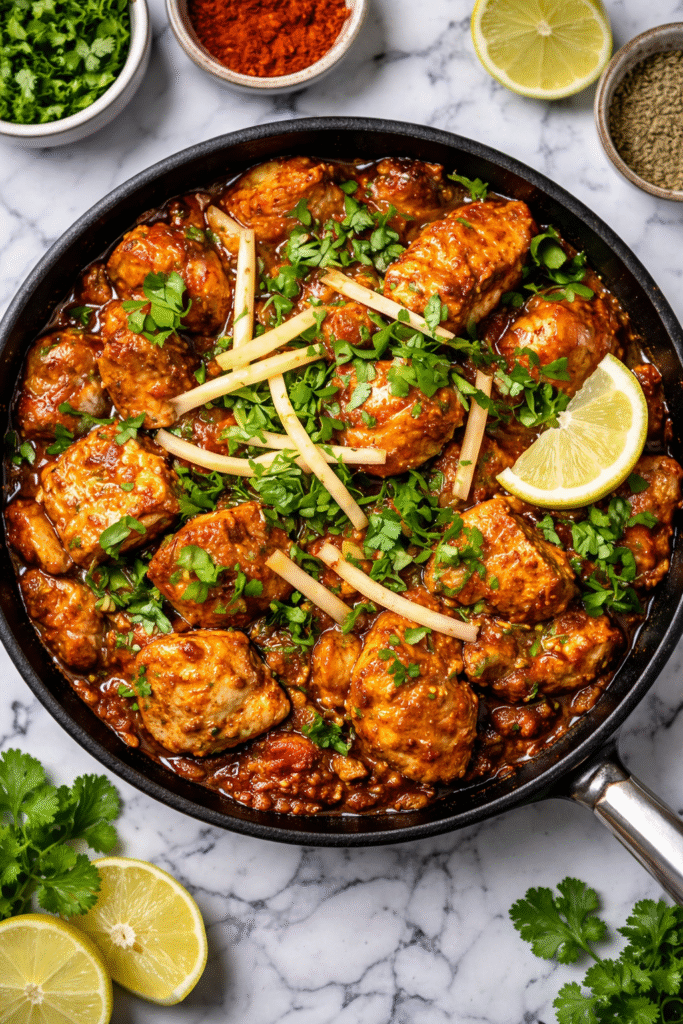
Sprinkle your fresh julienned ginger all over the top. Add a ton of fresh cilantro. Squeeze lime juice everywhere. That’s your finished karahi.
Why High Heat Is Non-Negotiable
This is not a slow cooker situation. This is high heat stir frying. That’s the whole point. High heat concentrates flavors. High heat makes the sauce thick. High heat gives you those slightly charred brown bits that taste incredible.
If you cook this on low heat you’ll end up with watery sad curry. That’s not karahi. That’s just chicken in tomato water.
So don’t be scared of high heat. Embrace it. That’s what makes this work.
What To Actually Eat It With
Naan bread. Roti. Paratha. Any fresh flatbread. Karahi is a bread dish. You’re supposed to tear off a piece of bread and scoop up the karahi with it. That’s the move.
Some people do serve it with rice but that’s not really authentic. Flatbread is the way. The semi-dry sauce is perfect for scooping.
Storage And Leftovers
Leftover karahi keeps in the fridge for like 2-3 days in an airtight container. Honestly the next day tastes better because all the flavors have melded.
Reheat it gently on the stove over medium heat. Add a splash of water if it’s gotten too thick. Don’t microwave it because that messes up the texture.
You can freeze it for like 6 weeks in a freezer container. Thaw it overnight and reheat it on the stove.
FAQs
Why can’t I add onions to my karahi? Because authentic karahi doesn’t have onions. Period. It’s tomato-based and ginger-based. Some restaurants add a bit of onion but that’s not traditional. Real karahi from Peshawar doesn’t have onions.
What if I can’t find Roma tomatoes? Any fresh ripe tomatoes work. Just avoid those huge beefsteak ones because they’re too wet. Medium tomatoes are fine.
Can I use chicken breast instead of thighs? You can but it won’t be as good. Chicken breast gets dry and boring. Thighs and drumsticks stay tender and flavorful. Bone-in is important.
What’s the difference between karahi and other Pakistani curries? Karahi is fast-cooked, high heat, semi-dry, tomato-based, no onions. Nihari is slow-cooked and thick. Korma is creamy. They’re completely different dishes.
Real Talk
Making authentic Pakistani chicken karahi is honestly easier than people think. It’s high heat. Fresh tomatoes. Good chicken. Proper spices. That’s literally it.
Once you nail this you’re gonna be making it constantly. It’s cheap. It’s fast. It tastes insane. There’s no reason not to make it every week.
Leave a Comment