
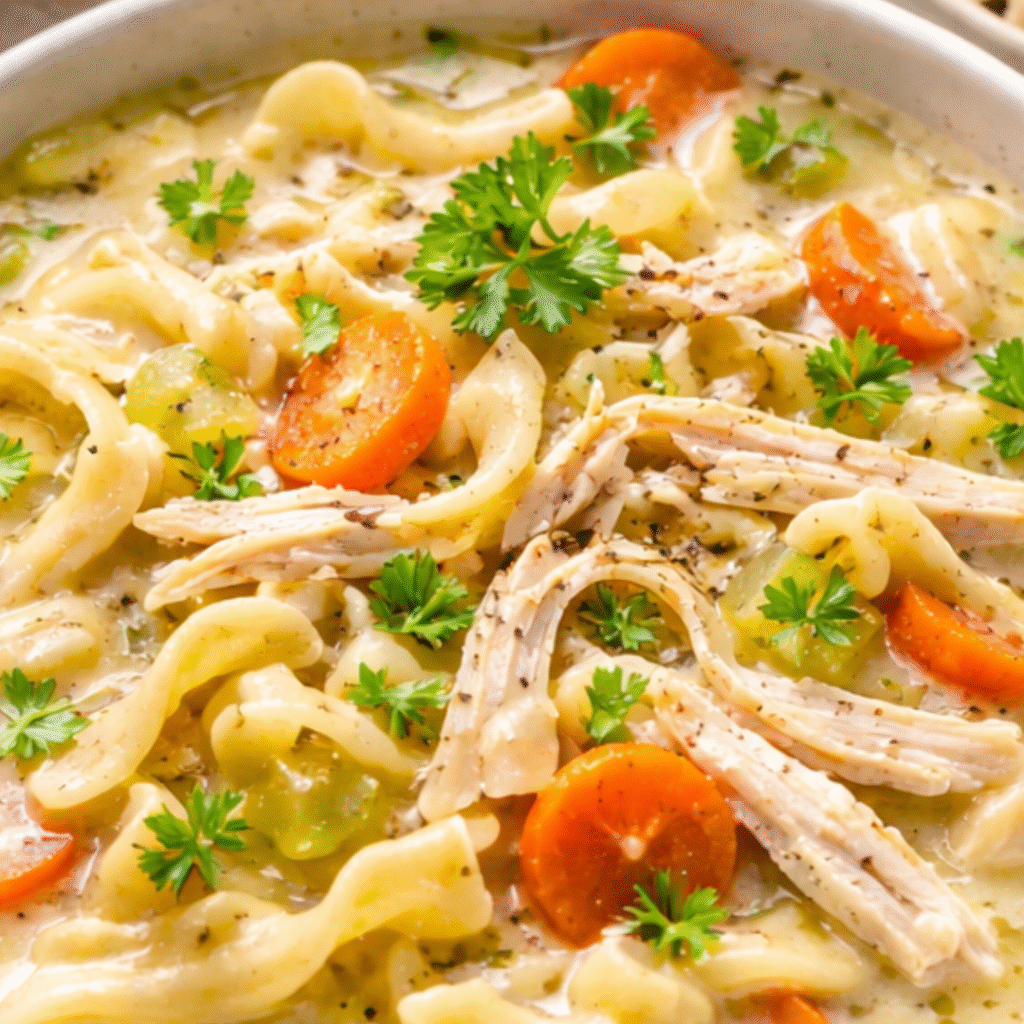
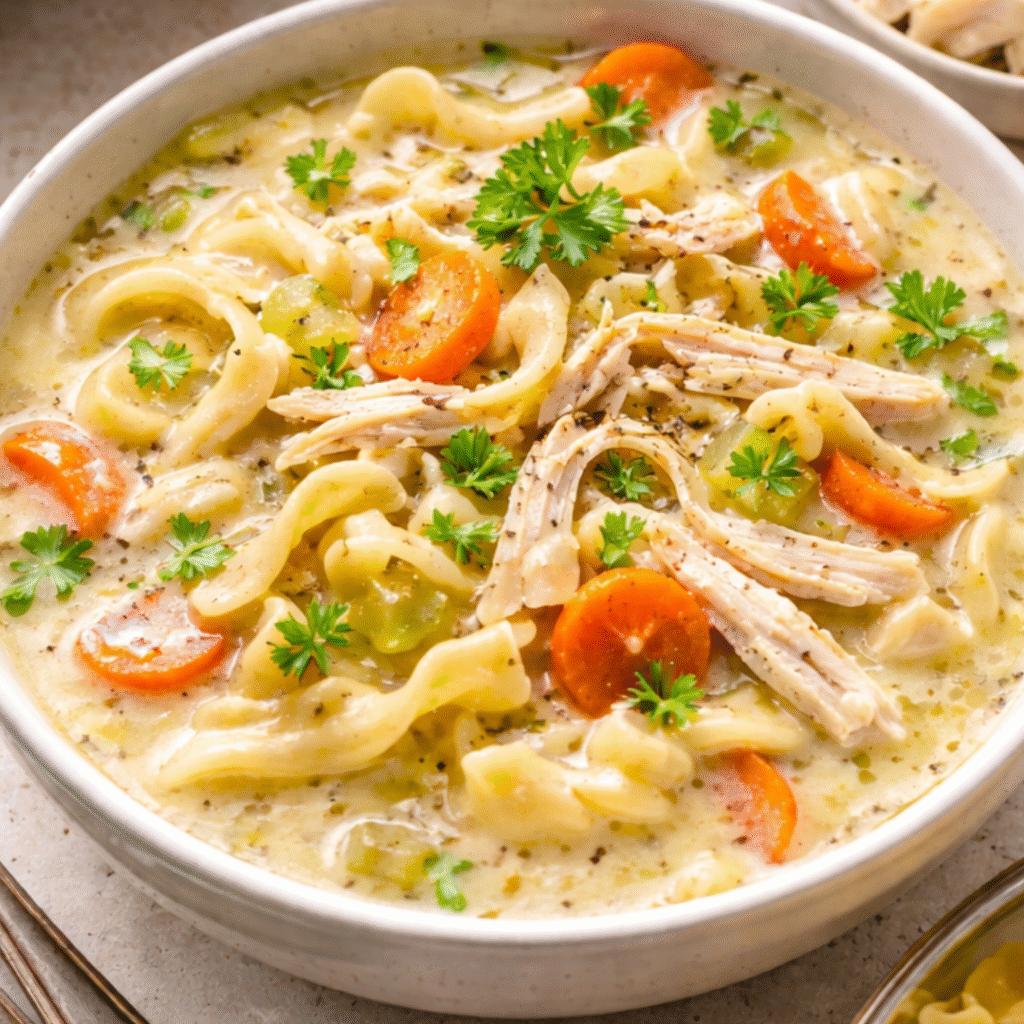
Winter evenings call for something warm in your belly. When the cold wind is blowing outside and you’re wrapped in a blanket, a bowl of thick, creamy chicken noodle soup just feels right. This isn’t the thin, clear broth type. This one’s got body to it – rich, filling, and loaded with tender chicken.
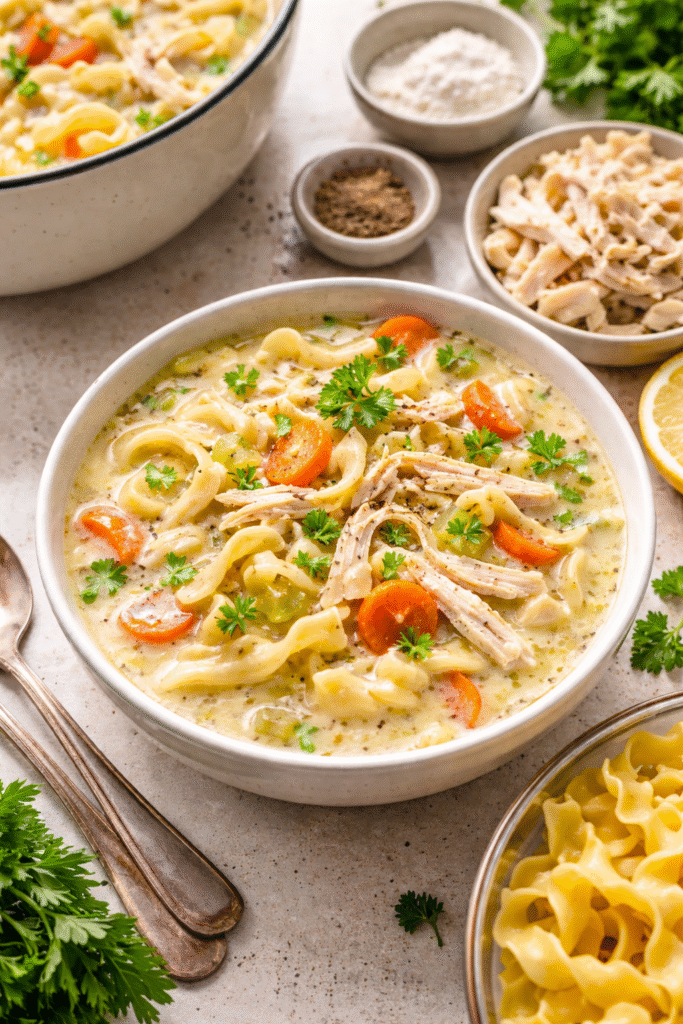
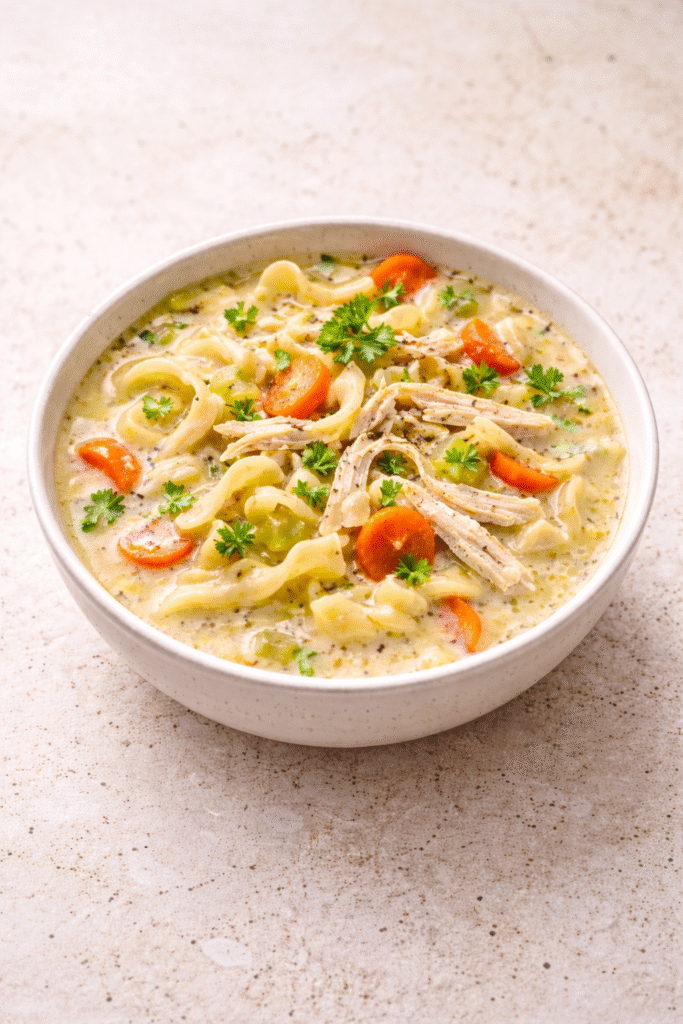
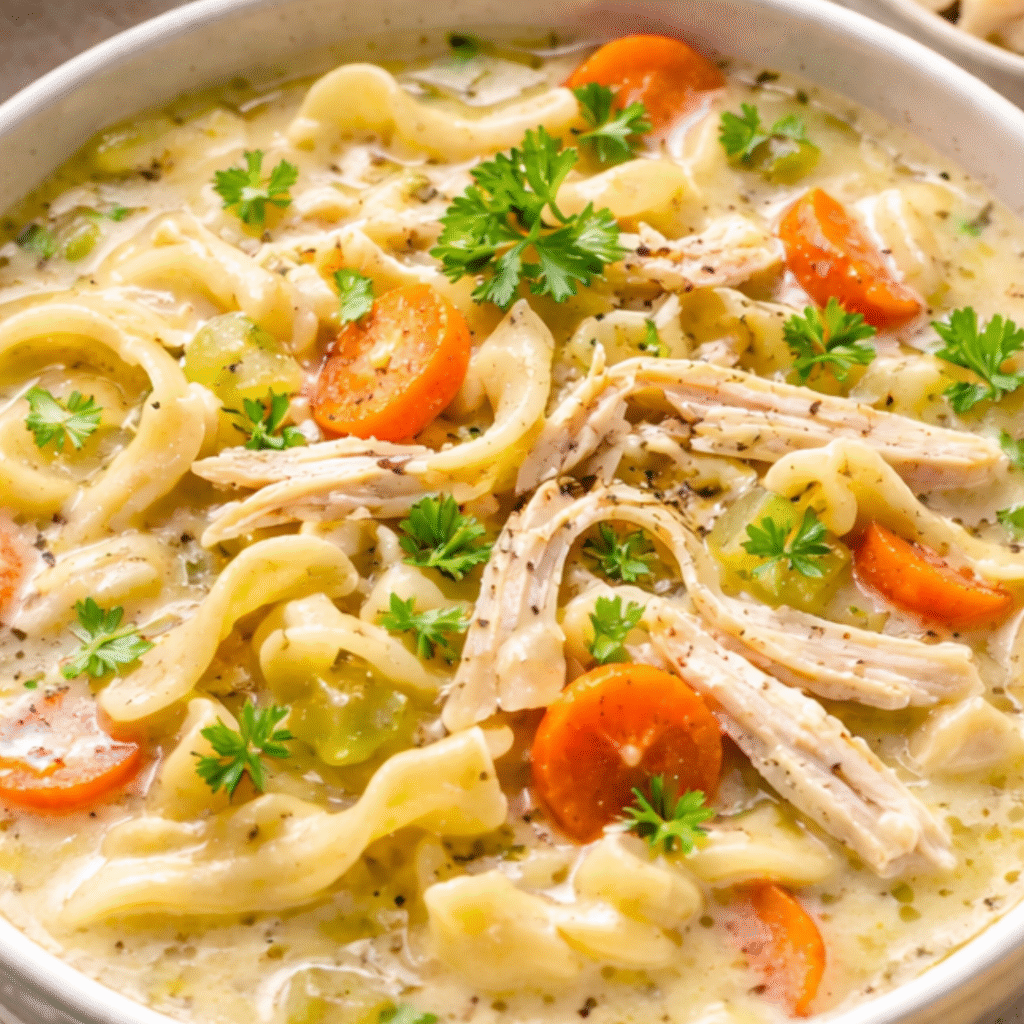
The cream transforms regular chicken soup into something more substantial. Every spoonful coats your mouth in a way that plain broth never could. You get soft egg noodles, chunks of chicken that fall apart easily, and vegetables cooked just enough that they’re not crunchy but not mushy either.
Making soup at home means you control what goes in it. No preservatives, no weird ingredients you can’t pronounce. Just real food cooked in your own kitchen. The house smells amazing while it’s cooking too.
Why People Love This Recipe
Most chicken soups are either watery or gloopy. This one sits right in the middle. The trick is cooking things in stages instead of dumping everything in at once.
When you cook the vegetables in butter first, they release their natural sugars. That sweetness goes into the soup base. The chicken poaches in the broth, which keeps it moist while also making the broth taste better. And that cream at the end? It pulls everything together.
You don’t need special tools or fancy ingredients. A big pot, a sharp knife, and a wooden spoon get the job done. No blender, no food processor, nothing complicated.
What You Need for Creamy Chicken Noodle Soup
Base Ingredients
- 2 tablespoons butter – Unsalted butter works best because it lets you control the salt level in your soup. Salted butter can make the soup too salty, especially after reducing
- 2 tablespoons olive oil – Extra virgin or regular olive oil both work. The oil prevents the butter from burning at higher temperatures and adds a subtle richness
- 1 large onion, chopped – Yellow or white onions work best. One large onion equals about 2 cups chopped. The onion provides natural sweetness and forms the flavor base
- 3 medium carrots, cut into rounds – About 1½ cups sliced. Cut them about ¼-inch thick so they cook evenly. Carrots add sweetness, color, and nutritional value
- 3 celery stalks, chopped – Include some of the leafy tops for extra flavor. About 1½ cups chopped. Celery adds aromatic depth and a subtle vegetal note
- 4 garlic cloves, minced fine – Fresh garlic only, not the jarred kind. Minced fine so it distributes evenly throughout the soup. Garlic adds pungent, savory depth
- 8 cups chicken broth – That’s 64 ounces or about 2 quarts. Homemade stock is incredible but good quality low-sodium store-bought works perfectly. The broth is your flavor foundation
- 2 bay leaves – These dried leaves add subtle herbal, slightly floral notes. Remember to remove them before serving as they’re not edible
- 1 teaspoon dried thyme – Or use 1 tablespoon fresh thyme leaves. Thyme adds earthy, slightly minty notes that complement chicken beautifully
- 1 teaspoon dried parsley – Or 2 tablespoons fresh chopped parsley. Parsley adds fresh, slightly peppery flavor and bright green color
- Salt – Kosher salt or sea salt. Start with 1 teaspoon and adjust to taste. The amount depends on your broth’s saltiness
- Black pepper – Freshly ground black pepper tastes best. Start with ½ teaspoon and add more to taste
For the Chicken
- 1.5 pounds boneless, skinless chicken breasts – About 2 to 3 large breasts. They poach beautifully in the broth, staying moist and tender
- Alternative: 1 rotisserie chicken – About 3 cups shredded meat. This saves time if you’re in a hurry. Just pull all the meat off and shred it
Cream Mixture
- 1 cup heavy cream – Also called heavy whipping cream. This is what makes the soup luxuriously creamy. 36-40% milk fat content
- ½ cup whole milk – Full-fat milk balances the richness of heavy cream. Don’t use skim or low-fat as they won’t give the same texture
- 3 tablespoons all-purpose flour – Regular white flour works as a thickening agent. It creates a roux-like effect when mixed with milk
Noodles
- 8 ounces wide egg noodles – The classic choice. Wide noodles (about 1-inch wide) hold up better in soup than thin ones. They also catch the creamy broth nicely
To Finish
- Fresh parsley – A handful, chopped. Adds bright color and fresh flavor right before serving
- Black pepper – Extra for garnishing each bowl
- Lemon juice – Optional, but a small squeeze brightens all the flavors. About 1 tablespoon per bowl
How to Make It
Getting Started
Chop everything before you start cooking. Cut the onion small, slice carrots about a quarter-inch thick, chop celery into pieces, and mince that garlic as fine as you can get it.
Dry off the chicken breasts with paper towels. Sprinkle salt and pepper on both sides. If you bought a rotisserie chicken, just shred all the meat and set it aside.
Cooking the Vegetables
Put your biggest pot on the stove. Medium heat works. Drop in the butter and oil together. Wait for the butter to melt and start bubbling.
Add the onion first. Stir it around every so often. Give it 3 to 4 minutes. The pieces should look see-through instead of white. When onions cook slow like this, they get sweet.
Toss in the carrots and celery. Mix it all up and let it cook 5 to 6 minutes. Stir it every minute or so. The vegetables will soften but should still have some bite to them. You’ll see some brown spots forming on the bottom of your pot. That’s what you want.
Adding Flavor
Push everything to the sides of the pot. Drop the garlic right in the middle. Let it cook about 30 seconds until you can really smell it.
Stir the garlic into the vegetables. Sprinkle the thyme and parsley over everything. Mix it around so the herbs get on all the vegetables. The heat wakes up the flavor in dried herbs.
Making the Broth
Pour in all 8 cups of broth. Use your spoon to scrape the bottom of the pot. Those brown bits stuck there need to come up – they add flavor.
Drop in the bay leaves. Turn the heat up to medium-high and get it boiling. Takes maybe 5 to 7 minutes.
Poaching the Chicken
When the broth boils, put the chicken breasts in carefully. The liquid should cover them. If it doesn’t, pour in more broth or water.
Turn the heat down to medium-low. You want it simmering gently, not boiling hard. Put a lid on but leave it cracked open a bit.
Let it cook 20 to 25 minutes. Cut into the thickest part to check. The meat should be white all through with no pink. If you’ve got a thermometer, it should hit 165°F.
Cooking the chicken in the broth keeps it from drying out. Just don’t overcook it or it turns stringy. Twenty minutes usually does it.
Pulling Apart the Chicken
Use tongs to get the chicken out. Put it on a cutting board and let it sit 5 minutes. When you can touch it without burning yourself, pull it apart with two forks. Make the pieces whatever size you like.
Set the chicken aside. It goes back in later.
Cooking Noodles
Get another pot of water boiling. Add salt to it. Cook the egg noodles like the package says. Usually 6 to 8 minutes.
Why cook them separate? Noodles suck up liquid like crazy. If you cook them right in the soup, they’ll absorb all that good broth and get bloated and mushy. Especially if you have leftovers.
Drain the noodles when they’re done. Run cold water over them quick to stop them cooking more. Set them aside.
If you’re making this to eat over a few days, keep the noodles completely separate. Only add them to bowls when you’re ready to eat.
Making It Creamy
Get a small bowl. Put in the flour and about half the milk. Whisk it smooth. No lumps at all. This stops the flour from clumping in your soup.
Pour this into the pot while you stir the soup. Keep stirring for 2 to 3 minutes. The soup starts getting thicker.
Pour in the cream and the rest of the milk. Stir it all together. Let it simmer without boiling for 5 to 7 minutes. It gets thicker as it cooks. Want it thicker? Let it go longer.
Once cream is in there, don’t let it boil hard. High heat makes cream separate and look broken. Keep the heat low so it just bubbles easy.
Putting It Together
Add all the shredded chicken back in. Stir it so it gets mixed through. Let everything heat together 3 to 4 minutes.
Taste it now. Add more salt if it needs it. Add pepper. If you got fresh parsley, stir some in.
Fish out the bay leaves with a spoon. Throw them away.
Serving It Up
Right before serving, add the cooked noodles. Stir them in gentle. They just need a minute to warm up.
Too thick? Pour in more broth or milk. Too thin? Let it simmer a few more minutes with no lid.
Ladle it into bowls. Sprinkle fresh parsley on top. Crack some black pepper over each bowl. Squeeze a bit of lemon juice if you want.
Tips That Help
Your broth quality matters a lot. Homemade stock is best if you’ve got it. Store-bought is fine too. Get low-sodium so you can control the salt yourself.
Cooking vegetables in butter first makes a big difference. Those extra minutes build flavor. Just throwing everything in at once doesn’t give you the same depth.
You can make it thicker or thinner. Want thick? Add another tablespoon of flour. Want thin? Use less cream, more broth.
Fresh herbs taste better than dried. Add fresh thyme when you add broth. Save fresh parsley for the end so it stays bright and fresh.
Chicken thighs work if you like dark meat better. They stay juicy even if you cook them a little long. Same amount, same cooking time.
This soup tastes even better the next day. The flavors blend together overnight. Just keep noodles separate when storing.
You can freeze the soup base for 3 months. Don’t freeze it with cream and noodles though. When you want it, thaw it, heat it, then add fresh cream and noodles.
Try these Recipes also:
Changing It Up
More Vegetables Throw in frozen peas in the last 5 minutes. They add sweet flavor and green color. Corn works the same. Green beans need 10 minutes, so add them earlier.
Mushrooms are great in this. Slice up 8 ounces. Add them when you cook the onions and carrots. They shrink down and make the broth taste earthy.
Spinach or kale can go in at the end. Just throw in a few handfuls and stir until they wilt. Takes a minute or two.
Making It Spicy Add half a teaspoon of red pepper flakes when you cook vegetables. Or chop up a jalapeño and cook it with the onions. Take the seeds out if you don’t want it too hot.
Hot sauce works too. Stir in a teaspoon near the end.
Different Noodles Rotini and fusilli catch the creamy broth in their spirals. Small shells work nice. Penne makes it feel more like pasta than soup.
Rice is good too. Use 1 cup uncooked white rice. Add it 20 minutes before the soup’s done. Brown rice takes longer – 35 to 40 minutes.
Orzo looks like rice but cooks fast. Add it in the last 8 to 10 minutes.
Different Herbs Rosemary gives it an earthy taste. Use half a teaspoon because it’s strong. Fresh is better than dried.
Sage works well in winter. Add 4 or 5 fresh leaves when you add broth. Take them out before serving. Or use half a teaspoon dried.
Italian seasoning has oregano and basil mixed in. Use a teaspoon instead of thyme and parsley.
Fresh dill at the end makes it taste really different. Bright and fresh.
Lighter Options Half-and-half instead of heavy cream cuts the richness. Not quite as thick but still good.
Skip cream completely. Make the soup with broth, then stir in half a cup of Greek yogurt after you turn off the heat. Make sure it’s not boiling or the yogurt might curdle.
Or use milk with more flour. Mix 4 tablespoons flour with 1½ cups milk instead of the cream mixture.
Adding Cheese Parmesan cheese makes it richer. Add a cup near the end and stir till it melts. Gets a nice salty flavor.
White cheddar or Gruyere work too. They melt smooth and don’t turn the soup orange.
For creamy cheese flavor without chunks, stir in 2 tablespoons cream cheese with the heavy cream. Melts right in.
Using Leftovers Got turkey from Thanksgiving? Shred about 3 cups. Use that instead of chicken.
Ham works. Chop it in cubes. Add it when you’d normally add shredded chicken. Tastes smoky.
Already have cooked chicken? Just shred it and add it near the end. Skip the poaching step.
Slow Cooker Way Cook the vegetables on the stove first. Move them to your slow cooker. Add broth, bay leaves, herbs, and raw chicken.
Cook low 6 to 7 hours or high 3 to 4 hours. Chicken falls apart easy.
Take out the chicken and shred it. Make your flour-milk mix. Stir it in the slow cooker. Add cream. Put lid back on. Cook high 15 to 20 minutes till it thickens.
Cook noodles separate right before serving.
Instant Pot Way Hit sauté on your Instant Pot. Cook vegetables in butter and oil like normal. Add broth, herbs, chicken.
Lock lid. High pressure 10 minutes. Natural release 5 minutes, then quick release the rest.
Take out chicken and shred it. Hit sauté again. Stir in flour mix, then cream. Simmer a few minutes till thick. Add chicken back in, then separately cooked noodles.
Easy Creamy Chicken Noodle Soup Recipe
Equipment
- Large pot or Dutch oven (6-8 quart)
- Chef's knife and cutting board
- Wooden spoon
- Tongs
- Ladle
- Small bowl and whisk
- Measuring cups and spoons
- Second pot for noodles
Ingredients
- 2 tbsp butter
- 2 tbsp olive oil
- 1 large onion chopped
- 3 carrots sliced
- 3 celery stalks chopped
- 4 garlic cloves minced
- 8 cups chicken broth
- 2 bay leaves
- 1 tsp dried thyme
- 1 tsp dried parsley
- 1.5 lbs chicken breasts
- 1 cup heavy cream
- ½ cup whole milk
- 3 tbsp flour
- 8 oz egg noodles
- Salt and pepper
INSTRUCTIONS
- 1. Cook onions in butter and oil 3 to 4 minutes till soft
- 2. Add carrots and celery, cook 5 to 6 minutes
- 3. Stir in garlic, thyme, parsley, cook 30 seconds
- 4. Pour in broth, add bay leaves, bring to boil
- 5. Add chicken breasts, lower heat, simmer covered 20 to 25 minutes
- 6. Remove chicken, rest 5 minutes, shred
- 7. Cook noodles separate, drain
- 8. Mix flour with half the milk, whisk into soup
- 9. Add cream and remaining milk, simmer 5 to 7 minutes
- 10. Return chicken to pot, remove bay leaves
- 11. Add noodles before serving
- 12. Garnish with parsley and pepper
Notes
Storage:
- Keep noodles separate for leftovers
- Soup base freezes 3 months without cream and noodles
- Use rotisserie chicken to save time
- Add more flour for thick soup, more broth for thin
Keeping It Fresh
Cooling It Down Let soup cool before storing it. Don’t leave it out more than 2 hours though. Bacteria grows fast in warm food.
Hot soup takes time to cool. Transfer it to a shallow container so heat escapes faster. Or put the pot in a sink with ice water around it. Stir sometimes.
In the Fridge Put cooled soup in containers with tight lids. Glass or plastic food containers both work. Soup stays good 3 to 4 days.
If you kept noodles separate, they last 5 days in their own container.
Write the date on containers. After a few days everything starts looking the same.
Soup gets thicker sitting in the fridge. The noodles absorb liquid and the flour keeps working even cold. That’s normal.
Heating It Back Up Pour what you want in a pot. Medium-low heat. Cold soup can burn on the bottom if heat’s too high.
Stir it every minute as it warms. It’ll be thicker than before. Add chicken broth a few tablespoons at a time till it looks right. Milk works too if you want to keep it creamy.
Heat till you see steam and it’s hot all through. Check the middle, not just edges.
If noodles are separate, add them to hot soup for a minute. Or microwave them 30 seconds with a tablespoon of water.
Freezing It Right Soup freezes good but you gotta do it right. Don’t freeze it with cream and noodles in. Cream gets grainy when frozen. Noodles turn to mush.
Make soup through the chicken step. So broth with vegetables and chicken. Let it cool all the way.
Put it in freezer containers. Plastic ones made for freezing work great. Freezer bags save space. Leave an inch at the top because liquid expands when frozen. Too full and containers might crack.
Write the date with permanent marker. Frozen soup all looks the same after a while.
Stays good 3 months. After that it’s safe but quality goes down. Vegetables get mushy. Flavor fades.
Freezing Single Servings Instead of one big container, freeze single servings. Freezer bags that hold 2 cups work perfect. That’s enough for one person.
Pour cooled soup in each bag. Push out air before sealing. Air causes freezer burn which tastes bad.
Lay bags flat on a baking sheet. Freeze them flat. Once solid, stack them like books. Takes way less room than containers. Grab just what you need.
Thawing It Best way is in the fridge. Move a container from freezer to fridge the night before. Takes 8 to 12 hours to thaw depending on size.
Forgot to thaw overnight? Put the container in cold water. Change water every 30 minutes. Takes 2 to 3 hours.
Microwave works too. Use defrost setting. Take it out of metal containers first. Stop and stir every few minutes so it thaws even.
After Thawing Pour thawed soup in a pot. Heat it medium. Stir sometimes.
Now add fresh stuff. Make flour and milk mix again. Three tablespoons flour with half cup milk. Stir smooth. Add to soup.
Pour in a cup of heavy cream and half cup milk. Simmer gentle 5 to 7 minutes till thick.
While that’s going, cook fresh egg noodles in another pot. Drain and add them right before serving.
Tastes just as good as fresh. Sometimes better because flavors had time to blend.
Microwave Quick Heat Put soup in microwave-safe bowl. Cover loose with paper towel or vented lid.
Microwave high 2 minutes. Stir. Go another 1 to 2 minutes till hot through. Time depends on how much soup and how strong your microwave is.
Stir well after. Microwaves heat uneven. Edges might be hot while middle’s cold.
Leftover Stuff Heavy cream lasts a week in the fridge after opening. Keep it in the original container with lid tight.
Chicken broth lasts 4 to 5 days in fridge in sealed container. You can freeze broth in ice cube trays. Pop out frozen cubes and store in a freezer bag. Then you got small portions ready when you need to thin soup.
Uncooked egg noodles keep long in the pantry. Just keep them in original package or airtight container. Last at least a year stored right.
Staying Safe Never leave soup out more than 2 hours. Bacteria grows between 40°F and 140°F.
When reheating, bring it to a simmer or boil. Hot enough to kill any bacteria that started growing during storage. If soup smells weird, looks off, or been in fridge longer than 4 days, throw it out.
Thawed soup shouldn’t be refrozen. Once thawed, use within 2 days. Refreezing changes texture and increases bacteria risk.
Use clean spoons when serving from storage container. Using a spoon from your mouth puts bacteria in the soup.
What Goes With This
This soup fills you up on its own, but sometimes you want more. Crusty bread works perfect for dipping. Get a baguette or sourdough. Maybe brush it with garlic butter and toast it. Bread soaks up every last bit from your bowl.
Simple green salad with lemon dressing balances the richness. Something light and fresh on the side makes the meal complete.
Grilled cheese sandwiches are classic. Make them with sharp cheddar on buttered sourdough. Everyone loves soup and grilled cheese.
Crackers add crunch. Saltines, oyster crackers, or cheese crackers work. Crumble them right in your soup or eat them separate.
Questions People Ask
Can I use chicken thighs? Yeah, thighs work great. They’re more forgiving than breasts and stay juicier. Use same amount, same cooking time.
Soup’s too thick. What do I do? Just add more chicken broth or milk. Little bit at a time till it looks right. Stir well and let it heat.
Can I make this in a slow cooker? You can but change it up. Cook vegetables on stove first. Move everything except cream and noodles to slow cooker. Add chicken and broth. Cook low 6 to 7 hours or high 3 to 4 hours. Shred chicken, stir in cream mix, add cooked noodles, heat 15 minutes on high.
What if I don’t have heavy cream? Use half-and-half for lighter soup. Or mix two-thirds cup whole milk with one-third cup melted butter.
Why’d my soup curdle? Happens when soup boils after adding cream. Keep it at gentle simmer once dairy goes in. If it curdles, try whisking in a tablespoon of cold milk.
Can I use turkey? Yeah, leftover turkey works perfect. Great for Thanksgiving leftovers. Just substitute turkey for chicken, follow same steps.
How do I make it gluten-free? Use gluten-free noodles. Replace flour with cornstarch for thickening. Mix 2 tablespoons cornstarch with cold milk instead.
Can I add noodles directly? You can but they’ll absorb lots of liquid and get mushy, especially leftovers. If you’re serving everything at once with no leftovers, go ahead.
Why This Works
Winter makes you crave warm, filling food. This soup delivers that without being complicated. The method is straightforward. The ingredients are easy to find. It works every time.
The cream makes it different from regular chicken noodle soup. Richer, more satisfying, feels like a real meal. Whether you’re feeding family, making lunch for the week, or just want something warm on a cold day, this does it.
Once you make it a couple times, it becomes one of those recipes you keep going back to. Reliable, everyone likes it, and you probably already have most ingredients.
The smell filling your kitchen while this cooks is worth it alone. But when you sit down with a bowl – tender chicken, vegetables, soft noodles in creamy, herb-flavored broth – that’s when you know you made something worth eating.
Leave a Comment