
That perfect pizza slice—crispy crust, melted cheese, fresh toppings—doesn’t have to come from a restaurant. You can make it at home. Most people think pizza making is complicated, but it’s not. You just need flour, water, yeast, and salt. Everything else is technique, and anyone can learn that.
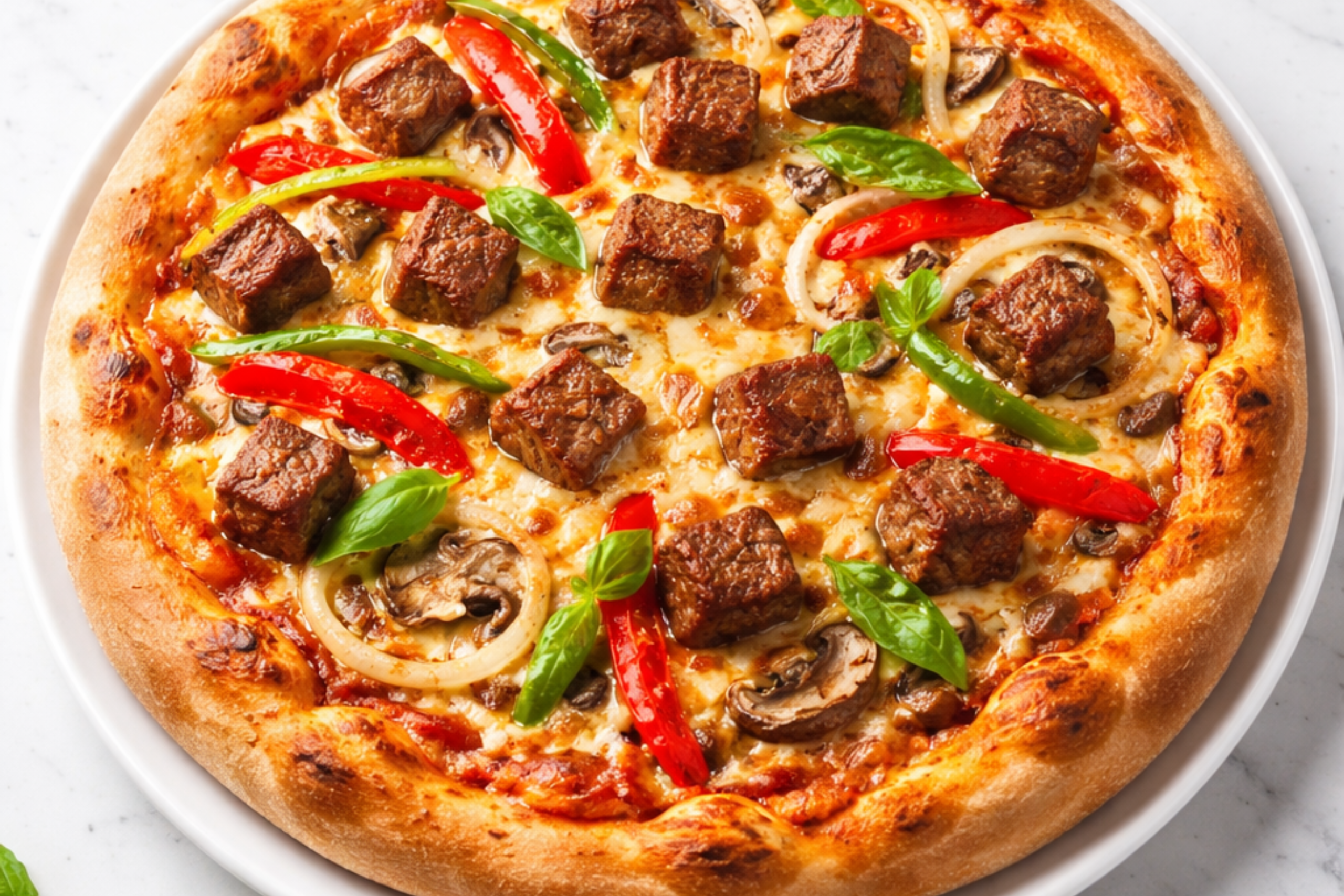
The real secret is understanding your dough. Bad dough ruins everything, no matter how good your sauce and toppings are.
Once you get the dough right, everything else becomes easy. The best part about making pizza at home with halal ingredients is knowing exactly what your family is eating. No mystery ingredients, just good food you made yourself.
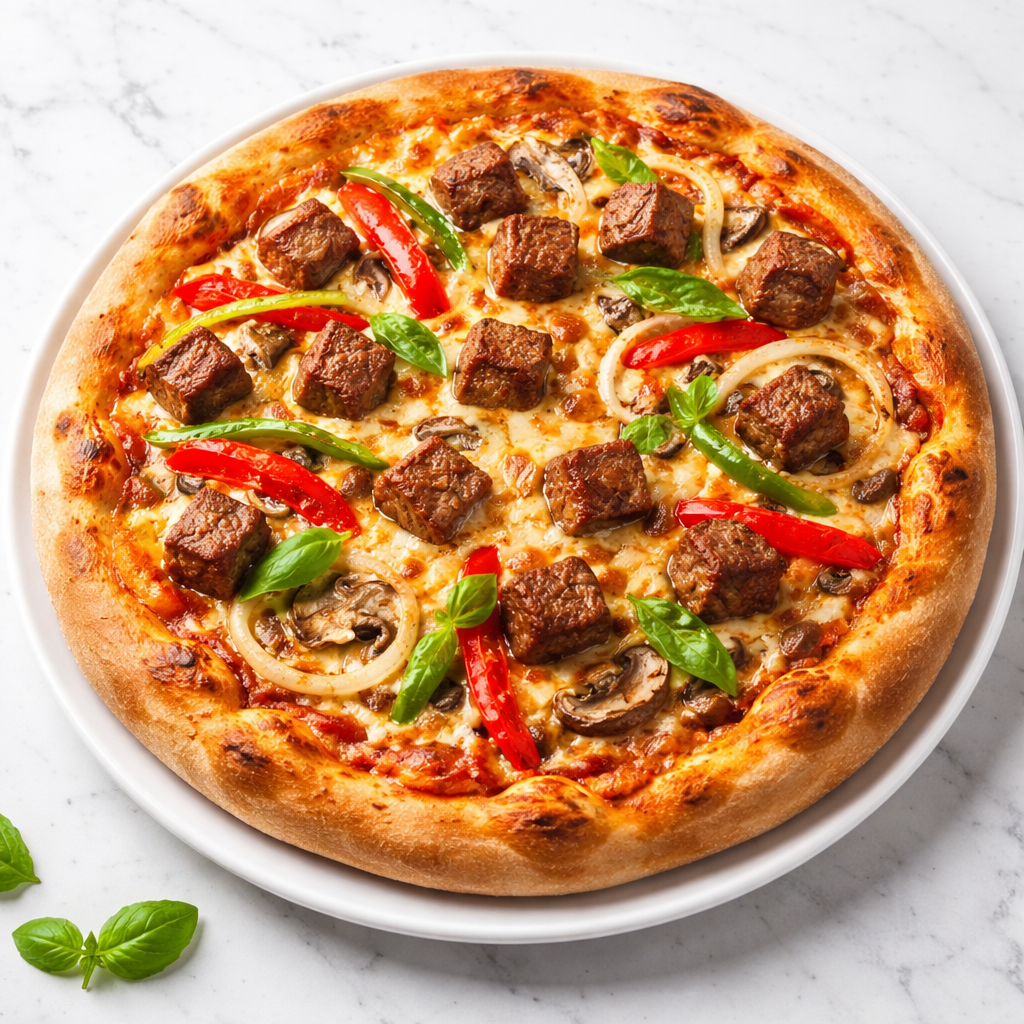
What You’ll Need to Get
For the Dough:
- 3 cups all-purpose flour
- 1 teaspoon salt
- 1 packet instant yeast
- 1 tablespoon sugar
- 2 tablespoons olive oil (halal certified)
- 1 cup warm water
For the Sauce:
- 1 can crushed tomatoes (15 ounces)
- 2 tablespoons tomato paste
- 3 garlic cloves
- 1 tablespoon olive oil
- 1 teaspoon dried oregano
- ½ teaspoon salt
- ¼ teaspoon black pepper
- Small pinch of sugar
For the Toppings:
- 2 cups mozzarella cheese (halal certified, shredded)
- 1 pound halal chicken breast or halal beef
- 1 bell pepper
- 1 medium onion
- 8 ounces mushrooms
- Fresh basil leaves
- Extra olive oil
How to Make This Pizza
Step One: Wake Up Your Yeast
Take a small bowl and pour in your warm water. Add the sugar and yeast. Don’t mix it yet. Just let it sit there for about five minutes. During this time, something interesting happens. The yeast starts to activate and bubbles will form on the surface.
The whole mixture will start looking foamy and bubbly. This is actually the most important part because it tells you something crucial—your yeast is alive and ready to work.
If after five minutes there’s still nothing happening and the surface is flat, your yeast is dead. You need fresh yeast. This foam is like a green light that says go ahead.
Step Two: Mix Your Dry Stuff with Wet Stuff
Get a big mixing bowl and put your flour and salt in it. Pour that bubbly yeast mixture in along with your olive oil.
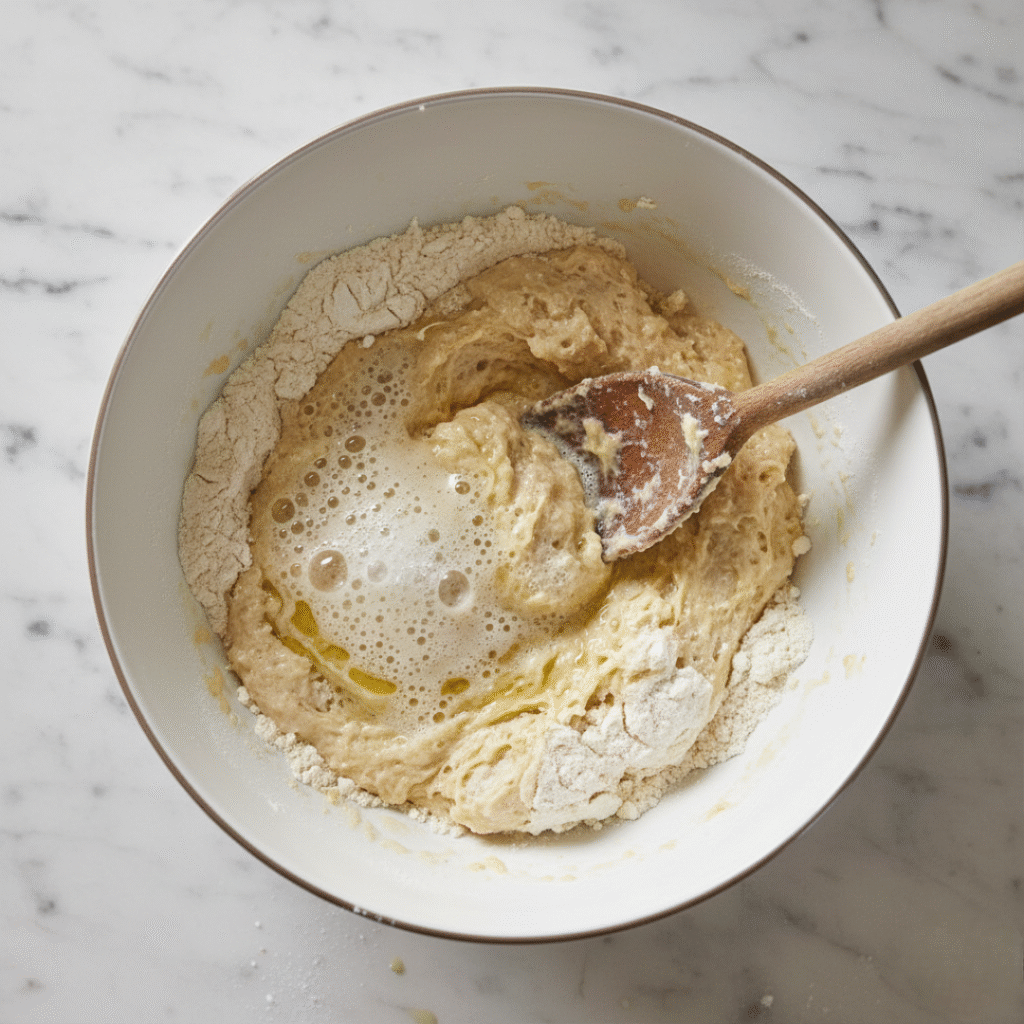
Start mixing everything together with a spoon or your hands.
It’s going to look messy and kind of rough right now. The dough will be sticky and loose. That’s completely normal. Keep mixing until there’s no dry flour left sitting on the bottom or sides of the bowl.
Step Three: Knead Your Dough
Push the dough away from you with the heel of your hand, fold it back, rotate it a quarter turn, and repeat. Do this for about eight to ten minutes.
At first it’ll feel sticky and unpleasant, but keep going. The gluten is developing and getting stronger. Around minute five or six, you’ll notice the dough becomes smooth and bounces back when you poke it. When the hole closes back up, you’re done.
Step Four: Let It Rise
Put your kneaded dough into a clean bowl that has a little bit of oil in it. Cover it with a damp kitchen towel or plastic wrap. Find somewhere warm in your kitchen—a windowsill, a countertop, anywhere that feels warm. Let it sit there for about an hour.
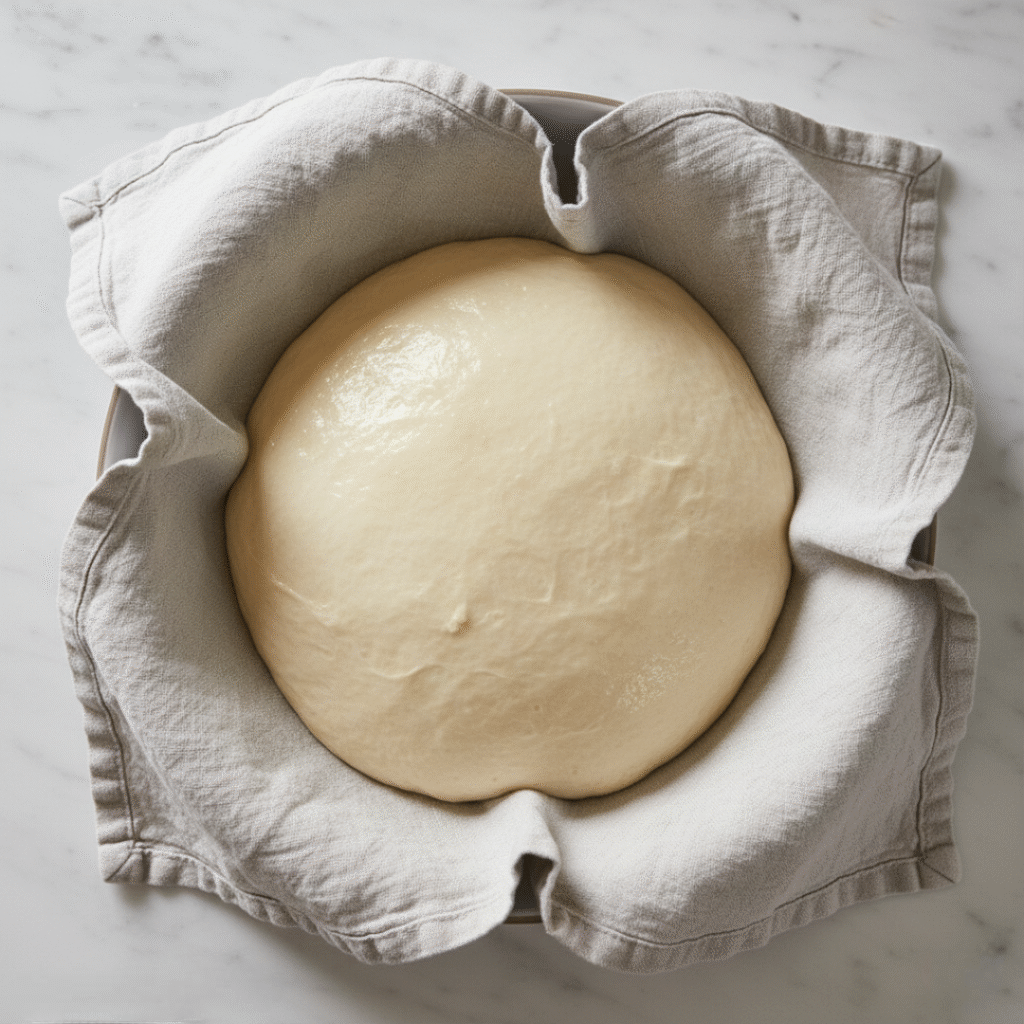
During this hour, the dough is growing. It’s going to roughly double in size. The yeast is eating the flour and creating tiny bubbles throughout the dough.
These bubbles are what make your crust light and fluffy instead of dense and heavy. If your kitchen is cold, turn your oven on for thirty seconds, turn it off, and put the dough bowl inside. That creates a warm space.
Step Five: Make Your Sauce
While the dough is rising, make your sauce. Heat olive oil in a pan over medium heat. Add your chopped garlic and cook it for about one minute.
You want to smell that amazing garlic smell but don’t let it turn brown because brown garlic tastes bitter. Add your tomato paste and cook it for another minute, stirring it around.
Then pour in your entire can of crushed tomatoes. Add the oregano, salt, pepper, and just a tiny pinch of sugar. The sugar is important because it balances out the sourness of the tomatoes.
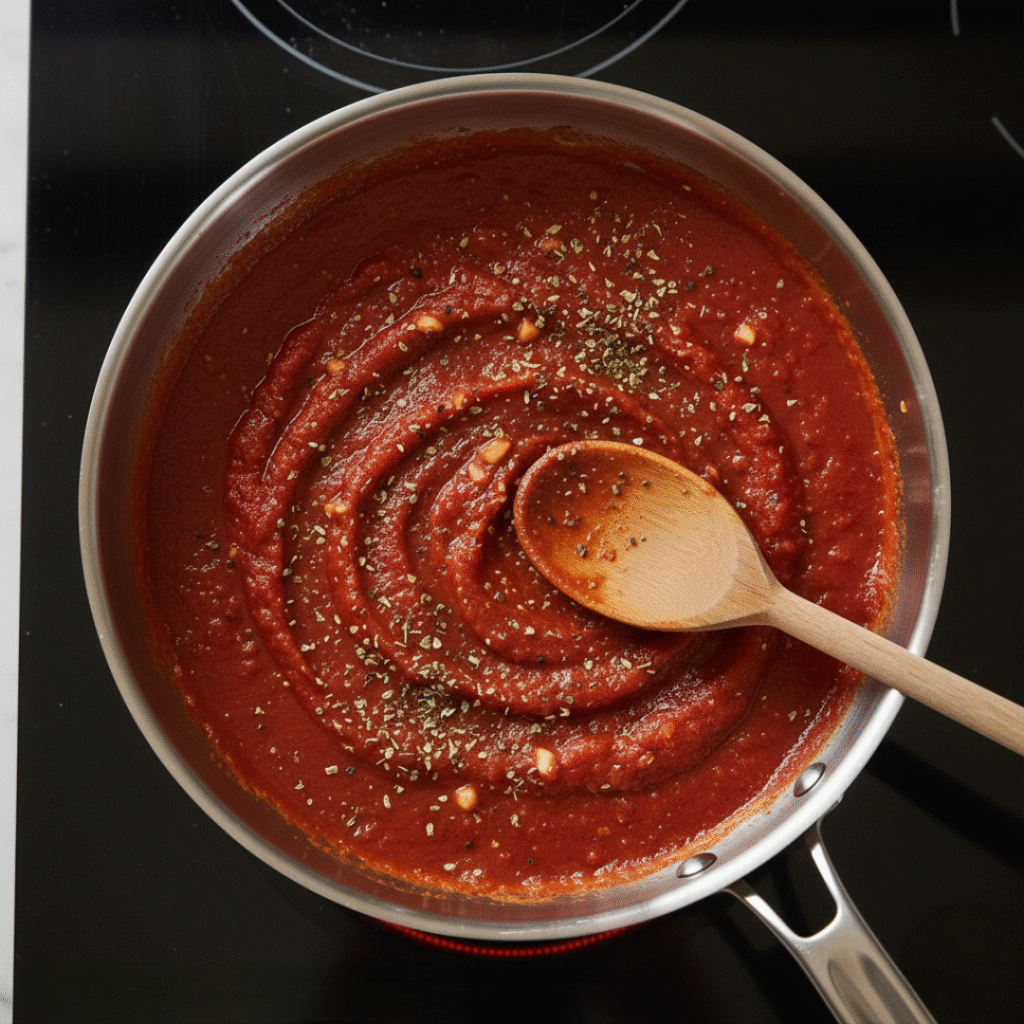
Let everything bubble gently for about ten minutes. Taste it. Does it taste like pizza sauce? Good. Does it need more salt? Add some. You’re completely in control.
Step Six: Cook Your Meat
Your halal meat needs to be fully cooked before it goes anywhere near the pizza. Take your chicken or beef and cook it in a skillet with a little oil over medium-high heat.
For chicken, cut it into chunks and cook until it’s white all the way through with no pink inside.
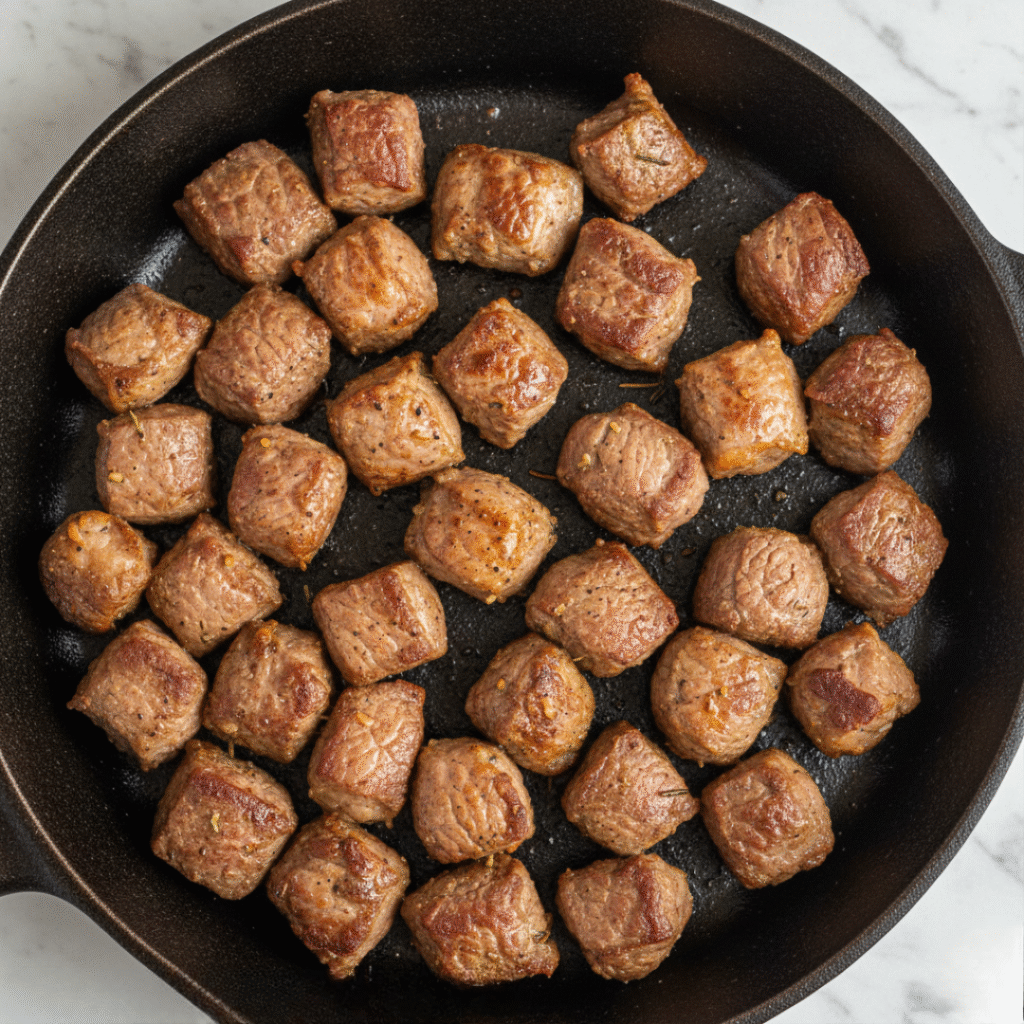
For beef, brown it until there’s no pink. If you have a meat thermometer, chicken should reach 165 degrees and beef should be fully cooked. Once it’s done, set it aside.
Step Seven: Get Everything Ready
Dice your bell pepper into small pieces. Slice your onion into thin strips. Slice your mushrooms. Have your shredded cheese sitting in a bowl ready to go. Get your basil nearby.
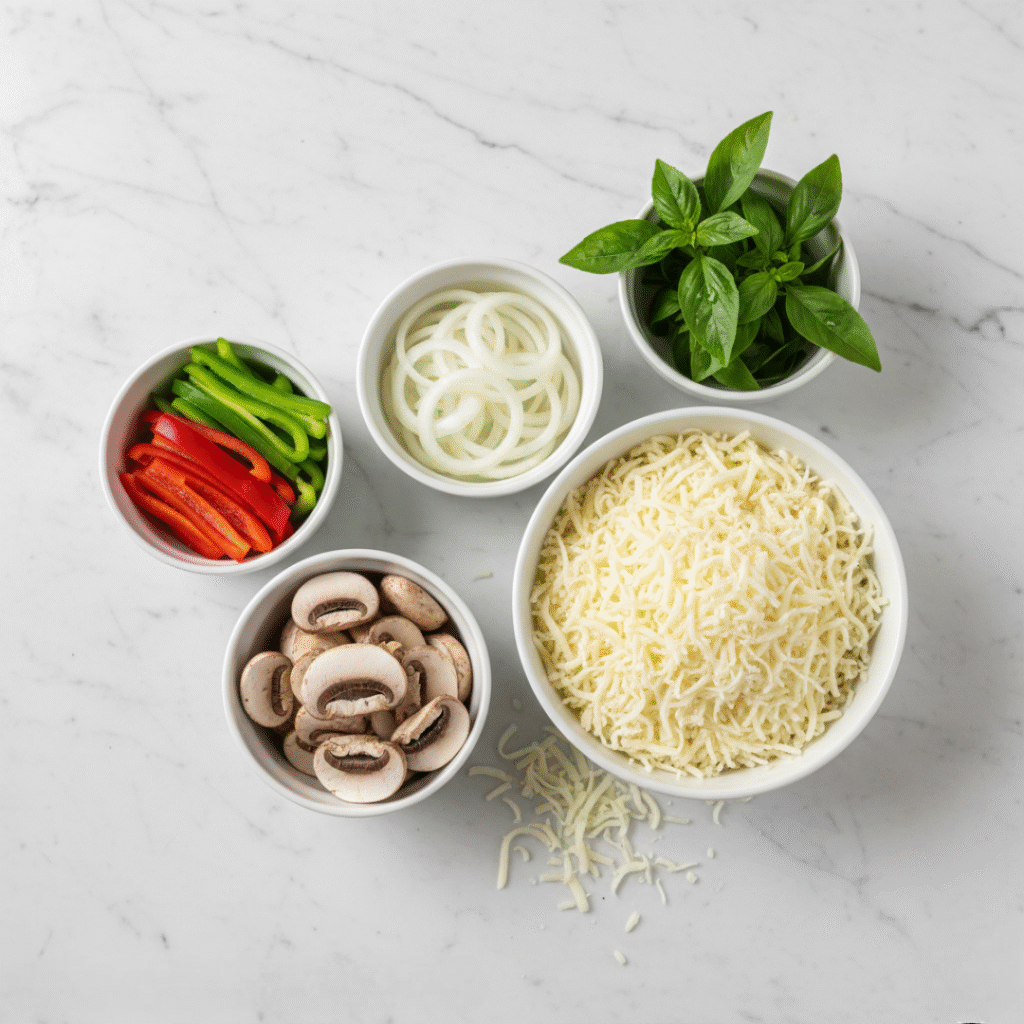
This prep work might seem boring but it makes everything else move really fast. Once you start topping your pizza, you want everything within arm’s reach.
Step Eight: Heat Your Oven and Shape Dough
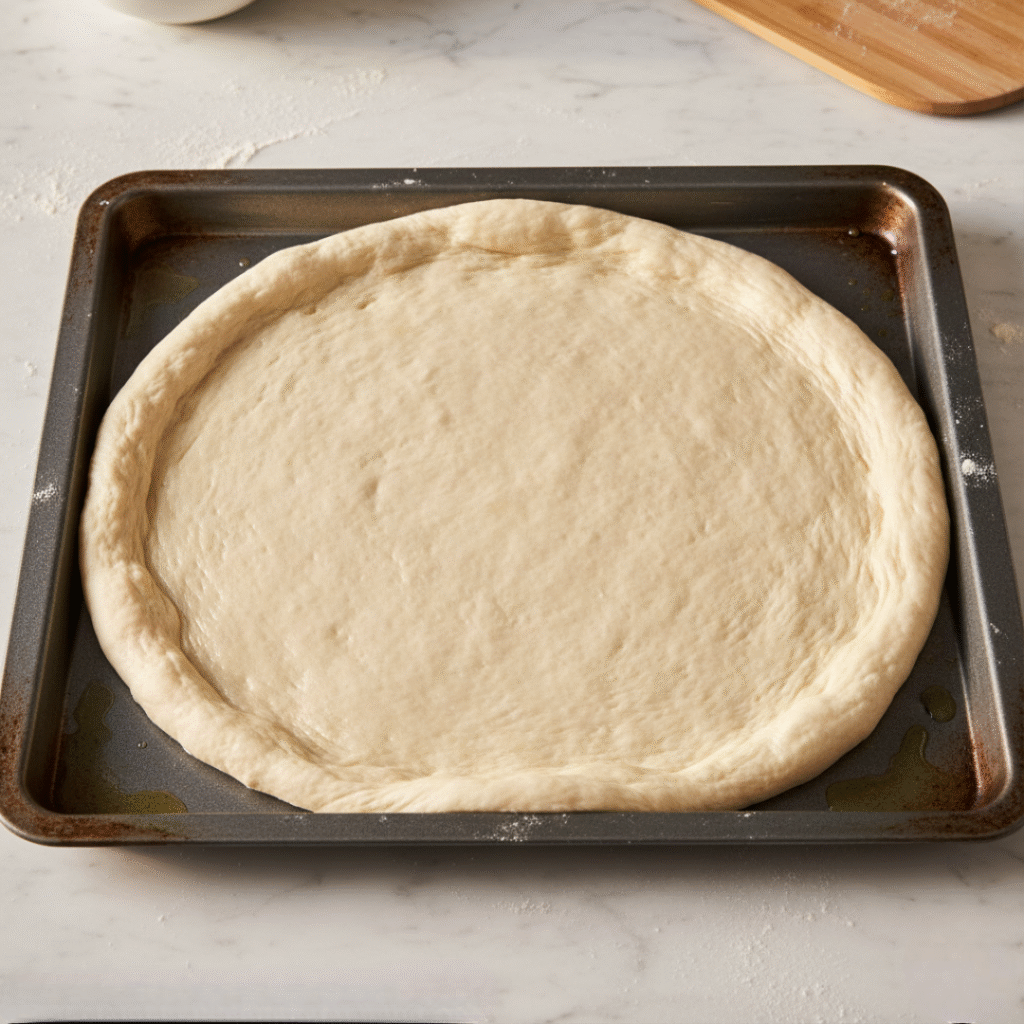
Turn your oven to 475 degrees and let it heat up. When your dough has doubled in size, punch it down gently. You’re not trying to be aggressive. You’re just letting some air out.
Take your dough and start stretching it with your hands. Try to make it into a circle that’s about as thick as your pinky is wide. If the dough starts fighting back and won’t stretch, let it rest for five minutes.
The gluten gets tight and needs a little break. Try stretching again and it’ll be easier. Put your shaped dough on an oiled baking sheet.
Step Nine: Add Your Toppings
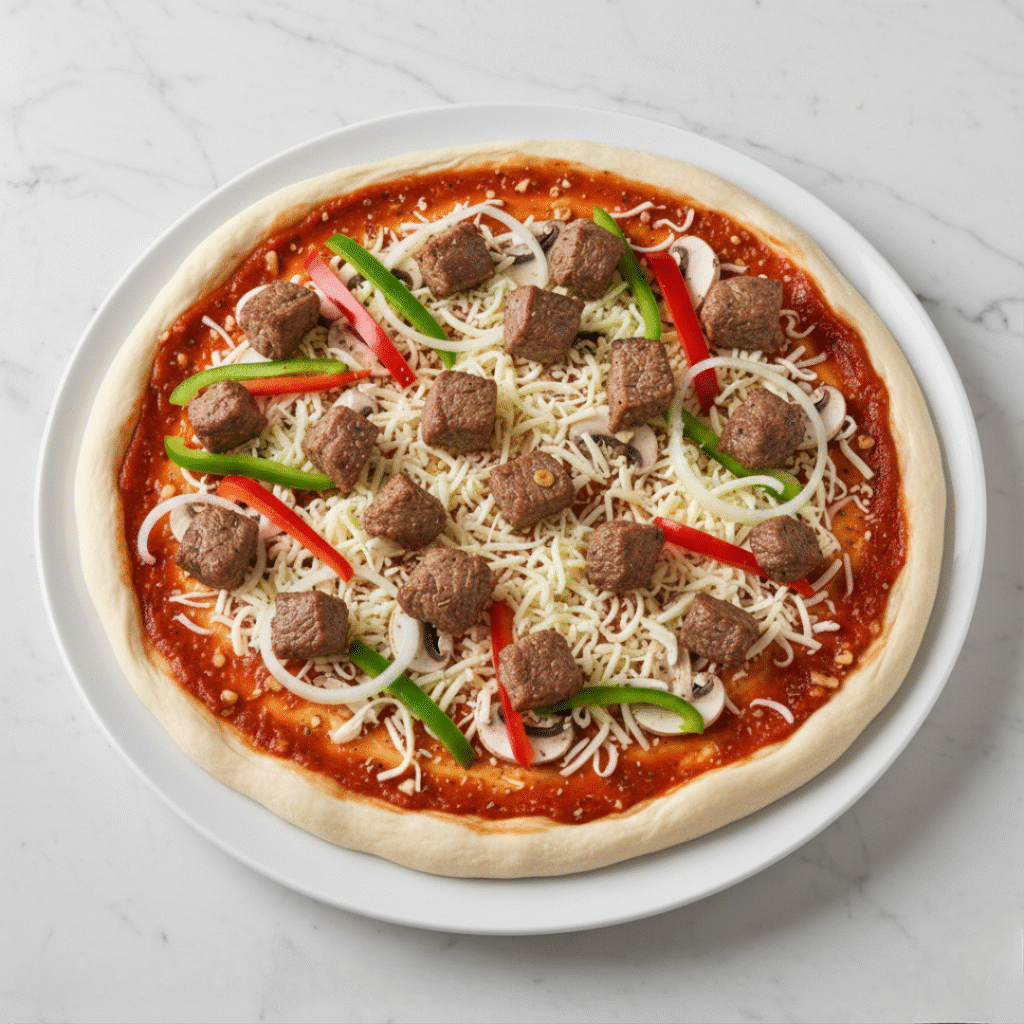
Spread your sauce over the dough but use a light touch. You want just enough to cover it, not a thick layer that makes everything wet and soggy.
Sprinkle your mozzarella cheese evenly across the sauce. Then add your cooked meat.
Then your vegetables. The idea is that every bite has toppings, but you’re not piling things so high that nothing cooks evenly. Honestly, restraint is your friend here.
Step Ten: Bake and Enjoy
Stick your pizza in that hot oven. Bake for twelve to fifteen minutes depending on how thick your crust is. You’re looking for two things—the crust should be golden brown on the bottom, and the cheese should be melted and bubbling on top.
If you want the cheese a little browned too, give it an extra minute or two. Take it out. Let it cool for just a couple minutes before you cut it or you’ll burn your mouth on the hot cheese.
Try these Recipes also:
Tips That Actually Help
- Check that your yeast foams—this confirms it’s alive.
- Dead yeast won’t foam. Use warm water, not hot or cold.
- Test it on your wrist like checking bathwater temperature.
- Always use halal certified ingredients.
- Add toppings sparingly because too many makes pizza soggy.
- Let pizza cool a few minutes before cutting or the cheese will be too hot and you’ll burn your mouth.
Questions People Actually Ask
What If I’m Too Busy to Make Dough?
Buy some from the grocery store. Make sure it says halal on the package. Skip all the rising steps. Just shape it, add toppings, and bake it. It won’t taste as good as homemade but it’s still better than delivery and takes way less time.
Which Halal Meat Works Best on Pizza?
Both chicken and beef are great. Chicken is lighter and less greasy. Beef has more flavor. Either one works perfectly. Just make sure whatever you buy has halal certification on the package. That’s the whole point of doing this.
Can I Make the Dough a Day Before?
Absolutely. Make your dough, let it rise for an hour, then stick it in the refrigerator. The next day, take it out and let it sit at room temperature for about thirty minutes until it’s warm again. Then shape and bake. The flavor is actually better because the dough had time to develop more taste while sitting in the fridge.
Why Does My Dough Shrink Back Every Time I Try to Stretch It?
The gluten is tight. That’s what happens. Stretch it as far as it’ll go without tearing, then let it rest for five minutes. During that rest, the gluten relaxes. Try stretching again and it’ll cooperate much better. Never force dough or you’ll tear holes in it.
Can I Make Pizza Outside on a Grill Instead of the Oven?
Yes you can. Make sure your grill is really clean and hot. Put your topped pizza right on the grates. Close the lid. Watch it carefully because it cooks faster on a grill than in an oven. It usually takes about ten minutes for the cheese to melt completely.
How to Store Your Pizza
Leftover pizza keeps in the refrigerator for about three days if you store it properly in an airtight container. You can eat it cold or reheat it. The oven works best—350 degrees for ten minutes brings back the crispy crust. Microwaves make it chewy, so skip that.
Raw dough freezes for up to three months wrapped tightly in plastic and a freezer bag. Thaw it overnight in the fridge before using. Cooked pizza freezes for about a month.
Wrap each slice individually and reheat at 375 degrees for twelve minutes.
Making pizza at home means you’re not dependent on restaurants anymore. You control the ingredients, the quality, and the cost. You get better pizza and save money doing it. That’s worth the effort.
Bottom Line
Making pizza at home is genuinely simpler than you think. You’re just mixing flour with water and yeast, waiting, and baking.
The difference between homemade and store-bought is huge though. Your pizza tastes better because you made it fresh. Your family knows exactly what they’re eating because you picked every ingredient.
You save money because you’re not paying markup on delivery.
Once you make pizza a few times, it becomes something you just do. It stops being intimidating and starts being normal. That’s when you realize you were overthinking it the whole time.
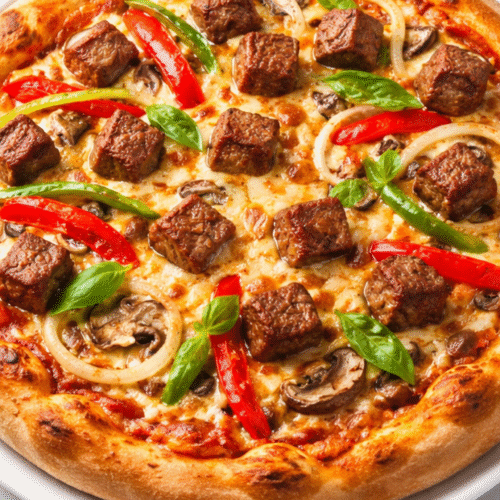
Freshly Baked Pizza on a Rustic Wooden Table (Halal Recipe)
Ingredients
For the Dough:
- 3 cups all-purpose flour
- 1 teaspoon salt
- 1 packet instant yeast 2¼ teaspoons
- 1 tablespoon sugar
- 2 tablespoons halal olive oil
- 1 cup warm water
For the Sauce:
- 1 can crushed tomatoes 15 oz
- 2 tablespoons tomato paste
- 3 garlic cloves minced
- 1 tablespoon olive oil
- 1 teaspoon dried oregano
- ½ teaspoon salt
- ¼ teaspoon black pepper
- Pinch of sugar
For Toppings:
- 2 cups halal mozzarella cheese shredded
- 1 pound halal chicken or beef cooked
- 1 bell pepper diced
- 1 medium onion thinly sliced
- 8 ounces mushrooms sliced
- Fresh basil leaves
- Extra olive oil for brushing
INSTRUCTIONS
1. Activate Yeast:
- Mix warm water, sugar, and yeast in a bowl. Let sit 5 minutes until foamy.
2. Mix Ingredients:
- Put flour and salt in a large bowl. Add yeast mixture and olive oil. Mix until shaggy dough forms.
3. Knead:
- Knead dough for 8-10 minutes until smooth and elastic. It should bounce back when poked.
4. First Rise:
- Place in oiled bowl, cover with damp towel. Let rise 60 minutes until roughly doubled in size.
5. Make Sauce:
- Heat olive oil in pan. Sauté garlic 1 minute. Add tomato paste, cook 1 minute. Add crushed tomatoes, oregano, salt, pepper, and sugar. Simmer 10 minutes.
6. Cook Meat:
- Ensure halal meat is fully cooked through. Season with salt and pepper.
7. Preheat Oven:
- Set oven to 475°F.
8. Shape Dough:
- Punch down dough gently. Stretch into pizza shape about ¼ inch thick. Place on oiled baking sheet.
9. Top Pizza:
- Spread thin layer of sauce. Sprinkle cheese evenly. Add cooked meat and vegetables.
10. Bake:
- Bake 12-15 minutes until crust is golden brown and cheese is bubbly.
11. Cool & Serve:
- Cool for 2-3 minutes. Slice and serve fresh.
Notes
- Halal Certification: Always use halal certified meat and halal certified cheese products.
- Yeast Activation: The foam is essential. If yeast doesn’t foam, it’s dead and needs replacing.
- Water Temperature: Warm water should feel comfortable on your wrist, around 110°F.
- Make Ahead: Prepare dough up to 24 hours in advance and refrigerate.
- Freezing Dough: Wrap tightly and freeze up to 3 months. Thaw overnight in refrigerator.
- Sauce Quality: Homemade sauce tastes significantly better than jarred versions.
- Topping Strategy: Use moderate toppings to prevent soggy crust and ensure even cooking.
- Crust Thickness: Quarter inch thickness creates the ideal crispy exterior with soft interior.
- Cheese Selection: Whole milk mozzarella melts better than low-fat varieties.
- Storage: Keep leftover pizza in fridge for 3 days. Can freeze cooked pizza for 1 month.