
Chicken Alfredo has this reputation for being complicated, like you need to be some kind of trained chef to pull it off. But honestly that’s just not true. The real version is actually ridiculously simple—just butter, cream, Parmesan, and garlic. That’s it. Add some chicken and pasta and suddenly you’ve got restaurant-quality food on your table in half an hour.
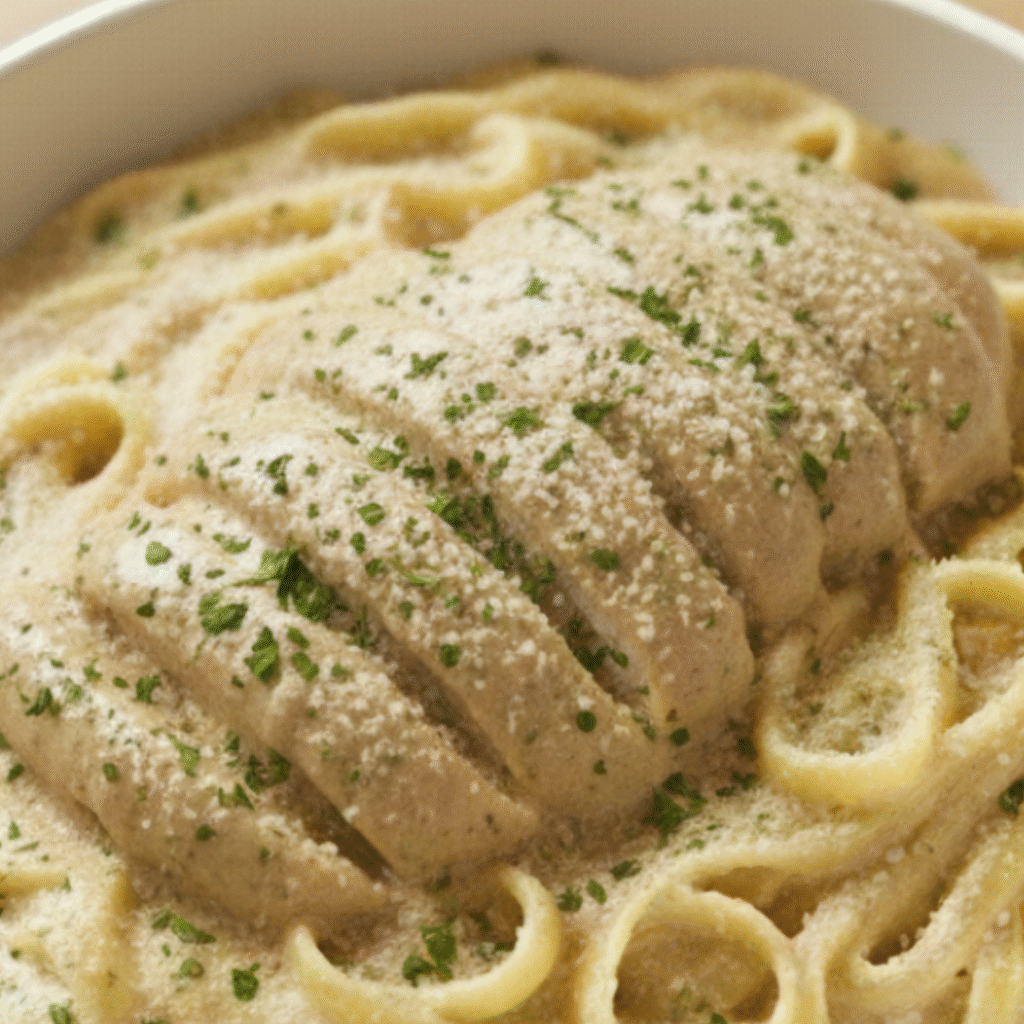
This is the kind of dish that feels fancy but comes together so fast that you won’t believe how easy it was. The sauce is silky and rich without being heavy, the chicken stays tender and juicy, and everything coats the pasta perfectly. Plus you can actually make this on a weeknight without losing your mind.
The secret is not overthinking it. Good technique matters, sure, but this isn’t a difficult dish. It’s straightforward cooking that produces something that tastes way better than the effort you put in. That’s the whole appeal of it.
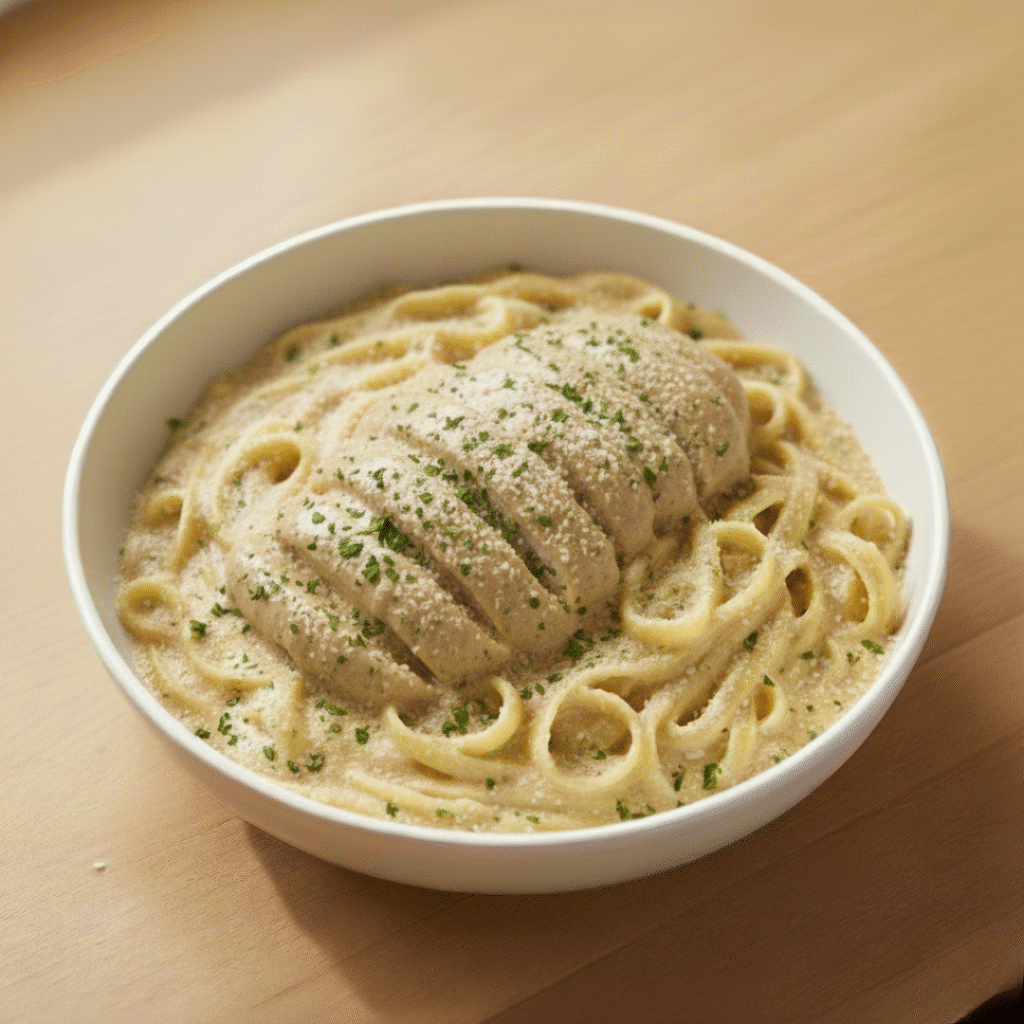
Why Alfredo Actually Works
Alfredo sauce is basically one of the best things ever invented because it’s so simple. Butter, cream, Parmesan, maybe some garlic. That’s the foundation. Everything else is just variations on that theme.
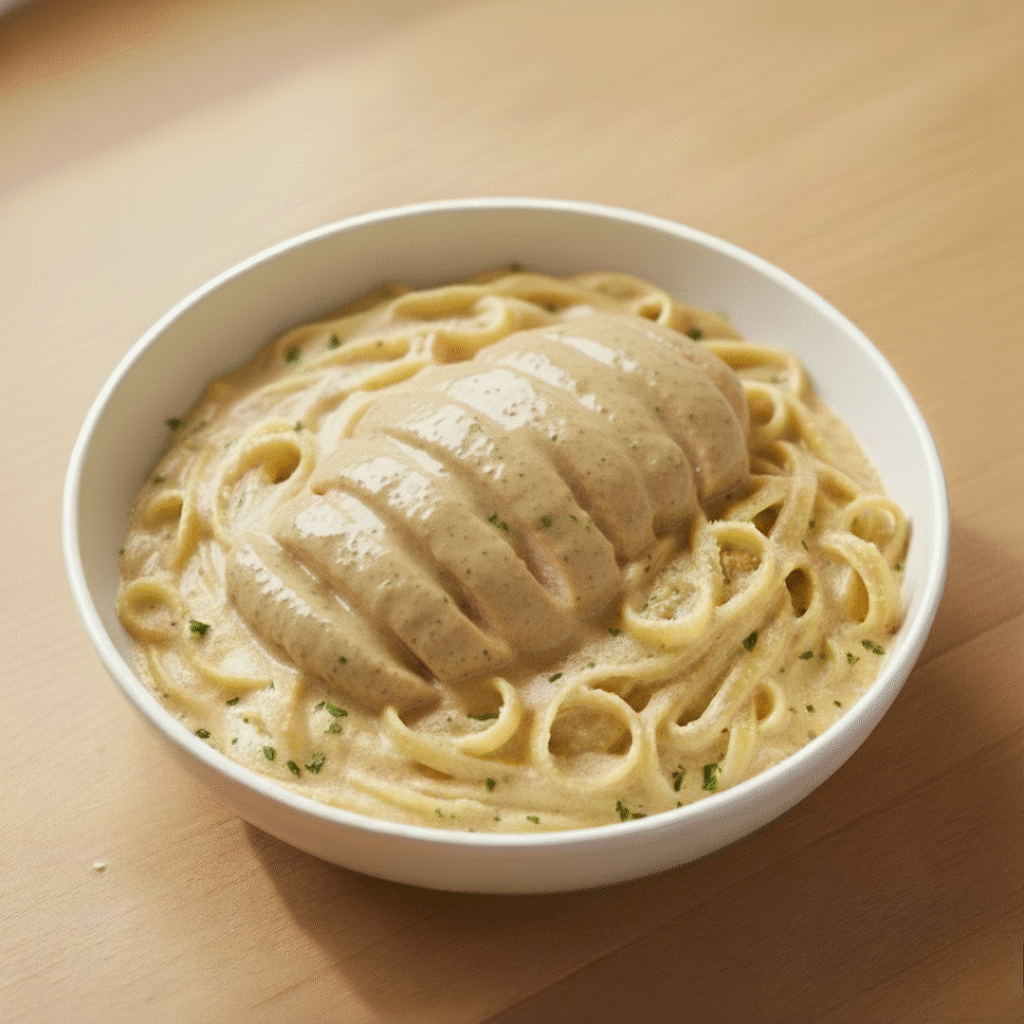
When you make it properly, the butter and cream emulsify together and create this luxurious coating that hugs every bit of pasta. The Parmesan adds that salty, nutty depth. Fresh parsley at the end brightens it all up and makes it feel fresh instead of heavy.
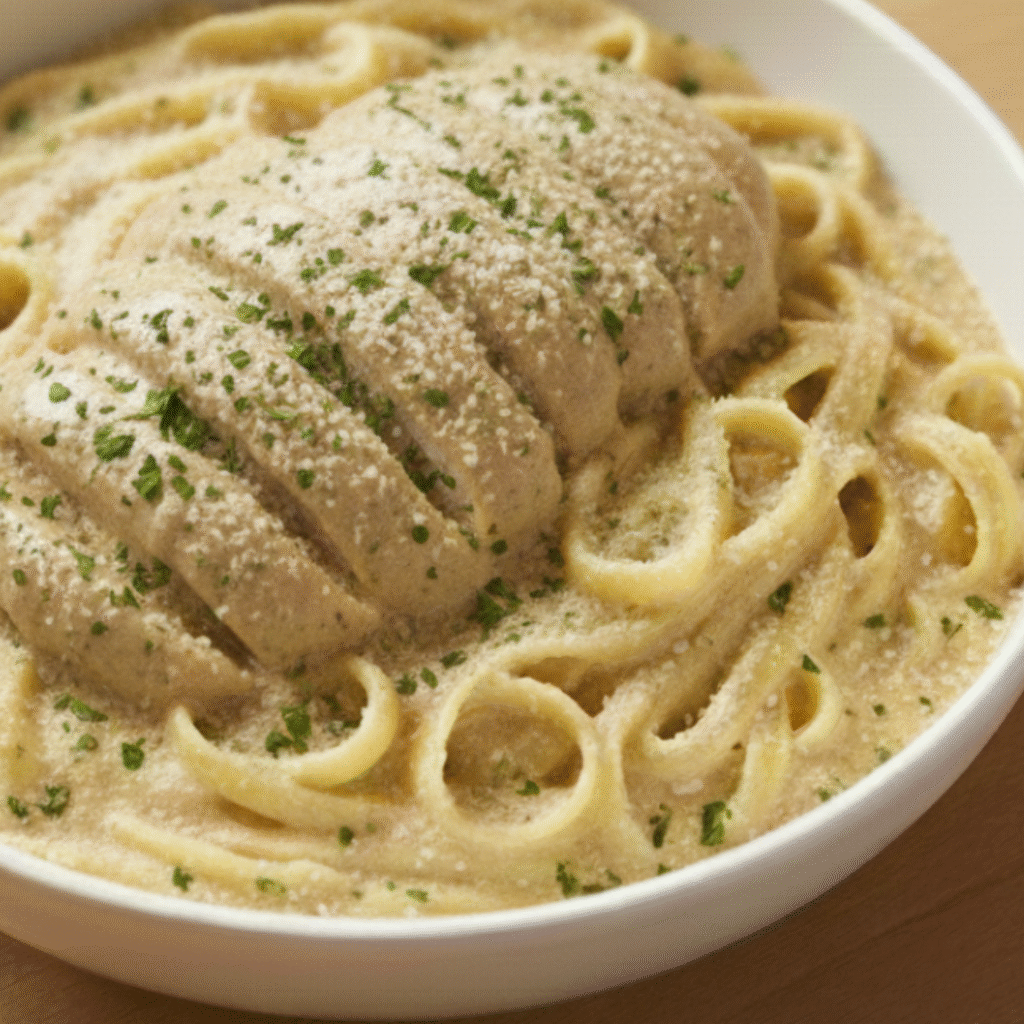
This dish teaches you something fundamental about cooking—that quality ingredients and proper technique matter way more than complexity. A handful of good ingredients handled correctly beats complicated recipes with tons of stuff every single time.
Try these Recipes also:
What You Actually Need to Gather
Let’s talk ingredients because this is where it gets easy. Nothing here is complicated or hard to find.
For the chicken, grab about 600 grams of boneless, skinless chicken breasts. Two medium to large ones work perfectly. You’ll need 3 tablespoons of butter and 2 tablespoons of olive oil for cooking. Have 4 cloves of fresh garlic minced. Salt, pepper, and 1/2 teaspoon of dried Italian seasoning to season as you go.
The sauce is the star of the show. You need 1 cup of heavy cream—that’s your foundation. Also get 1/2 cup of chicken broth to lighten it up a bit. Three cloves of garlic minced separately for the sauce. 3/4 cup of freshly grated Parmesan cheese—and seriously, grate it yourself, don’t use the pre-grated stuff if you can help it. It melts better. You’ll also want 2 tablespoons of butter for the sauce and 1/2 teaspoon of garlic powder.
Fresh parsley is important. Get a small bunch or at least a handful. Fresh herbs make a huge difference in how this tastes.
To finish everything, grab 300 grams of fettuccine or penne pasta, salt for your pasta water, extra Parmesan for the top, and black pepper.
How to Actually Make This
Start Your Water First
Fill a large pot about three-quarters full with water. Add a good amount of salt—enough that it tastes noticeably salty. Put it on high heat and let it come to a boil. You want this boiling before you start cooking anything else because it takes a few minutes.
Prepare Your Chicken
While your water’s heating, take your chicken breasts and pat them completely dry with paper towels. Moisture prevents proper browning so don’t skip this step. You want them as dry as you can get them.
Grab a meat mallet or rolling pin.
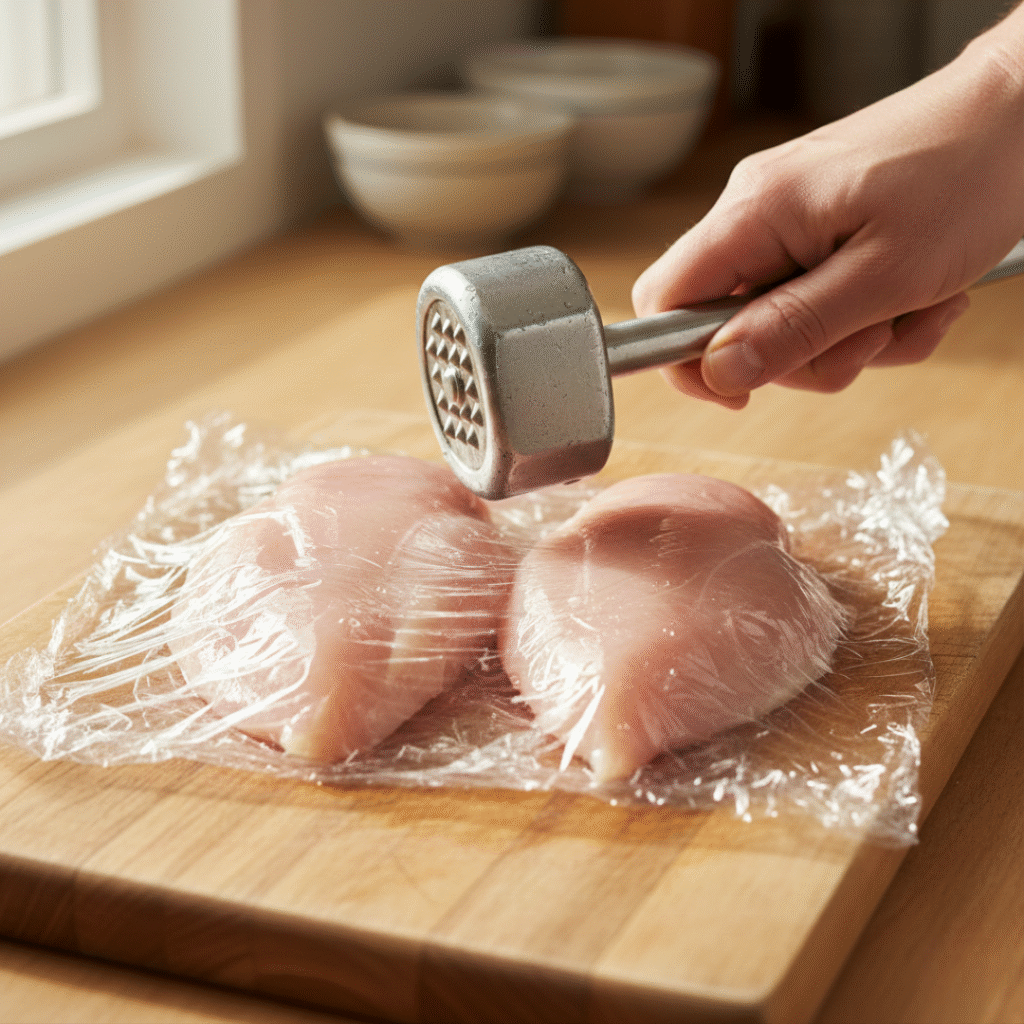
Put one chicken breast between two pieces of plastic wrap and pound it gently until it’s about half an inch thick. Do this for all of them. The goal is even thickness so they cook at the same rate.
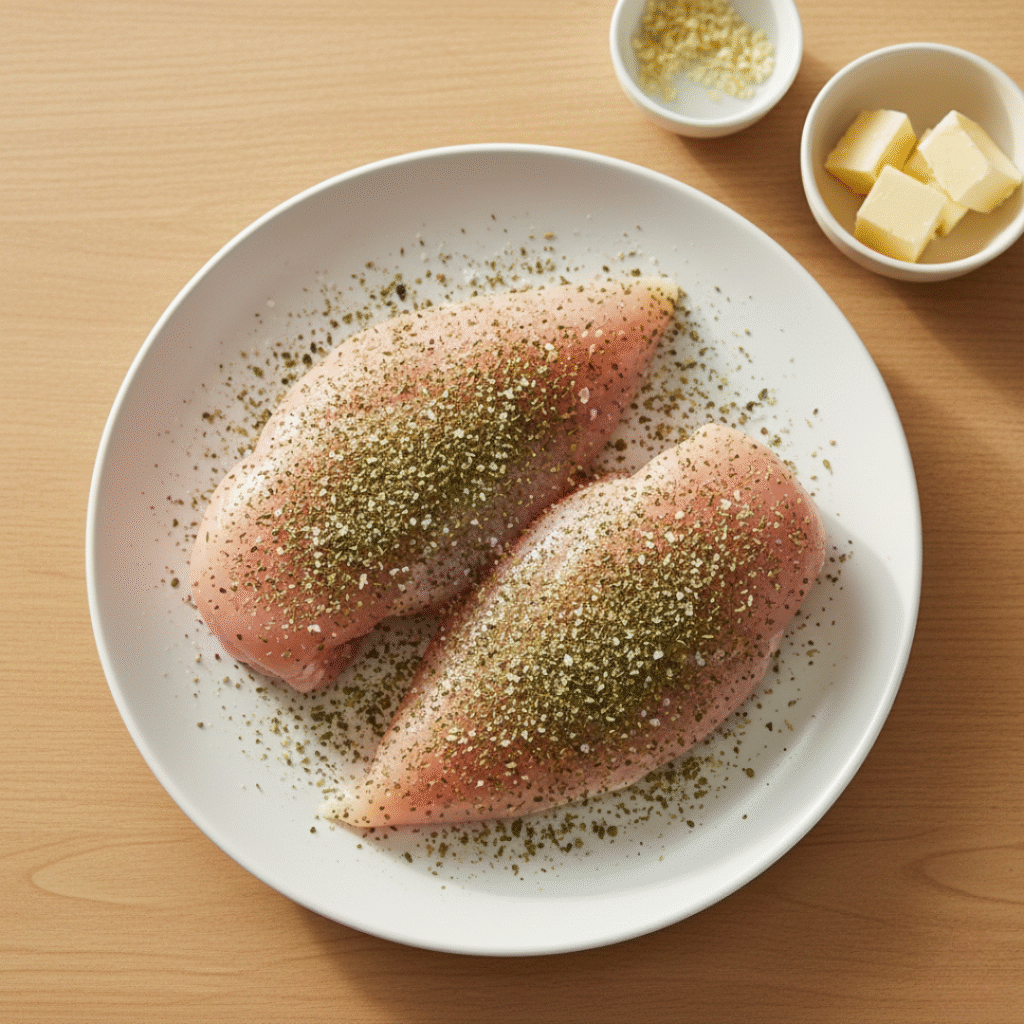
Season both sides with salt, pepper, and your Italian seasoning. Put them on a plate and leave them for now.
Cook Your Chicken Properly
Heat 2 tablespoons of butter and 1 tablespoon of oil in a large skillet over medium-high heat. Wait for it to get hot—you’ll see it shimmer and smell good. This is the temperature you want.
Put your chicken breasts in the pan. And this is crucial: don’t move them. Leave them alone. Let them sit there for about 4 to 5 minutes so they develop a golden-brown crust on the bottom. That crust is where the flavor comes from.
After 4 to 5 minutes, flip them over. Cook the other side for 3 to 4 minutes. They’re done when they’re white all the way through with no pink inside, or when a meat thermometer reads 165 degrees.
Transfer them to a cutting board and let them rest for a couple of minutes. This keeps them from drying out when you slice them.
Add Your Pasta to the Water
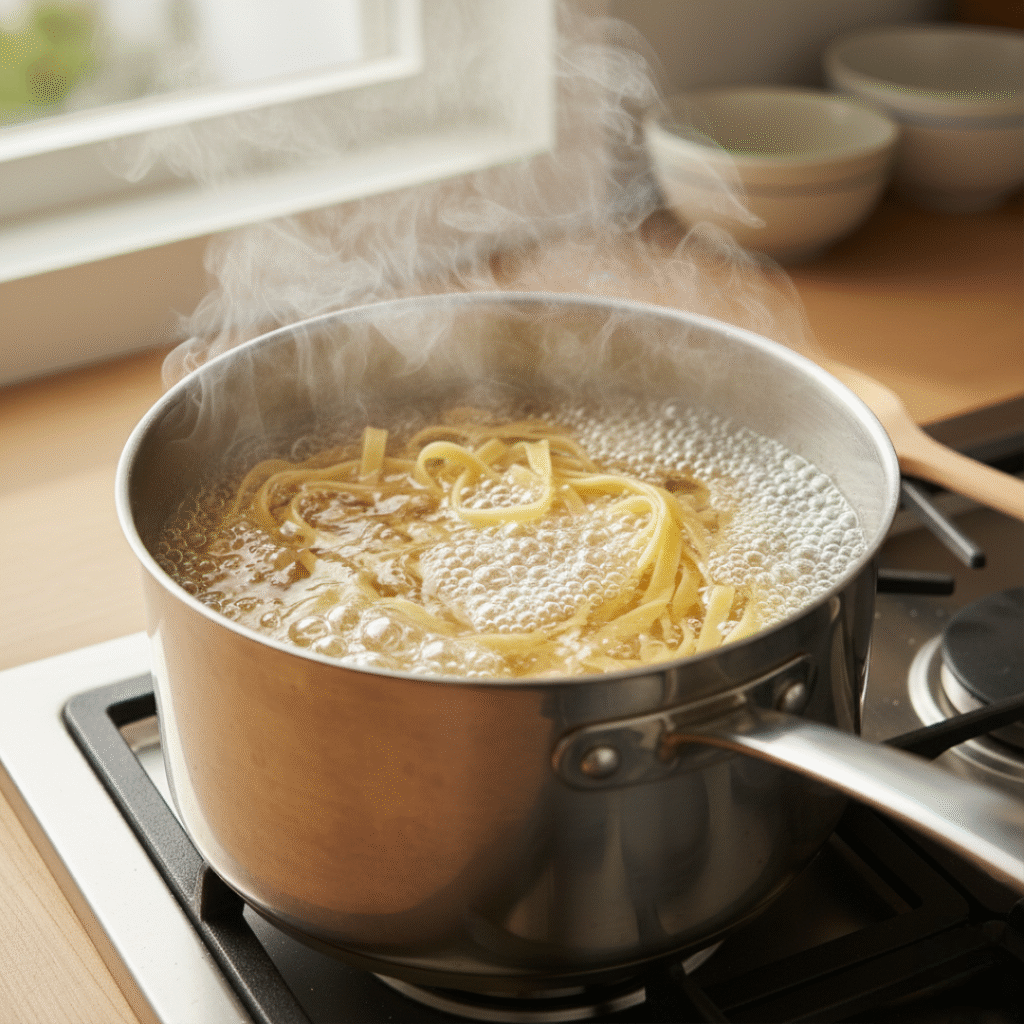
Your water should be boiling by now. Dump your pasta in there. Give it a quick stir so the noodles don’t stick together. It’ll take about 8 to 9 minutes to cook. You want it al dente—soft but still with a little bite to it.
Make Your Alfredo Sauce
In the same skillet you used for the chicken (don’t wash it—those brown bits have flavor), reduce the heat to medium. Add 2 tablespoons of butter. Let it melt.
Add your 3 minced garlic cloves. Cook for just about 30 seconds until it smells good. Don’t let it brown. Burned garlic tastes bitter.
Now pour in your chicken broth. Let it bubble for about 30 seconds. This helps bring up all those brown bits from the bottom of the pan. Use a wooden spoon to scrape them up. All that stuff is going into your sauce.
Pour in your heavy cream. Stir everything together. Let it simmer gently for about 2 minutes. You’ll see it start to thicken naturally.
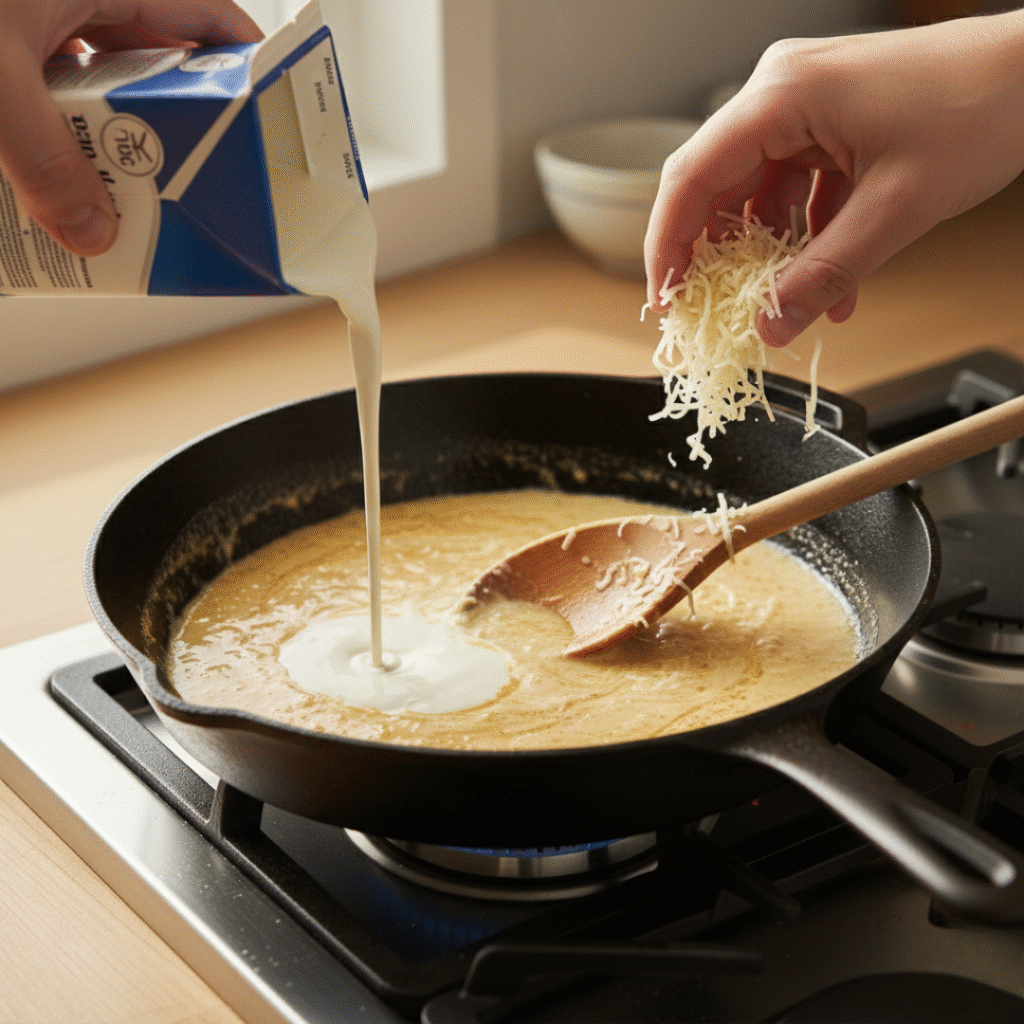
Now add your Parmesan cheese. Stir it in slowly so it melts smoothly into the sauce. Add the garlic powder and a good amount of black pepper. Taste it. Add more salt if you need it. Make it taste how you want it to taste.
Put It All Together
Your pasta should be done by now. Before you drain it, save about a cup of that starchy pasta water. This water is actually useful for adjusting your sauce consistency.
Slice your rested chicken into strips or bite-sized pieces.
Add your drained pasta to the Alfredo sauce. Add the sliced chicken too. Mix everything together gently but thoroughly. Every strand of pasta should get coated with that creamy Alfredo sauce.
If it looks too thick, add a splash of that pasta water. Keep adding it until it reaches the right consistency—creamy and coating the pasta, but not soupy.
Garnish and Serve
Put it on plates or in bowls. Top with plenty of fresh parsley. Shower it with extra Parmesan. Serve it hot.
Things That Actually Help You Succeed
Don’t skip drying the chicken. Moisture prevents browning and you want that golden crust because that’s where flavor comes from. Use paper towels and take your time.
Don’t move the chicken while it’s searing. Just leave it in the hot pan. The browning is what makes it taste good.
Those brown bits stuck to the bottom of the pan are not burnt food. They’re concentrated flavor. Scrape them into your sauce. That’s where the depth comes from.
Don’t brown the garlic in your sauce. About 30 seconds is all you need. If it starts to turn brown, you’ve gone too far. Burned garlic ruins everything.
Use freshly grated Parmesan if you can. Pre-grated Parmesan has anti-caking agents that prevent it from melting smoothly. Fresh grated melts into the sauce beautifully and makes it silkier.
Save your pasta water. The starch in it helps the sauce coat the pasta better and stick to it. It’s not just for thinning—it helps everything come together.
Use real heavy cream. The quality directly affects how the sauce tastes. It should be thick and rich.
Keep your sauce on medium heat. High heat can cause cream to do weird things. Gentle heat keeps everything smooth and luxurious.
Let your chicken rest after cooking. Those couple of minutes let the juices redistribute. It keeps the meat moist and juicy.
Fresh parsley makes a difference. It brightens everything up and makes the dish feel fresher. Don’t skip it.
Taste constantly. Don’t wait until it’s done. Taste and adjust as you go. That’s how you get better flavor.
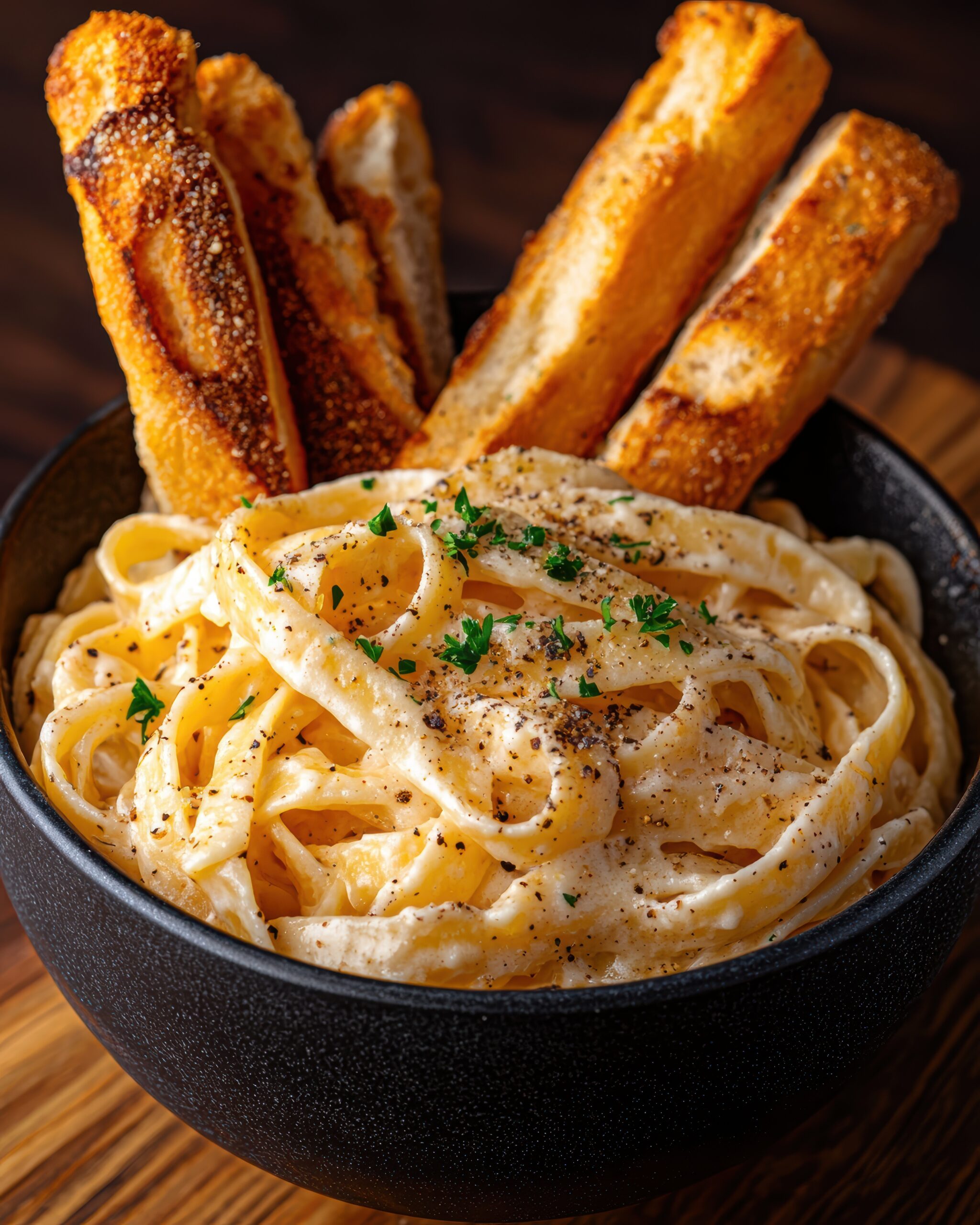
Easy Chicken Alfredo in 30 Mins with Parsley
Equipment
- 1 large pot (for pasta)
- 1 large skillet or frying pan (10-12 inches)
- 1 cutting board
- 1 meat mallet or rolling pin
- Paper towels
- Measuring cups and spoons
- Wooden spoon or silicone spatula
- whisk
- Meat thermometer (optional but helpful)
- Colander or pasta strainer
- Box grater (for fresh Parmesan)
- Serving bowls or plates
- Tongs or pasta fork
Ingredients
- 600 g boneless skinless chicken breasts
- 3 tbsp butter for cooking chicken
- 2 tbsp olive oil
- 4 cloves fresh garlic minced (for cooking)
- Salt and pepper to taste
- ½ tsp dried Italian seasoning
- 1 cup heavy cream
- ½ cup chicken broth
- 3 cloves fresh garlic minced (for sauce)
- ¾ cup freshly grated Parmesan cheese
- 2 tbsp butter for sauce
- ½ tsp garlic powder
- 300 g fettuccine or penne pasta
- Fresh parsley for garnish about 1/4 cup chopped
- Extra Parmesan for topping
- Black pepper to taste
INSTRUCTIONS
- 1. Boil salted water in a large pot. Pat chicken dry, pound to even thickness (1/2 inch), and season with salt, pepper, and Italian seasoning.
- 2. Heat 2 tbsp butter and 1 tbsp oil in a large skillet over medium-high heat. Sear chicken for 4-5 minutes per side until golden and cooked through. Rest for 2 minutes, then slice.
- 3. Add pasta to boiling water. Cook 8-9 minutes until al dente. Save 1 cup pasta water before draining.
- 4. In same skillet, melt 2 tbsp butter over medium heat. Add 3 minced garlic cloves and cook for 30 seconds until fragrant (don't brown).
- 5. Add chicken broth and let it bubble for 30 seconds, scraping up brown bits from the pan with a wooden spoon.
- 6. Pour in heavy cream and stir well. Simmer gently for 2 minutes until it starts to thicken.
- 7. Stir in Parmesan cheese slowly until melted and smooth. Add garlic powder and black pepper. Taste and adjust seasoning.
- 8. Add drained pasta and sliced chicken to the sauce. Toss to coat evenly. Add pasta water as needed for consistency.
- 9. Serve hot in bowls, garnished generously with fresh parsley and extra Parmesan cheese.
Ways to Change This Up
There’s lots of flexibility with this recipe if you want to make it different.
If you want to add vegetables, mushrooms are classic with Alfredo. Sauté them first, then add them to the pasta. Broccoli works if you like that. Peas are nice too—just add them at the end. Spinach wilts right into the sauce. Sun-dried tomatoes add color and a little tang.
You can make it spicier by adding red pepper flakes to the sauce or using black pepper more generously.
If you want it richer, add more Parmesan or an extra tablespoon of butter. If you want it lighter, you can use half-and-half instead of heavy cream, though it won’t be quite as luxurious.
You can use different pastas. Penne has ridges that catch sauce. Linguine is thinner and more delicate. Spaghetti is thinner than fettuccine. All of them work with Alfredo.
Different proteins work here too. Shrimp cooks super fast—just 2 to 3 minutes per side. Turkey works exactly like chicken. Even white fish works if you want something lighter. Prosciutto adds a salty richness if you want to go that direction.
You could add bacon. Cook it first, chop it up, and add it to the pasta. It adds a salty, smoky depth.
Fresh herbs are flexible too. Basil instead of parsley gives it an Italian vibe. Thyme works. Even a tiny bit of fresh tarragon is interesting if you’ve got it.
You can make this ahead. Cook everything in advance, store it in the fridge, and reheat gently on the stove when you’re ready. Add a splash of cream when reheating.
Questions People Keep Asking
Does this really take 30 minutes?
Yeah it does. If you get your water boiling first and move through everything organized, you’re done in about 30 minutes. The timing works out well.
Can I use a different pasta?
Sure. Fettuccine is classic with Alfredo. Penne, rigatoni, spaghetti all work. Just follow the cooking time on your box.
How do I know if my chicken is actually cooked?
Cut into the thickest piece. If there’s zero pink inside, you’re good. Or use a meat thermometer—165 degrees and you’re done.
Can I use pre-grated Parmesan?
You can but it won’t be as good. Pre-grated has anti-caking stuff that prevents smooth melting. Fresh grated is worth the extra minute.
What if I want to make it lighter?
Use half heavy cream and half half-and-half. Or even half heavy cream and half milk. It won’t be as luxurious but it’ll be lighter.
Can I use turkey instead?
Turkey works exactly the same way. Same cooking time, same technique.
What about shrimp?
Shrimp works but cook it way less. Like 2 to 3 minutes per side max. Overcooked shrimp is rubbery.
Is this gluten free?
Only if you use gluten-free pasta. Everything else is naturally gluten-free.
What do I serve with this?
Crusty bread is perfect for soaking up any extra sauce. A simple salad to balance the richness. Or just eat the pasta—it’s good enough on its own.
Can I freeze leftovers?
Don’t freeze the whole thing because pasta gets mushy when it thaws. You can freeze the sauce and chicken separately for up to 3 months. Cook fresh pasta when you’re ready.
What if the sauce breaks or looks weird?
This rarely happens but if it does, take it off heat and whisk in some cold cream. The emulsion usually comes back together.
Can I make this ahead?
You can prep everything separately and keep it in the fridge. Cook it all and put it together when you’re ready to eat. The sauce keeps for like a day in the fridge.
How long do leftovers last?
Keep it in the fridge for up to 3 days. Reheat gently on the stove with a splash of cream. The microwave makes it weird.
What’s the difference between this and restaurant Alfredo?
Usually just technique and quality ingredients. Fresh Parmesan, good cream, proper heat control, fresh parsley. That’s what makes the difference.
Why You Should Actually Make This
This is a recipe that works because each part is handled right. Nothing’s overcomplicating it. It’s just solid technique with decent ingredients.
The chicken gets a proper sear so it’s flavorful and juicy. The Alfredo sauce is smooth and silky and luxurious. The pasta is cooked to the right texture. Everything works together.
Make this when you want food that tastes like you actually thought about what you were doing. It’s the kind of thing that feels special but doesn’t take forever. It’s reliable and it tastes really good.
It’s the kind of dinner that doesn’t feel like an ordinary weeknight dinner. It feels like something worth making and worth eating.