
You know that feeling when you bite into something so good you actually stop talking? That’s what happens with a proper crab cake. The kind where you get that crispy outside, and then inside it’s all sweet, tender crab that just falls apart in your mouth. Add some tangy remoulade on top and you’ve got yourself something special.
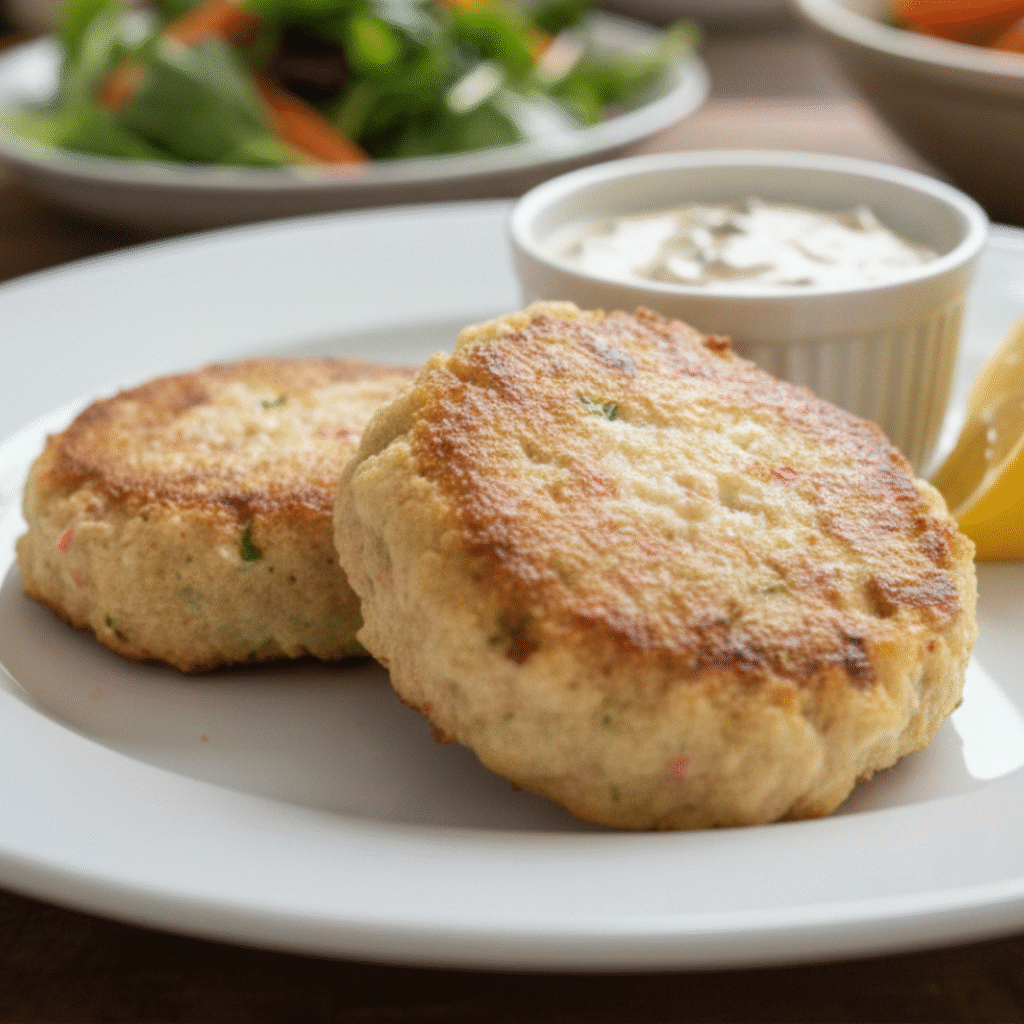
I’m going to show you how to make these at home, and honestly, they’re better than most places charge you twenty bucks for. The trick isn’t complicated—it’s just about using good crab and not messing it up with a bunch of filler nobody wants anyway.
What You Need
Crab Cakes:
- 1 pound lump crab meat
- 1/2 cup breadcrumbs (regular ones, not panko)
- 1/4 cup mayo
- 1 egg
- 1 tablespoon Dijon mustard
- Juice from half a lemon
- 2 teaspoons Old Bay seasoning
- 1 teaspoon Worcestershire sauce
- 2 tablespoons chopped parsley
- A little black pepper and cayenne
- Butter and oil for frying
Remoulade Sauce:
- 1 cup mayo
- 2 tablespoons grainy mustard
- 1 tablespoon Dijon
- Juice from half a lemon
- 1 tablespoon capers, chopped up
- 2 teaspoons horseradish
- 2 garlic cloves, crushed
- Hot sauce to taste
- 1 teaspoon Worcestershire
- 1 teaspoon paprika
- Salt and pepper
Let’s Make the Sauce First
Start with the sauce because it gets better sitting in the fridge while you work on everything else.
Dump your mayo in a bowl. Add both mustards and mix them in. The grainy mustard gives it texture and the Dijon makes it sharp. Squeeze in your lemon juice—fresh is way better than the bottled stuff.
Chop up those capers pretty fine. You want little bits throughout, not big chunks you bite into. Toss them in with the horseradish. If you’ve never used horseradish before, it’s that stuff that clears your sinuses. Don’t worry, it mellows out in the sauce.
Crush your garlic. I use a press but you can mince it super fine with a knife. Raw garlic can be harsh, so the finer the better. Add your parsley, hot sauce, Worcestershire, and paprika.
Mix everything together really well. Taste it. It should be tangy with a little kick. If you want more heat, add more hot sauce. If it needs more zing, squeeze in a bit more lemon.
Cover it up and stick it in the fridge. The flavors need time to get friendly with each other.
Getting the Crab Ready
Here’s the thing about crab meat—even the good stuff usually has some shells hiding in it. Open up your container and spread the crab out in a bowl. Now you’ve got to pick through it. Run your fingers through gently, feeling for any hard bits. When you find a shell piece, pull it out.
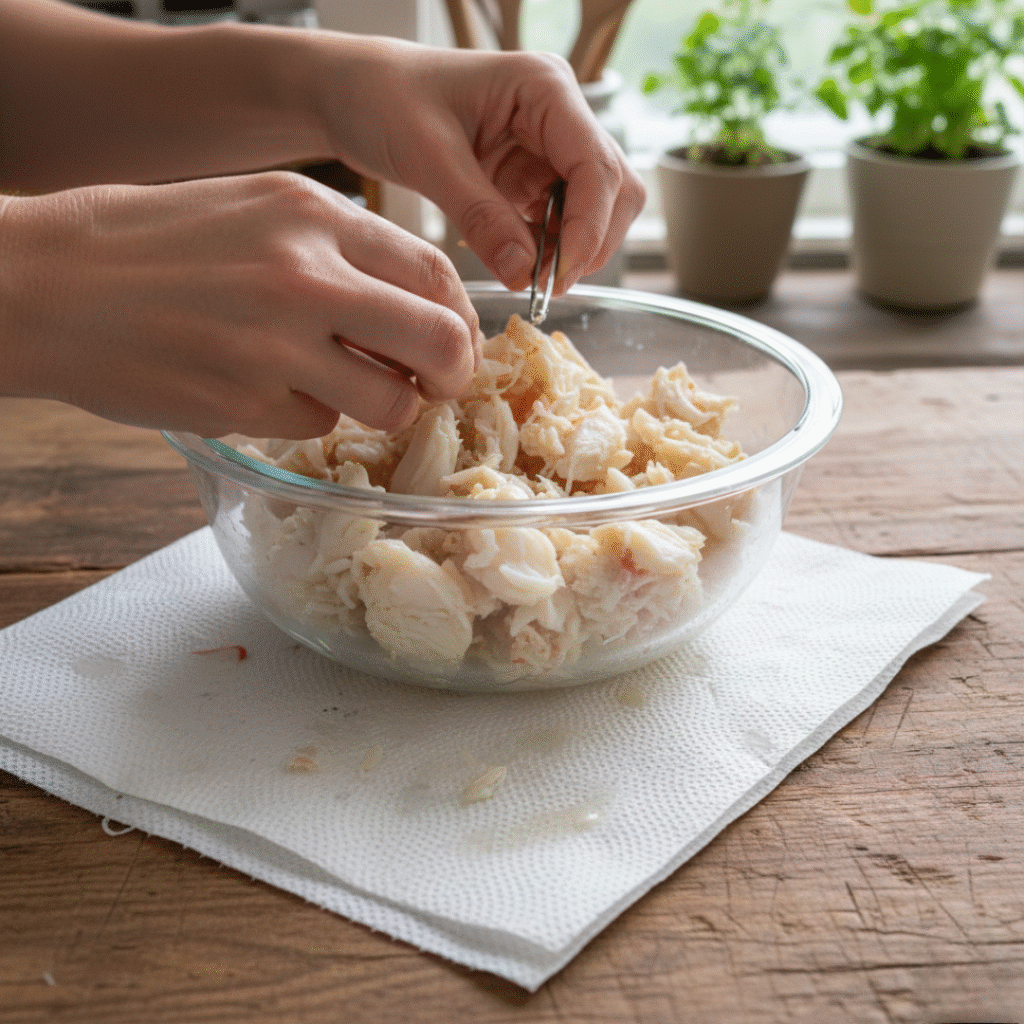
This is boring but important. Nobody wants to bite down on a shell fragment when they’re eating. Take a few minutes and do it right.
Once you’ve picked through everything, put the crab on some paper towels. Press another layer on top. You’re trying to get rid of extra water. If the crab is too wet, your cakes will be mushy and fall apart in the pan.
After a couple minutes, move the crab to a big bowl. Look at those nice chunks of crab. Your goal is to keep them that way.
Mixing It Up
Get another bowl and put in your mayo, egg, mustard, lemon juice, and Worcestershire. Beat it together with a fork until it’s smooth. No lumps of egg white or anything.
Add your Old Bay, pepper, cayenne, and parsley. Mix it up. Old Bay is kind of essential here—it’s got celery salt and paprika and a bunch of other stuff that just works with crab. Don’t skip it.
Pour this mixture over your crab. Sprinkle the breadcrumbs on top.
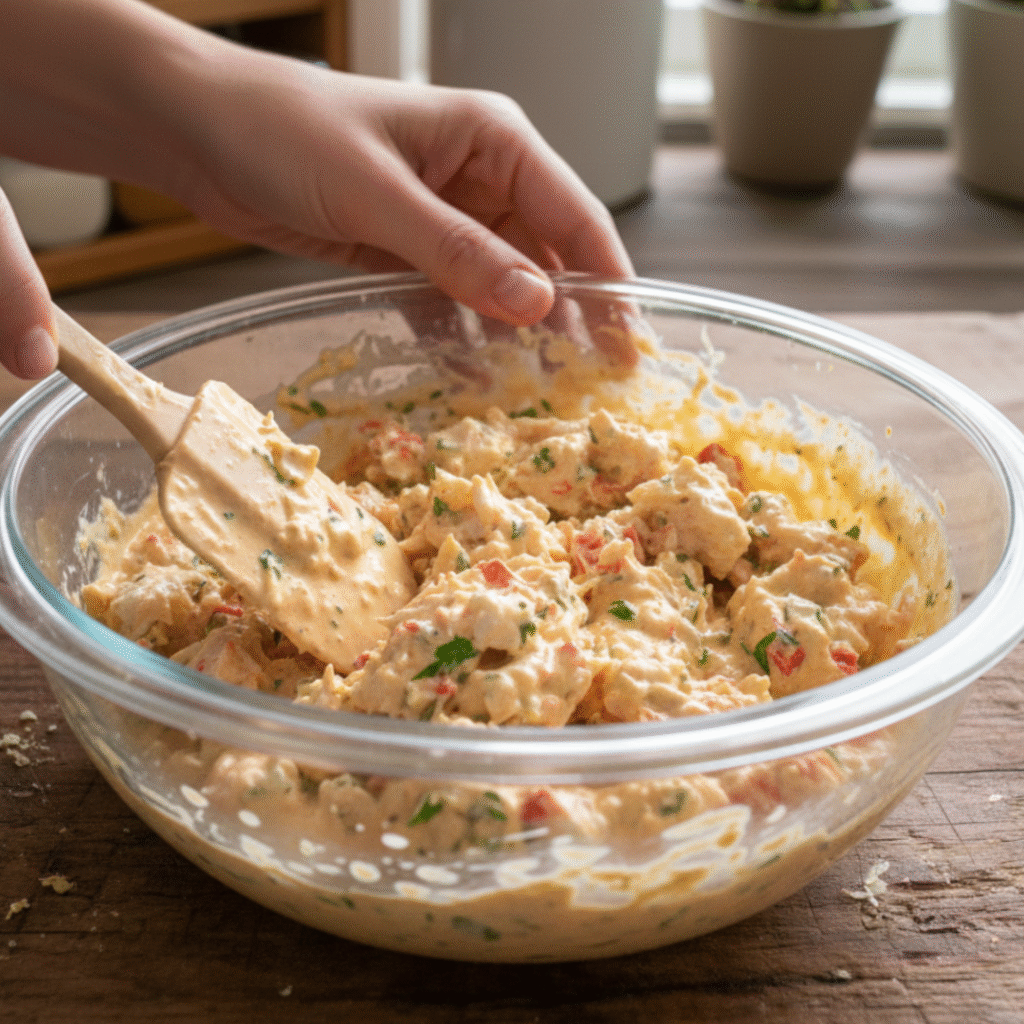
Now here’s where people usually screw it up. Don’t stir this like you’re making pancake batter. You need to fold it together real gently. Get your hand in there or use a spatula, and just turn it over on itself, lifting from the bottom. You’re trying to coat everything without turning those nice crab chunks into mush.
When you can press it together and it holds, you’re done. If it’s falling apart, add a few more breadcrumbs. If it feels dry, add a tiny bit more mayo.
Making the Patties
Line a baking sheet with parchment paper. Use a 1/3 cup measure to scoop out the mixture—this way they’re all the same size and they’ll cook evenly.
Take a scoop and put it in your hand. Cup your other hand over it and press it into a patty. Make it about as thick as your thumb, maybe three inches across. Don’t squeeze it too hard. You want it to stick together, but you don’t want it packed tight like a burger.
Put it on your baking sheet. Keep going until you’ve made all your crab cakes. You should get six or seven depending on the size.
Stick the whole tray in the fridge for half an hour. I know you want to cook them right away, but don’t. This chilling time makes them firm up so they don’t fall apart when you flip them.
Cooking Them Perfect
Get out a heavy pan—cast iron is great if you have it. Put it on medium heat and let it warm up for a few minutes.
Add about three tablespoons of butter and two tablespoons of oil. The butter tastes great but it burns easy, so the oil helps keep things from getting too hot. Swirl it around so it covers the bottom.
Watch the butter melt. When it stops bubbling, you’re ready. Carefully lay your crab cakes in the pan. Leave space between them—if you crowd them, they’ll steam instead of getting crispy.
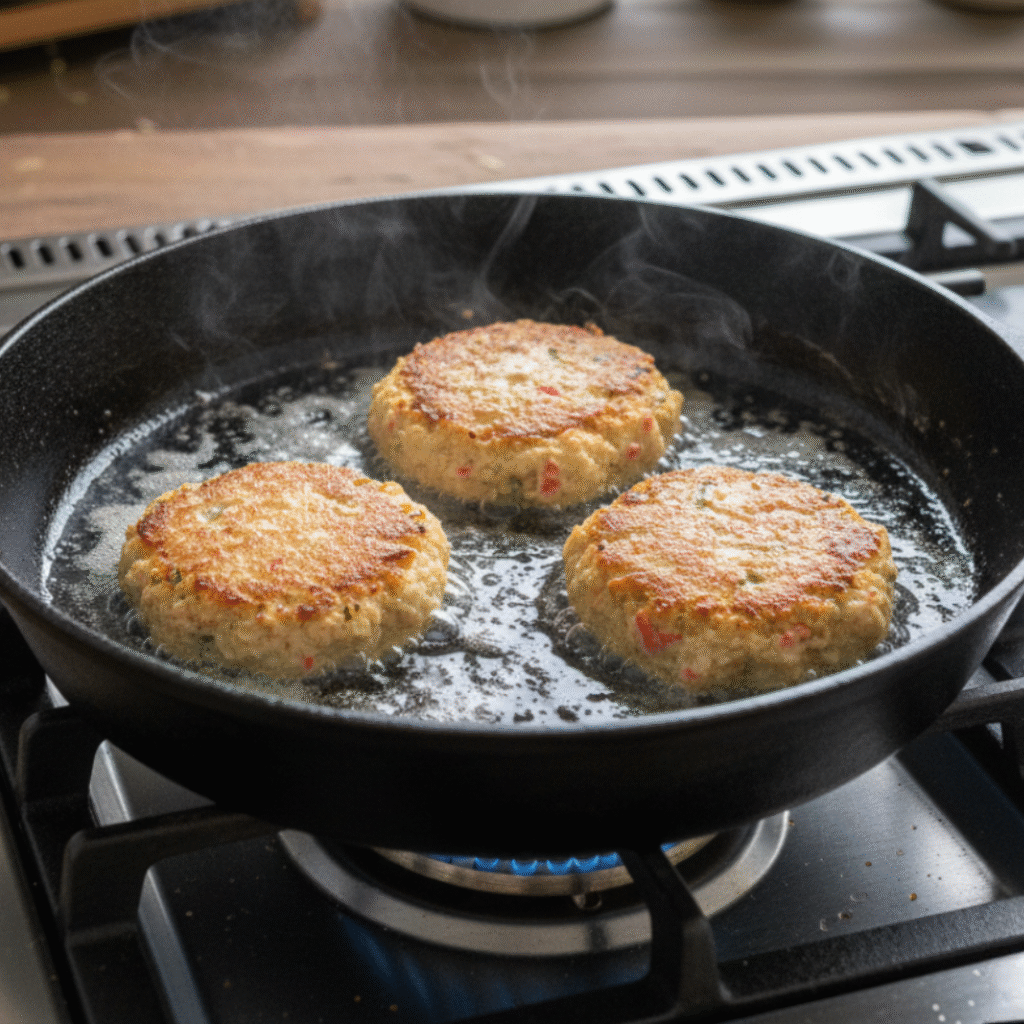
You should hear a nice sizzle. If it’s silent, your pan needs to be hotter. If it’s spitting everywhere, turn the heat down a touch.
Now don’t touch them. This is hard because you want to check, but you’ve got to leave them alone. Let them cook for four or five minutes without moving them at all.
You’ll see the edges start turning golden. When you peek underneath with a spatula, the bottom should be a deep golden brown with crispy edges. That’s when you flip them.
Be gentle with the flip. Slide your spatula under and turn them over in one smooth motion. Cook the other side for another four or five minutes.
They’re done when both sides are golden and crispy, and they feel firm when you press on them gently. Move them to a plate with a paper towel to soak up any extra oil.
Time to Eat
Put your crab cakes on plates while they’re still hot. The crust should be shiny and golden, almost crackling. Spoon some remoulade next to them. Some people like dipping, some like it on top—whatever works for you.
Cut a lemon into wedges and put one on each plate. That squeeze of fresh lemon right before you eat makes everything brighter.
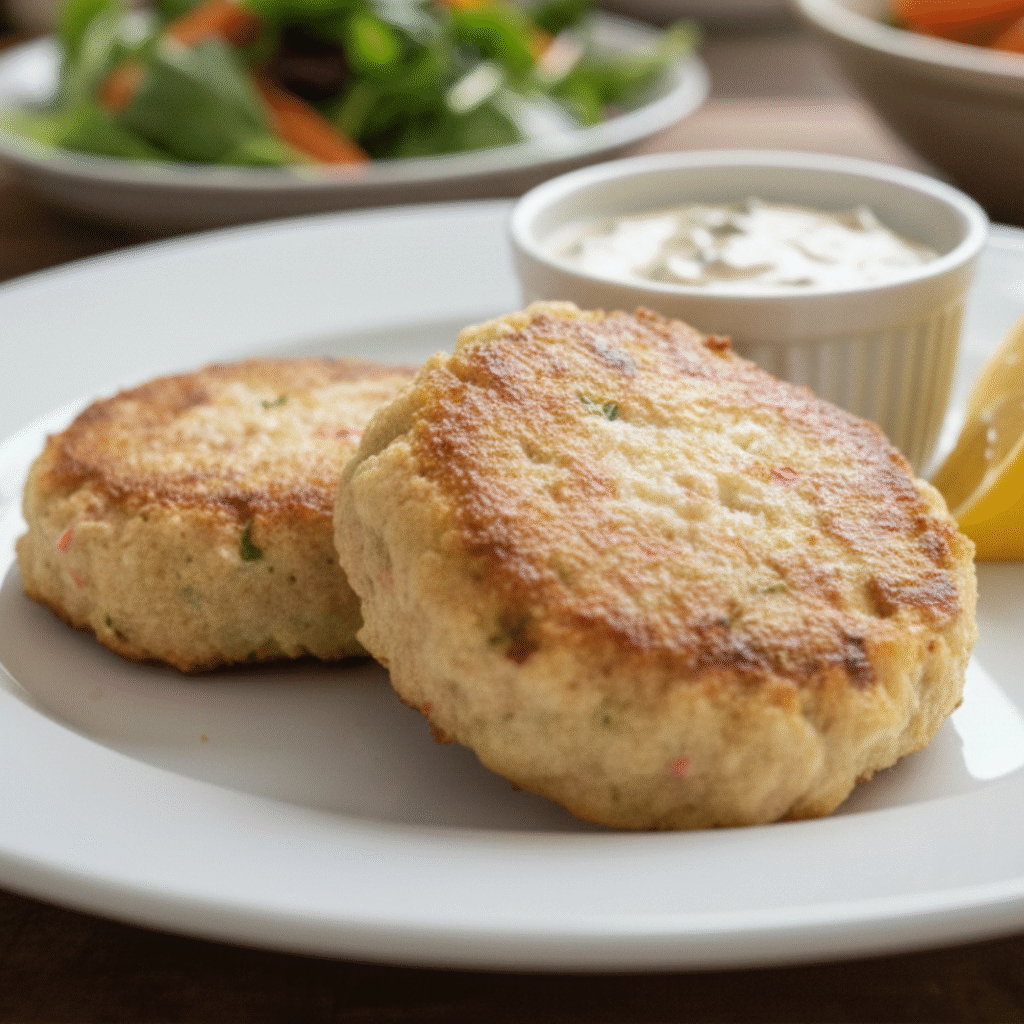
Keep the sides simple. A salad with some lemon dressing is good. Roasted vegetables work. Even just sliced tomatoes. The crab cakes are what matters.
What Makes These Work
The secret is pretty simple—use good crab and don’t hide it under a ton of bread. You want just enough binder to hold things together, but the crab should be the star.
Fresh breadcrumbs work better than panko because they’re softer. They blend in instead of adding crunch. If you don’t have fresh ones, just put regular bread in a food processor for a few seconds.
Don’t skip the chilling step. I know it’s tempting when you’re hungry, but cold crab cakes hold together way better than room temperature ones.
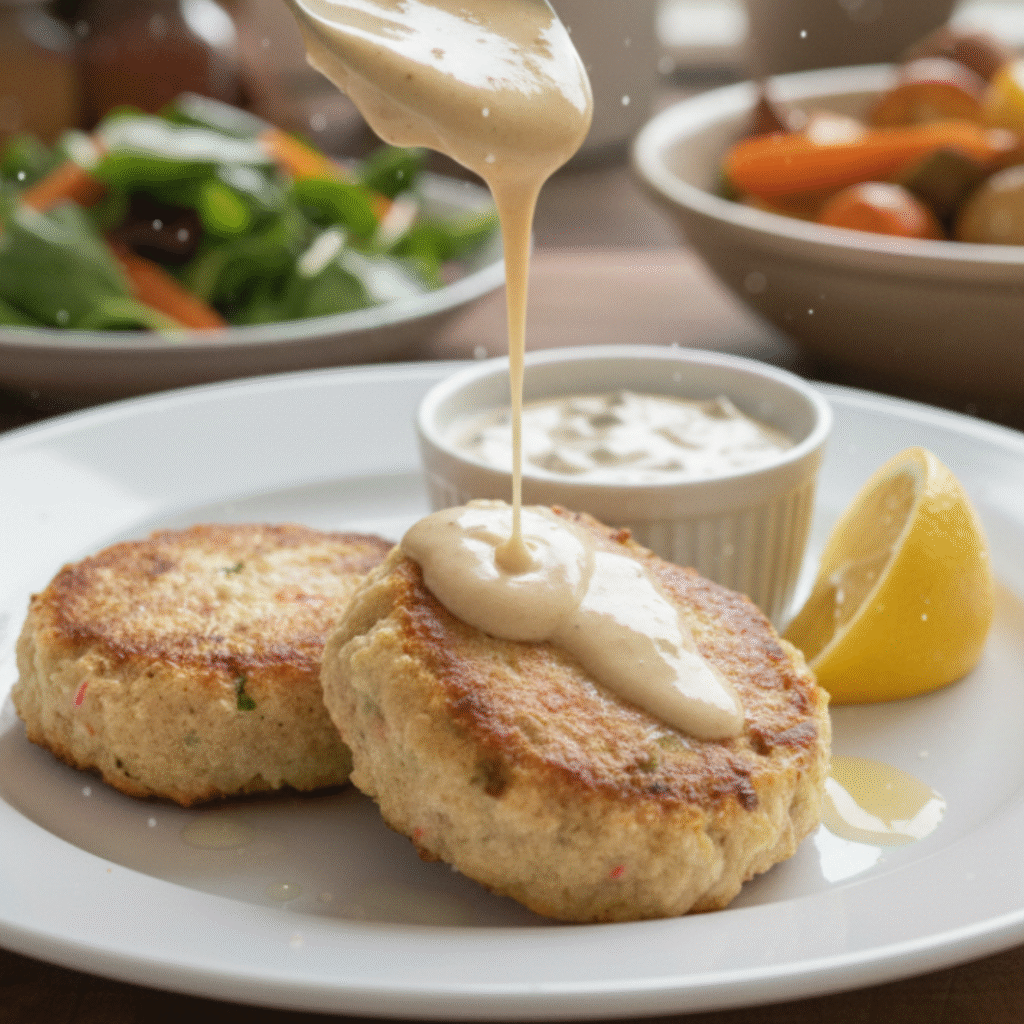
Make sure your pan is hot enough. If it’s not, the cakes will absorb oil and get greasy. You want that quick sear that makes them crispy outside and tender inside.
Try these Recipes also:
Pro Tips for Perfect Crab Cakes
Buy Smart: Get the best crab meat you can afford. Jumbo lump is the gold standard, but lump or backfin works too. Check the expiration date and smell it—fresh crab smells sweet, not fishy.
Keep It Cold: Cold ingredients stick together better. If your kitchen is hot, stick your mixing bowl in the fridge for a few minutes between steps.
Test First: Not sure if your mixture will hold? Make one small test cake and fry it up. If it falls apart, add more breadcrumbs. If it’s too dense, add a splash of mayo.
The Flip Trick: When you flip them, slide the spatula all the way under in one motion. If you try to flip with just the edge of the spatula, they’ll break.
Rest After Cooking: Let them sit for a minute after cooking. This lets the crust set up so it stays crispy.
Double Batch the Sauce: Remoulade keeps in the fridge for a week. Make extra and use it on fish, shrimp, or sandwiches.
Watch Your Heat: Medium heat is your friend. Too hot and the outside burns before the inside warms through. Too low and they absorb oil and get soggy.
Golden Crab Cakes with Creamy Remoulade Sauce Delight
Equipment
- Large mixing bowls (2-3)
- Medium bowl for remoulade
- Shallow dish for breadcrumbs
- Baking sheet
- Parchment paper
- Measuring cups and spoons
- Whisk or fork
- Rubber spatula
- 1/3 cup measuring cup or ice cream scoop
- Heavy-bottomed skillet or cast iron pan
- Wide fish spatula or turner
- Garlic press (optional)
- Paper towels
- Plastic wrap or bowl cover
- Chef's knife and cutting board
- Lemon juicer (optional)
Ingredients
Crab Cakes:
- 1 pound lump crab meat
- ½ cup fresh breadcrumbs
- ¼ cup mayonnaise
- 1 large egg beaten
- 1 tablespoon Dijon mustard
- Juice of 1/2 lemon
- 2 teaspoons Old Bay seasoning
- 1 teaspoon Worcestershire sauce
- 2 tablespoons fresh parsley chopped
- ¼ teaspoon black pepper
- Pinch of cayenne pepper
- 3 tablespoons butter
- 2 tablespoons vegetable oil
Remoulade Sauce:
- 1 cup mayonnaise
- 2 tablespoons grainy mustard
- 1 tablespoon Dijon mustard
- Juice of 1/2 lemon
- 1 tablespoon capers minced
- 2 teaspoons prepared horseradish
- 2 garlic cloves pressed
- 1 tablespoon fresh parsley minced
- 1-2 teaspoons hot sauce
- 1 teaspoon Worcestershire sauce
- 1 teaspoon paprika
- Salt and pepper to taste
INSTRUCTIONS
Make the Remoulade:
- 1. Combine all remoulade ingredients in a bowl and whisk until smooth.
- 2. Cover and refrigerate for at least 30 minutes.
Prepare the Crab Cakes:
- 1. Pick through crab meat carefully to remove any shell fragments.
- 2. Place crab on paper towels and press gently to remove excess moisture.
- 3. In a separate bowl, mix mayo, egg, mustard, lemon juice, and Worcestershire until smooth.
- 4. Add Old Bay, pepper, cayenne, and parsley to the wet mixture.
- 5. Pour wet mixture over crab meat, add breadcrumbs, and fold together gently.
- 6. Form into 6-7 patties about 3/4 inch thick and 3 inches wide.
- 7. Place on parchment-lined baking sheet and refrigerate for 30 minutes.
Cook:
- 1. Heat butter and oil in a heavy skillet over medium heat.
- 2. Add crab cakes without crowding the pan.
- 3. Cook 4-5 minutes per side until deep golden brown.
- 4. Transfer to paper towel-lined plate.
- 5. Serve immediately with remoulade sauce and lemon wedges.
Notes
- Fresh crab meat works best, but quality canned is fine
- Don’t overmix or you’ll break up the crab chunks
- Chilling is essential for cakes that hold together
- Medium heat prevents burning while cooking through
- Sauce can be made 2-3 days ahead
- Formed cakes can be frozen for up to 1 month
Recipe Variations to Try
Spicy Cajun Style: Swap Old Bay for Cajun seasoning and add diced bell peppers and green onions to the mixture. Use extra cayenne in both the cakes and remoulade.
Asian Fusion: Replace Old Bay with ginger and a splash of soy sauce. Add chopped cilantro and scallions. Serve with a spicy mayo made with sriracha instead of remoulade.
Lighter Version: Substitute Greek yogurt for half the mayo in both the cakes and sauce. They’ll be tangier and less rich but still tasty.
Mini Appetizers: Make them half the size for party appetizers. They cook faster—about three minutes per side.
Baked Option: Brush formed cakes with melted butter, place on a greased baking sheet, and bake at 400 degrees for 15-18 minutes, flipping halfway through.
Corn and Crab: Mix in half a cup of fresh corn kernels for sweetness and texture. This is really good in summer when corn is at its best.
Cheese Addition: Stir in a quarter cup of grated Parmesan or sharp cheddar for extra richness.
Avocado Topping: Skip the remoulade and top with mashed avocado mixed with lime juice and cilantro.
Frequently Asked Questions
Can I use imitation crab? You can, but I wouldn’t recommend it. Real crab has a sweetness and texture that imitation just can’t match. If budget is tight, use less real crab and bulk it up with more vegetables like diced peppers.
Why are my crab cakes falling apart? Usually it’s one of three things: not enough binder (add more breadcrumbs), too much moisture (drain the crab better), or flipping them too early (give them more time to form a crust).
Can I make these ahead? Absolutely. Form the cakes and keep them covered in the fridge for up to 24 hours before cooking. You can also freeze them. Put them on a baking sheet, freeze until solid, then transfer to a freezer bag. Cook from frozen, adding a couple extra minutes per side.
What if I don’t have Old Bay? Mix up celery salt, paprika, black pepper, and a tiny bit of cayenne. It won’t be exactly the same but it’ll work in a pinch.
Can I air fry these? Yeah, you can. Spray them with cooking oil and air fry at 375 degrees for about 10 minutes, flipping halfway. They won’t be quite as crispy as pan-fried but they’re still good.
My remoulade is too spicy, help! Add more mayo to mellow it out. A little sugar or honey can also balance the heat without making it taste sweet.
What’s the best way to reheat leftovers? Pan fry them again in a little butter, or put them in a 350-degree oven for about 10 minutes. Microwave makes them soggy.
Can I use different seafood? Sure. Shrimp works great—chop it coarse. You can also do half crab, half lobster if you’re feeling fancy. Even salmon makes decent cakes with this recipe.
Do I have to use fresh lemon juice? Fresh is way better. Bottled lemon juice tastes weird and chemical-like. Lemons are cheap and the real juice makes a big difference.
How do I know when they’re cooked through? They should reach 145 degrees inside if you want to use a thermometer. Otherwise, they should feel firm when you gently press the top, not squishy.
Wrapping Up
These crab cakes aren’t complicated. They just need attention and decent ingredients. Handle the crab gently, don’t overmix, let them chill, and cook them in a hot pan. That’s it.
The remoulade pulls everything together with its tangy, creamy, slightly spicy thing it’s got going on. Make a batch and keep it in the fridge—it’s good on all kinds of seafood, sandwiches, whatever.
Next time you’re craving crab cakes, skip the restaurant. Make them yourself. You’ll save money and end up with something better. And when someone takes a bite and stops talking for a second? That’s when you know you nailed it.
Leave a Comment