
How Long Is Spaghetti Good for in the Fridge? Learn safe storage times, sauce differences, spoilage signs, and freezing tips to avoid food poisoning.
You’ve cooked a big batch of spaghetti. Maybe you made too much, or you’re planning ahead for the week. Now you’re looking at those leftovers and wondering—how long can this actually sit in the fridge before it goes bad?
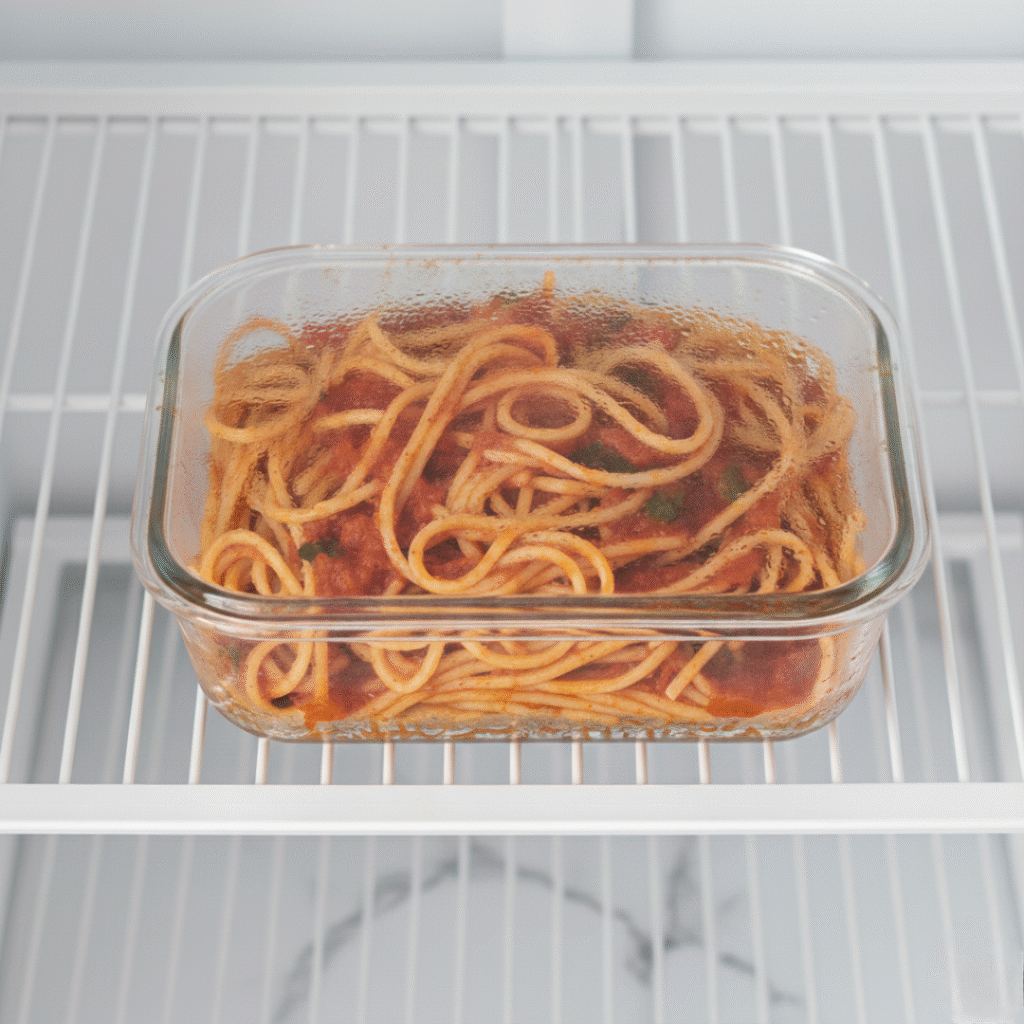
The answer depends on what’s in it, how you stored it, and what you’re willing to risk. Let’s walk through the whole thing so you know exactly what you’re dealing with.
The Basic Timeline
Cooked spaghetti without sauce lasts about 3 to 5 days in the fridge when you store it right. With sauce, you’re still looking at 3 to 5 days, though some sauces are riskier than others. After that window closes, bacteria start multiplying at rates that make it unsafe to eat.
That’s the baseline. But the actual length depends on what kind of sauce you’re dealing with, how fresh the ingredients were, and whether your fridge is actually cold enough.
Why Cold Food Still Goes Bad
Your fridge doesn’t kill bacteria. It just slows them down. Bacteria are everywhere—on your hands, on your utensils, in the food itself. When you cook something, heat kills most of the bad stuff. But once that food cools down, new bacteria start moving in again.
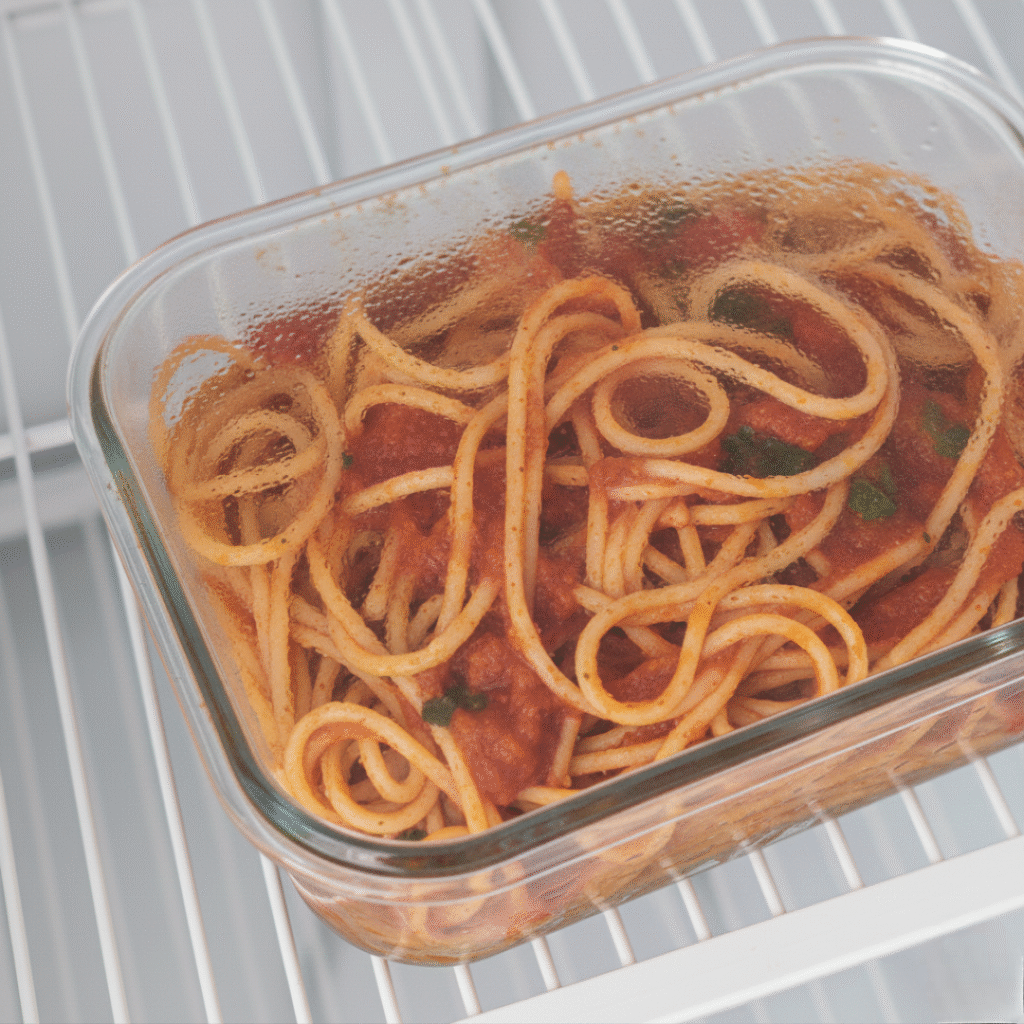
Warm temperatures let bacteria multiply like crazy. That’s why leaving food on the counter is dangerous—bacteria can double every 20 minutes or so in the “danger zone” between 40°F and 140°F. But even in the cold, at 40°F or lower, bacteria still grow. It just takes longer.
This is why your spaghetti doesn’t last weeks. The cold buys you time, maybe 3 to 5 days, but eventually you hit a point where the bacterial load gets too high.
Plain Cooked Spaghetti
If it’s just noodles—maybe with a little oil so they don’t stick together—you’ve got a decent window. Plain spaghetti noodles keep for 3 to 5 days in the fridge.
Put them in an airtight container or a sealed bag. Air exposure dries them out and lets bacteria in. If you use a bowl, cover it tightly with plastic wrap or foil. The seal matters.
Plain noodles are forgiving because there’s nothing in them that spoils quickly. The main risk is just general bacterial growth and drying out. After a few days though, they start to get hard or develop that off smell that tells you it’s time to throw them away.
Plain spaghetti actually freezes really well. You can freeze it for up to 2 months without much quality loss. Thaw it in the fridge before using, or throw the frozen noodles straight into hot water or sauce to reheat.
Spaghetti with Tomato Sauce
Tomato sauce is your friend here. The acidity in tomato-based marinara or meat sauce actually helps keep things fresher longer. You get about 3 to 5 days in the fridge.
But—and this is important—the noodles keep absorbing moisture from the sauce the whole time they’re sitting there. By day 4 or 5, your noodles might be turning into mush. The sauce gets darker and thicker too. The dish is still safe, but the quality drops fast.
Here’s the smart move: store the noodles and sauce in separate containers. When you’re ready to eat, reheat them separately and combine them. Your spaghetti tastes fresher this way, and the noodles don’t turn into a soggy mess.
Tomato sauce spaghetti freezes well. You can keep it for up to 3 months in the freezer. The texture might change a little—noodles can get softer—but it’s safe and tastes decent when you reheat it.
Spaghetti with Meat Sauce
Meat sauce is where you need to start being more careful. A bolognese, ground beef sauce, or any meat-based sauce keeps for 3 to 4 days in the fridge. Sometimes you might stretch it to 5 days if you stored it perfectly in clean containers right after cooking, but 3 to 4 is your safety zone.
Ground beef can carry bacteria like E. coli. Even after cooking, it’s vulnerable to new bacterial growth once it cools down. The cold slows the growth, but it doesn’t stop it. After 4 days, you’re really gambling with it.
Keep meat sauce spaghetti in airtight containers. Like with tomato sauce, separate the noodles and sauce if you can. This makes reheating easier and helps the noodles stay better.
Meat sauce spaghetti is great for freezing. It keeps for up to 3 months in the freezer. This is honestly smart if you’ve made a big batch—freeze it in portions and you’ve got meals ready whenever you need them.
Spaghetti with Seafood
Seafood-based spaghetti—clams, shrimp, fish—is where you have to be most careful. The shelf life is shorter. You’re looking at 2 to 3 days maximum in the fridge.
Seafood spoils faster than meat. The proteins break down more quickly, and certain bacteria that grow on seafood can make you genuinely sick. When something’s got seafood in it and it’s been sitting around longer than 3 days, don’t take chances. Throw it out.
You can freeze seafood spaghetti, but the quality suffers more. If you do freeze it, use it within 1 to 2 months and be prepared for the texture to be different. Honestly, fresh seafood dishes are better made fresh than stored and reheated.
Spaghetti with Cream Sauce
Alfredo, carbonara, or anything cream-based has a shorter life than tomato sauce. You’re working with 2 to 3 days maximum in the fridge.
Cream-based sauces break down faster. The cream can separate, the whole thing can look grainy or oily when you try to reheat it. The flavor and texture change more noticeably than with other sauces.
Store noodles and sauce separately if possible. When you reheat, the sauce might need a splash of cream or pasta water to come back together.
Freezing cream sauce spaghetti is risky. The sauce often breaks and gets grainy when thawed. If you do freeze it, keep it for 1 to 2 months max, and expect it to need work when you reheat it. You might be better off just not freezing cream-based dishes.
How to Know When Spaghetti’s Gone Bad
Don’t just rely on the days passing. Use your senses. These are the signs that spaghetti needs to go:
The smell test: This catches problems first usually. If it smells sour, off, funky, or just wrong—don’t eat it. Your nose is good at picking up when bacteria have taken over.
Mold: Any visible mold and the whole container is trash. Don’t try to pick it off and eat the rest. Mold spreads throughout.
Slimy texture: If the noodles feel slimy or have a slick coating, bacteria are thriving. Don’t eat it.
Strange color: If the sauce looks noticeably different from when you stored it, or the noodles look weird, that’s a warning sign.
Weird taste: If you try a tiny bit and it tastes off—sour, bitter, or just plain strange—spit it out. Don’t eat more.
Bloated container or bubbles: If your container is puffed up or you see bubbles when you open it, gas-producing bacteria have been growing. That’s dangerous. Throw it away.
Storing Spaghetti Right
How you store it makes all the difference in how long it lasts.
Cool it first: Don’t shove hot spaghetti straight into the fridge. Let it cool to room temperature first. Takes about 30 to 60 minutes. Hot food raises the temperature inside your fridge, which is bad for everything else in there.
Use airtight containers: Get the spaghetti into sealed containers or bags. Air exposure dries things out and lets bacteria in. Plastic containers with tight lids work great. Resealable bags work too. Even a bowl covered tightly with plastic wrap is fine.
Separate the noodles and sauce: When you can, keep them apart. The noodles don’t get waterlogged and mushy, and reheating is easier. Store them in different containers.
Label it: Write the date on your container with a marker. A week later you won’t remember when you stored it. You need to know.
Keep your fridge cold enough: Your fridge should be at 40°F or lower. If it’s warmer, everything spoils faster. Get a cheap fridge thermometer to check.
Don’t cram it in: Leave space for air to move around inside your fridge. Overstuffing blocks cold air from circulating and keeps things warmer than they should be.
Reheating Spaghetti
Once you pull leftovers out of the fridge, you need to reheat them properly.
Stovetop: Put it in a pot with a little water or sauce so it doesn’t stick. Medium heat, stir now and then, until it’s steaming all the way through. This works best and gives you the most control.
Microwave: Container in the microwave, cover loosely, heat for 1-minute bursts. Stir between rounds. Keep going until it’s hot throughout, not just on the outside.
Oven: Spread it in an oven dish, cover with foil, heat at 350°F until hot. Takes longer but doesn’t mess up the texture as much.
Make sure whatever method you use gets the spaghetti steaming hot all the way through. That heat kills bacteria that might have grown. If it’s been sitting in the fridge for several days, be especially careful to get it really hot.
Freezing for Later
If you want to keep spaghetti longer than 5 days, freezing is the way.
Get it ready: Cool it to room temperature. Portion it into meal-sized chunks if you want. Separate noodles and sauce when possible.
Use freezer containers: Get it into airtight freezer containers, freezer bags, or wrap it tightly in plastic wrap and foil. You want to stop freezer burn.
Write the date on it: Mark when you froze it. You want to use it before it gets too old.
How long it lasts: Plain noodles—up to 2 months. Tomato sauce spaghetti—up to 3 months. Meat sauce—up to 3 months. Seafood or cream sauce—use within 1 to 2 months for best results.
Thaw it right: Put it in the fridge to thaw overnight. Don’t leave it out at room temperature. If you’re in a rush, you can reheat straight from frozen, but thawing first gives better results.
Questions About Storage
Can I eat spaghetti that’s been in the fridge for a week?
Technically maybe, but it’s risky. The safe window is 3 to 5 days. After that, bacterial growth is high. If it’s been a week, better to throw it out.
What if it smells fine but it’s been 6 days?
Smell doesn’t always catch everything. Some bacteria don’t make obvious odors. After 5 days, even if it smells okay, the risk is too high. Toss it.
Can I leave cooked spaghetti on the counter?
No. The danger zone is 40°F to 140°F, and bacteria go crazy in that range. Spaghetti should be on the counter for maximum 2 hours. After that, into the fridge or freezer it goes.
Can I reheat spaghetti multiple times?
Technically yes, but each time you reheat and cool it, you introduce more risk. Better to reheat only what you’re about to eat. Portion it first, then reheat just that portion.
Why does spaghetti get mushy?
The noodles keep absorbing moisture. The starch breaks down more. This is why separating them from the sauce helps—you keep the texture better and can store it longer.
Can I freeze spaghetti with sauce on it?
Yeah, but it’s not ideal. The noodles get mushier. Better to freeze them separately and combine after reheating.
The Bottom Line
Spaghetti is convenient and tastes good as leftovers. Just handle it smart. Cool it before refrigerating. Use sealed containers. Keep your fridge cold. Use it within 3 to 5 days.
When you’re not going to eat it within that window, freeze it. You get months of storage that way, and you’ve still got good meals ready when you need them.
Trust your senses. If something looks, smells, or tastes wrong, don’t eat it. A plate of spaghetti isn’t worth food poisoning. Throw it out and move on.
Follow these guidelines and you’ll always know exactly where you stand with your leftovers.
Leave a Comment