
Lasagna’s one of those dishes that sounds way more complicated than it actually is. Sure, there are layers and cheese and sauce everywhere, but honestly? It’s just organized chaos that bakes itself into something delicious. The tricky part isn’t making it—it’s figuring out how long to actually leave it in the oven.
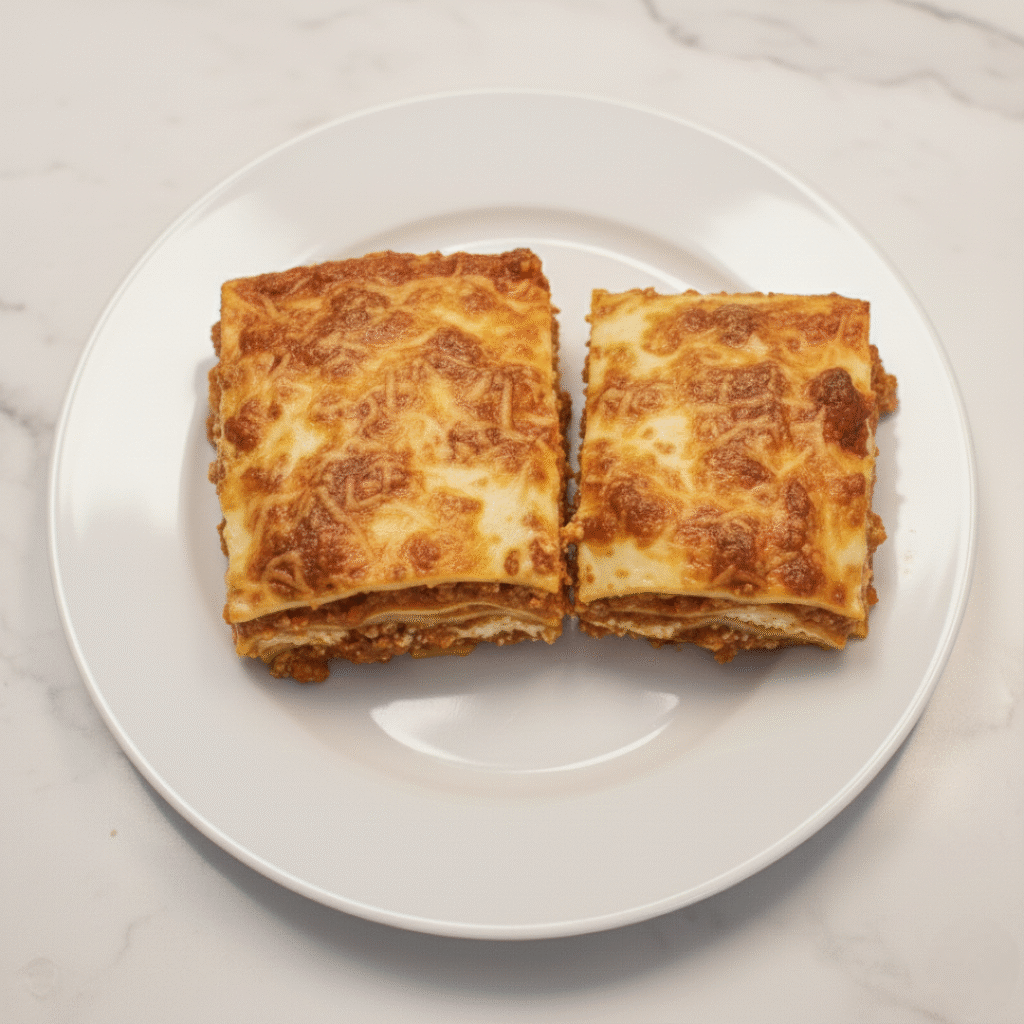
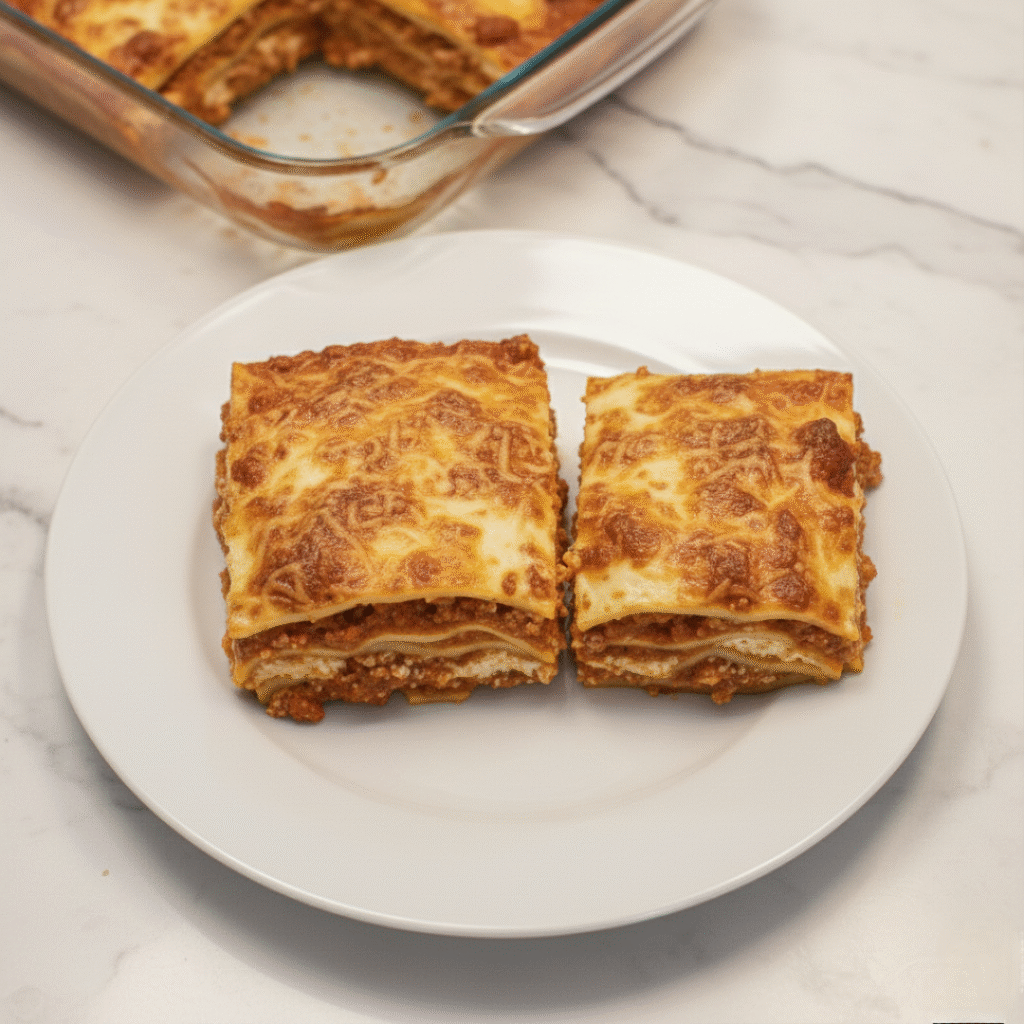
Too short and you’ve got crunchy noodles with cold spots in the middle. Too long and you’re scraping dried-out edges off the pan. But get the timing right at 350°F? You’ll pull out a bubbling, golden masterpiece that’s cooked perfectly all the way through.
Why 350°F Is the Sweet Spot
Most lasagna recipes hover between 350°F and 375°F, and there’s good reason for that middle ground. Go too hot and the top burns before the center heats through. Too low and you’re waiting forever while your kitchen smells amazing but you can’t eat yet.
At 350°F, everything happens at the right pace. The cheese melts and browns without scorching. The sauce bubbles gently instead of splattering everywhere. The noodles absorb moisture and soften completely. And all those flavors meld together into something greater than the sum of its parts.
Professional kitchens often use 350°F because it’s reliable. It works whether you’re using a metal pan or a glass dish, whether your lasagna’s got three layers or six, whether it’s straight from the fridge or assembled and ready to go.
The Basic Timeline
Here’s the deal: a standard 9×13 inch lasagna with regular noodles bakes for 45 to 60 minutes covered, then 10 to 15 minutes uncovered at 350°F. That’s your baseline. But—and this is important—that timing changes based on a bunch of factors.
If your lasagna’s coming straight from the fridge, add time. If you’re using no-boil noodles, it matters whether you’ve got enough liquid. If your pan’s deeper than usual with extra layers, plan on the longer end. If you pre-cooked everything and it’s already hot, you’re just looking to melt cheese and brown the top.
Think of that 45-60 minute range as a guideline, not gospel. Your actual lasagna might need 40 minutes or 70 minutes depending on what you’ve built.
What Actually Affects Baking Time
Cold vs Room Temperature
Pulling lasagna straight from the fridge means the center’s cold—maybe 40°F. That takes serious time to heat all the way to 165°F in the middle. We’re talking 60-75 minutes total, sometimes more for really thick pans.
If your lasagna sits on the counter for 30 minutes while your oven preheats, you’ve already shaved off 10-15 minutes of baking time. The center starts warmer, so it reaches serving temperature faster.
Fresh vs Frozen
Frozen lasagna is a whole different beast. You’re looking at 90 minutes to 2 hours at 350°F, and you absolutely need to keep it covered the entire time or the top will turn into leather while the middle’s still frozen. Some people thaw it in the fridge overnight first—cuts the time back down to that regular 60-minute range.
Noodle Situation
Regular lasagna noodles that you’ve boiled first? They’re already soft and hydrated. They just need to heat through. No-boil noodles need to absorb liquid while baking, which means you need extra sauce and sometimes a few more minutes in the oven.
Oven-ready noodles work great, but if your sauce is thick or you didn’t use enough of it, those noodles stay crunchy in spots. Make sure everything’s well-sauced, and you’re golden.
Pan Depth and Size
A shallow lasagna in a wide pan bakes faster than a deep one crammed into a smaller dish. Three layers in a 9×13? You’re probably at 45 minutes. Five or six layers stacked high? Could easily need 70 minutes.
Glass pans take a bit longer to heat up than metal ones, but they hold heat better. If you’re using glass, you might add five or ten minutes, or bump the temp to 375°F for the first 30 minutes.
What’s Inside
All-meat lasagna with ricotta and mozzarella bakes differently than veggie lasagna loaded with watery vegetables like zucchini or spinach. More moisture means longer baking to evaporate excess liquid. Drier fillings heat through faster.
Pre-cooked meat and vegetables speed things up since you’re not relying on the oven to cook them through. Raw sausage or ground beef layered in needs time to fully cook, which adds to your total bake time.
Step-by-Step Baking Process
Getting Everything Ready
Preheat that oven to 350°F—and actually wait for it to hit temperature. Most ovens beep way before they’re fully heated. Give it an extra five minutes after the beep.
If your lasagna’s been chilling in the fridge, pull it out while the oven heats. Thirty minutes on the counter takes the edge off the cold. Don’t leave it out longer than an hour though—food safety and all that.
Grab some aluminum foil and spray one side with cooking spray or brush it with a little oil. This keeps the cheese from sticking when you cover the pan. Nothing worse than peeling half your beautiful cheese layer off onto the foil.
First Bake: Covered
Cover your lasagna pan tightly with that foil, sprayed side down. You want it sealed well but not touching the cheese if you can help it. Tent it slightly in the middle if needed.
Slide it into your oven and set a timer for 45 minutes. This covered period is where the magic happens—heat penetrates all the layers, noodles finish softening, cheese melts, everything comes together.
Don’t peek. Don’t lift the foil. Every time you do, you let out steam and heat, which means longer cooking time. Trust the process.
Checking Doneness
After 45 minutes, pull the pan out carefully and remove the foil—watch out for the steam, it’s hot. Stick an instant-read thermometer into the center. You want 165°F minimum. If you don’t have a thermometer, slide a butter knife into the middle and leave it for three seconds, then touch it to your wrist. Should be almost too hot to touch comfortably.
If it’s not there yet, cover it back up and give it another 10 minutes. Check again. Repeat until the center’s hot.
Final Bake: Uncovered
Once your lasagna’s hot all the way through, pull off that foil and crank the oven to 375°F or even 400°F for the last part. This is purely cosmetic—you’re browning and crisping the top, maybe getting those cheese edges golden and slightly crunchy.
Watch it closely during these 10-15 minutes. Cheese can go from perfectly browned to burnt surprisingly fast. You want golden spots and bubbling sauce around the edges, not blackened cheese.
Some folks flip on the broiler for the last two or three minutes to really crisp things up. If you do this, do NOT walk away. Broilers are aggressive and will ruin your lasagna in 30 seconds of inattention.
The Resting Period
This is the hardest part. Your lasagna comes out of the oven looking gorgeous and smelling incredible, and you want to dive right in. Don’t.
Let it rest for 15-20 minutes before cutting. I know, it’s torture. But here’s why it matters: all those layers need time to settle. The sauce needs to thicken slightly as it cools. The cheese needs to set just enough to hold together when you slice.
If you cut immediately, you get lasagna soup. Everything slides everywhere, your slices fall apart, sauce runs all over the plate. Give it 20 minutes and you get clean, defined slices that actually look like lasagna.
Cover it loosely with foil during this rest time to keep it warm. It’ll still be piping hot when you serve it.
How to Tell It’s Actually Done
The Visual Check
Look at the edges. You should see sauce bubbling up around the sides. The cheese on top should be melted completely with golden-brown spots. The whole thing should look set, not jiggly.
The Thermometer Test
Most reliable method. Stick your instant-read thermometer right in the center—that’s the last place to heat up. You want 165°F at minimum. Some people prefer 170°F or 175°F to make absolutely sure.
The Knife Test
No thermometer? Slide a butter knife straight down through all the layers in the center. Pull it out and carefully touch it. Should be almost too hot to comfortably touch. If it’s just warm, keep baking.
The Jiggle Test
Gently shake the pan. The lasagna should move as one unit, not slosh around. If you see liquid sloshing or the center jiggles independently, it needs more time.
Recipe for Perfect Baked Lasagna
What You’ll Need
For the Meat Sauce:
- 1 pound ground beef or Italian sausage
- 1 onion, diced
- 4 cloves garlic, minced
- 28 oz can crushed tomatoes
- 6 oz can tomato paste
- 2 teaspoons dried basil
- 2 teaspoons dried oregano
- 1 teaspoon sugar
- Salt and pepper
- Half cup water
For the Cheese Layer:
- 15 oz ricotta cheese
- 1 egg
- Half cup grated Parmesan
- 2 tablespoons fresh parsley (or 2 teaspoons dried)
- Half teaspoon salt
For Assembly:
- 12-15 lasagna noodles (regular or no-boil)
- 4 cups shredded mozzarella cheese
- Extra Parmesan for topping
Making the Sauce
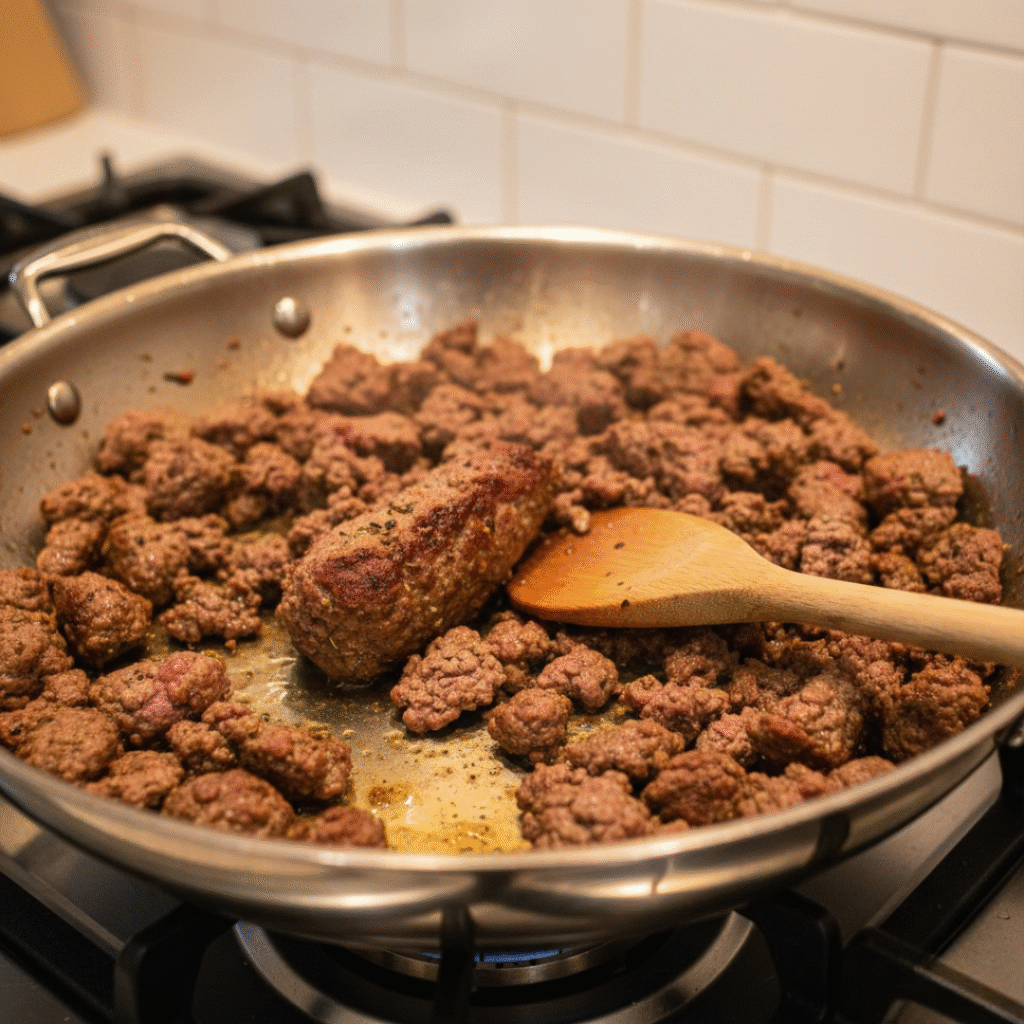
Brown your meat in a large skillet over medium-high heat, breaking it up as it cooks. Takes about 8-10 minutes. Don’t drain all the fat—leave a tablespoon or so for flavor.
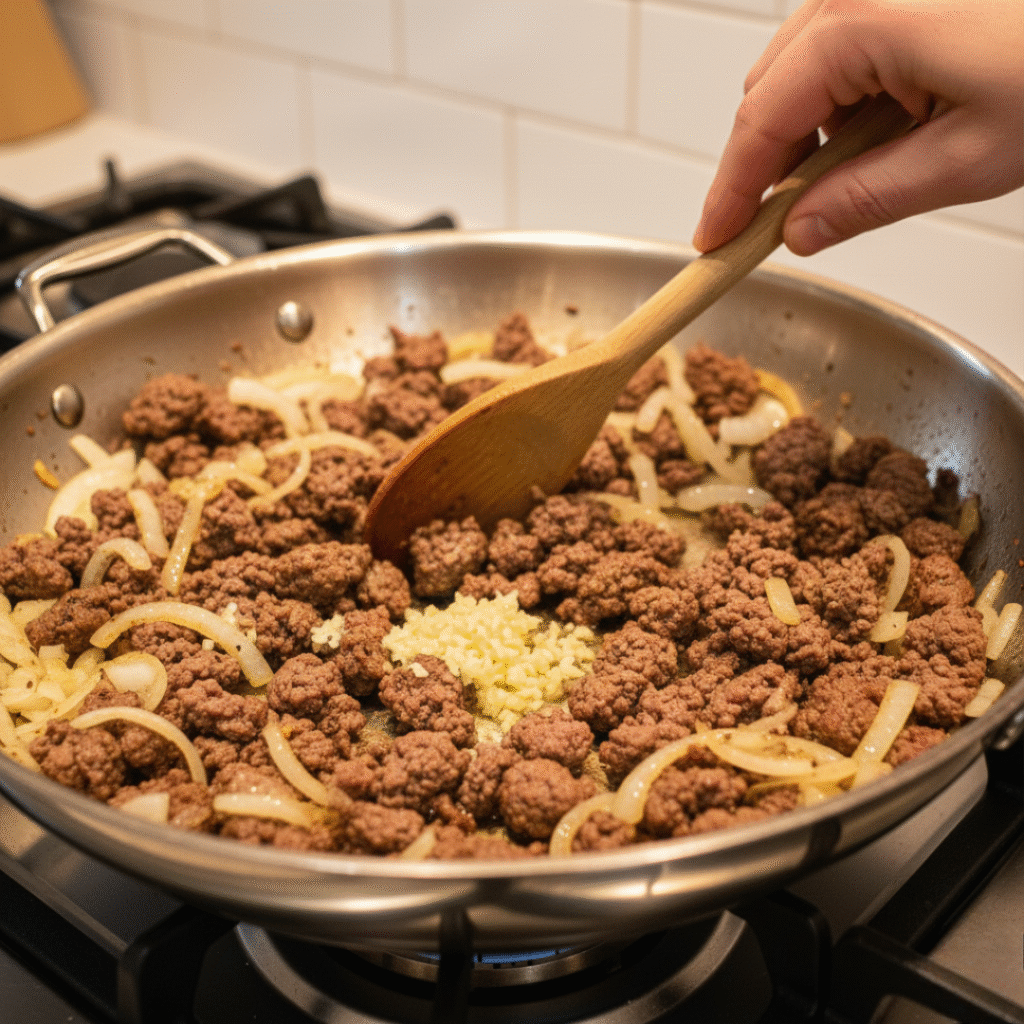
Toss in your onion and cook until soft, maybe five minutes. Add garlic and cook for one minute—just until it smells amazing. Any longer and it burns.
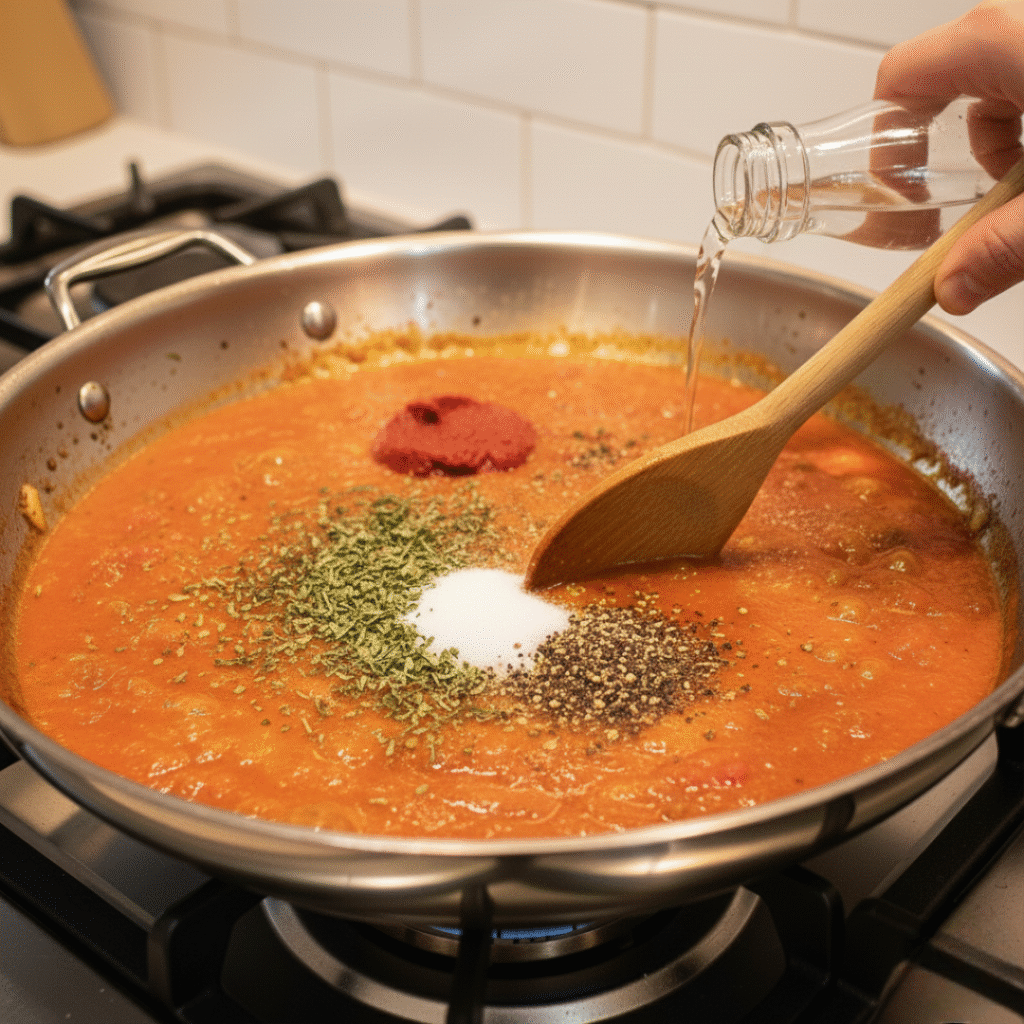
Dump in crushed tomatoes, tomato paste, basil, oregano, sugar, salt, and pepper. Stir in your water or wine to thin it slightly. Bring everything to a simmer, then turn heat to low. Let it bubble gently for 20-30 minutes while you prep everything else. Taste and adjust seasoning.
Prepping the Cheese Mixture
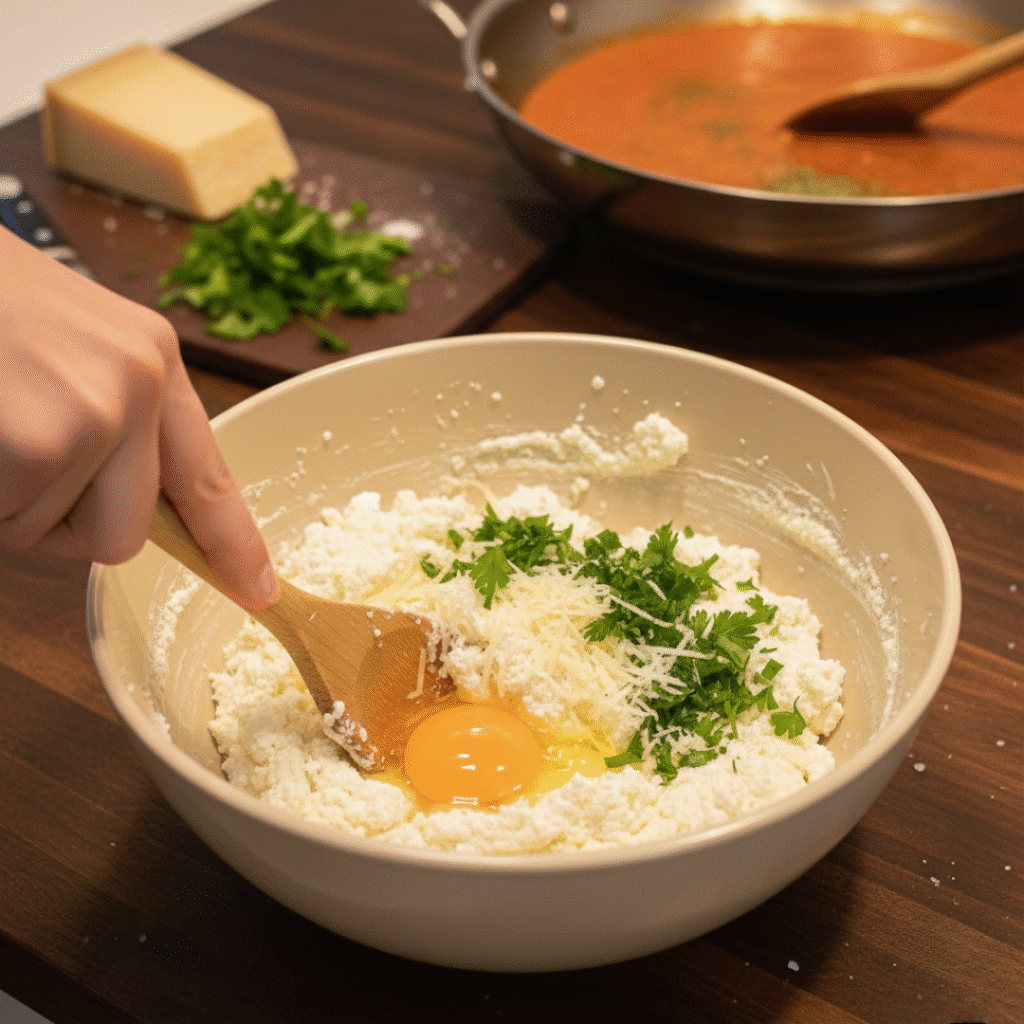
Mix ricotta, egg, Parmesan, parsley, and salt in a bowl. That’s it. The egg helps the ricotta firm up during baking so your layers don’t slide around.
Cooking the Noodles (If Needed)
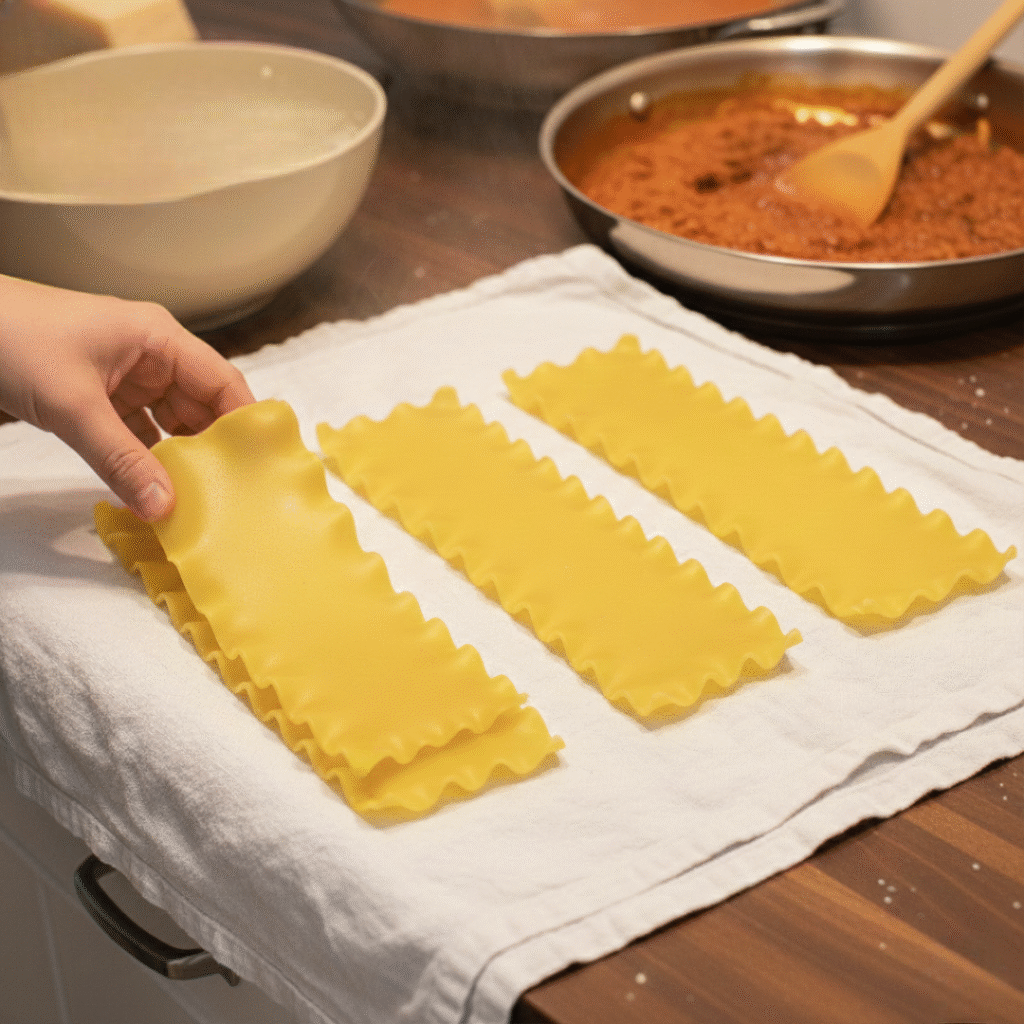
If you’re using regular lasagna noodles, boil them according to package directions. Usually 8-10 minutes. Drain and lay them flat on a clean towel or parchment paper so they don’t stick together.
No-boil noodles skip this entirely. Just use them straight from the box. Make sure you’ve got enough sauce though—they’ll absorb a lot of liquid.
Building Your Lasagna
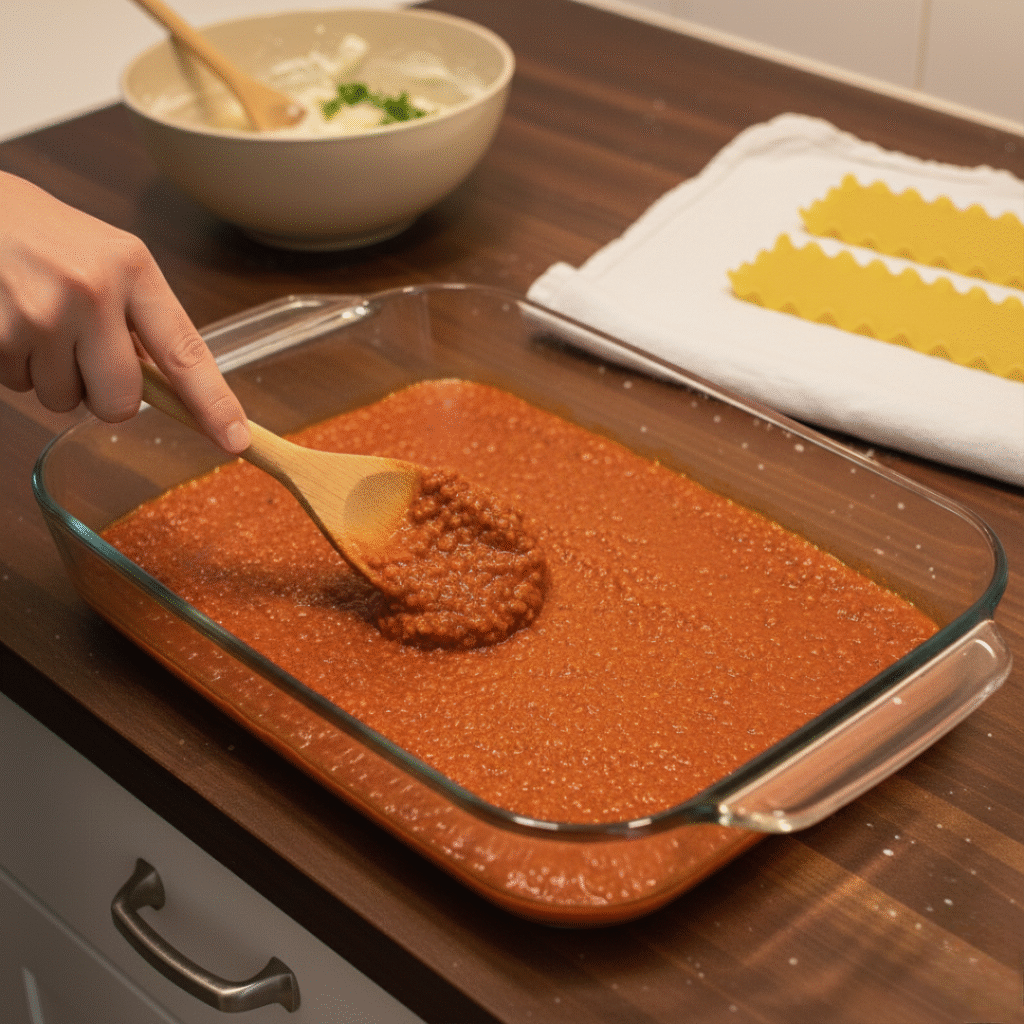
Spread about one cup of meat sauce across the bottom of a 9×13 inch pan. This prevents sticking and gives the bottom noodles something to absorb.
Layer four or five noodles over the sauce, overlapping slightly to cover the bottom. Spread half your ricotta mixture over the noodles. Doesn’t need to be perfect—just get it reasonably even.
Sprinkle about one cup of mozzarella over the ricotta. Ladle on a third of your remaining meat sauce.
Repeat: noodles, rest of ricotta, another cup of mozzarella, more meat sauce.
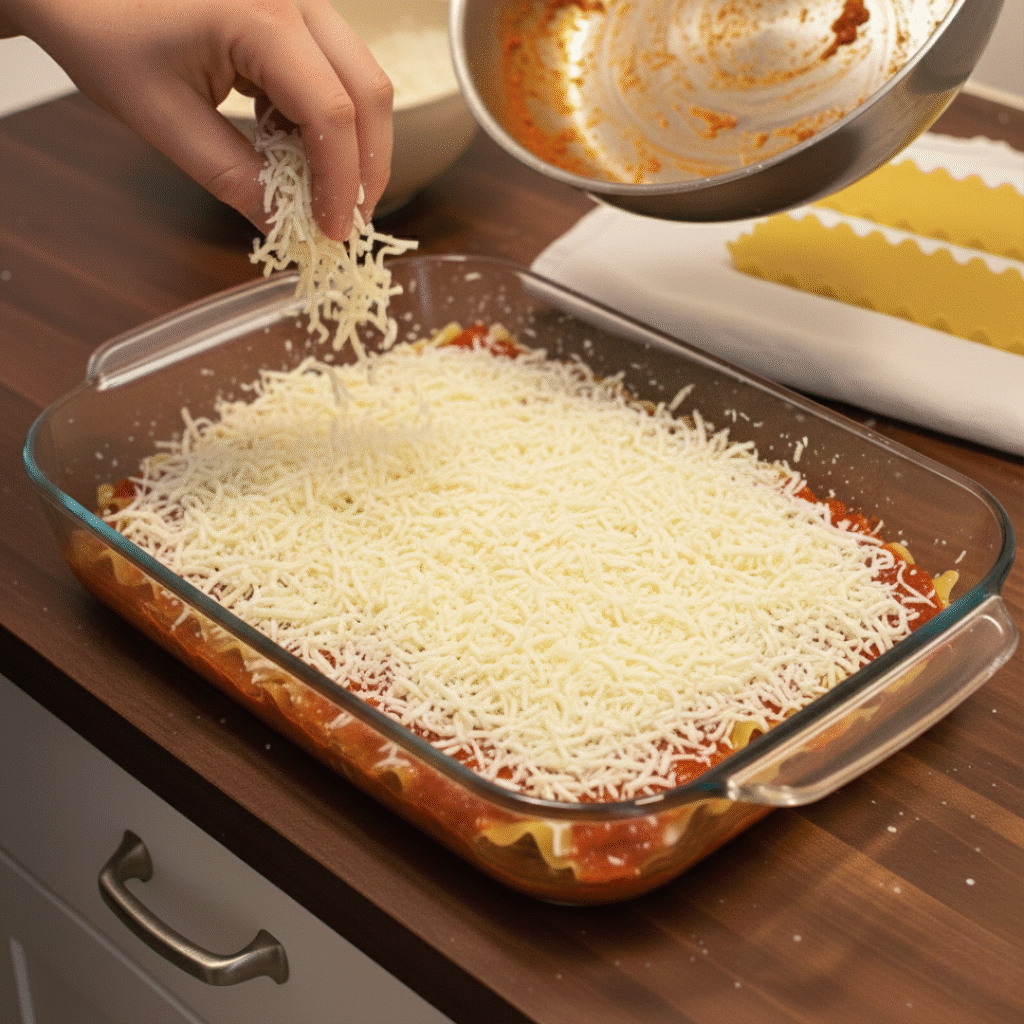
Final layer: noodles, remaining meat sauce, remaining mozzarella. Really pack that top layer with cheese—it’s what everyone sees and gets excited about.
Sprinkle some Parmesan over the top for extra flavor and browning.
Baking It Right
Cover tightly with oiled foil. Bake at 350°F for 45 minutes.
Check temperature. If it’s not 165°F in the center, cover again and bake another 10-15 minutes. Check again until it hits temp.
Remove foil. Bake uncovered 10-15 more minutes until the top browns and gets bubbly.
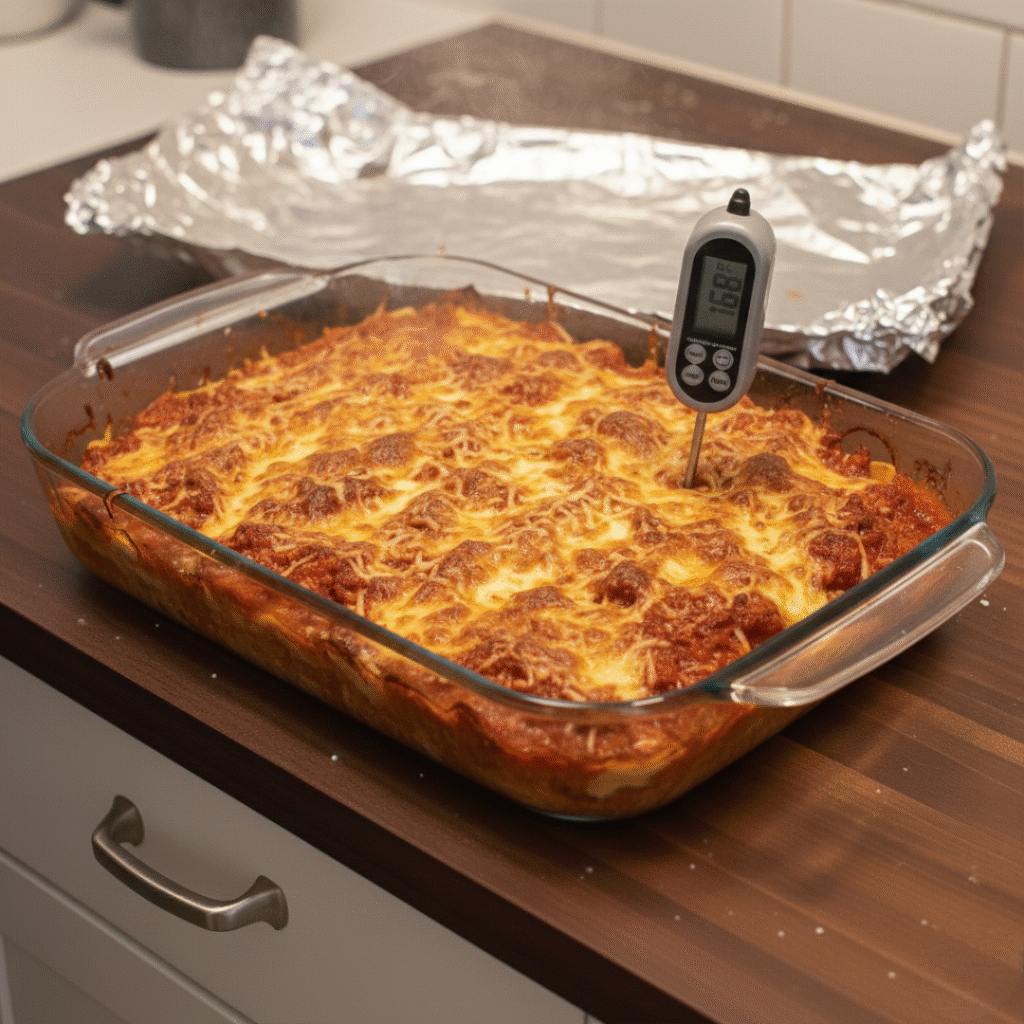
Pull it out and let it rest 15-20 minutes before slicing.
Common Mistakes and How to Avoid Them
Skipping the foil for most of the baking: Your top layer burns while the middle stays cold. Always start covered.
Cutting too soon: Lasagna soup. Just wait. Set a timer if you have to.
Not enough sauce: Especially with no-boil noodles. They need moisture to soften. When in doubt, make extra sauce.
Overfilling the pan: Sauce bubbles over and burns on your oven floor. Leave an inch of space at the top.
Uneven layers: Thick spots take forever to heat through while thin spots dry out. Try to keep everything consistent.
Make-Ahead and Storage Tips
Assembling Ahead:
Build your lasagna completely, cover it tightly with plastic wrap and then foil, and refrigerate for up to two days. Pull it out 30 minutes before baking. Add 10-15 minutes to baking time since it’s cold.
Freezing Unbaked:
Assemble in a disposable aluminum pan, wrap incredibly well—plastic wrap, then foil, then more foil. Freeze up to three months. Bake from frozen at 350°F for 90 minutes covered, then check temp and continue as needed. Or thaw in fridge overnight and bake normally.
Storing Leftovers:
Cover cooled lasagna and refrigerate up to five days. Reheat individual slices in the microwave or bake the whole thing covered at 350°F for 30-40 minutes.
Freezing Cooked Lasagna:
Cut into portions, wrap individually, freeze for three months. Microwave from frozen or thaw overnight and reheat in the oven.
Adjusting for Different Pans and Sizes
8×8 Pan (Half Batch):
Bake for 35-40 minutes covered, 10 minutes uncovered. Great for smaller households.
Deep Dish or Extra Layers:
Start checking at 60 minutes, but could need up to 90 minutes. The center takes forever to heat in really thick lasagnas.
Individual Ramekins:
About 25-30 minutes total at 350°F. Perfect for portion control or fancy dinner parties.
Disposable Aluminum Pans:
Same timing, but put them on a baking sheet for stability. Thin aluminum can buckle when full of hot lasagna.
FAQS
Can I bake it at 400°F instead? Yeah, but reduce time to 35-40 minutes covered. Watch the top closely during the uncovered phase—higher heat means faster browning and potential burning.
What if I don’t have foil? Use a lid if your pan has one, or another baking sheet placed on top. You just need to trap steam and protect the top from direct heat.
My lasagna’s watery. What happened? Probably your vegetables released too much moisture, or you used too much sauce. Next time, salt and drain vegetables first, or use slightly less sauce.
Can I use cottage cheese instead of ricotta? Totally. Drain it well first—cottage cheese is wetter than ricotta. Mix it with an egg just like you would ricotta.
How do I get clean slices? Sharp knife, wipe it clean between cuts, and make sure you’ve rested it long enough. A thin metal spatula helps lift slices out cleanly.
Should I grease the pan? Not necessary if you’re putting sauce on the bottom. The sauce prevents sticking. But a quick spray doesn’t hurt if you’re paranoid.
Other Pasta Bakes Worth Making
Once you’ve got lasagna down, try Baked Ziti, Pastitsio (Greek lasagna basically), Vegetable Lasagna, White Lasagna with Bechamel, or Lasagna Roll-Ups. Same principles apply—layering, proper baking time, letting it rest before serving.
The Real Secret
Honestly? The secret to perfect lasagna isn’t some fancy technique or expensive ingredient. It’s just patience. Patience to let it bake long enough. Patience to check the temperature instead of guessing. Patience to let it rest before you cut into it.
Rush any of those steps and you get disappointing lasagna. Take your time and you get something worth the effort—layers that hold together, cheese that’s melted but not dried out, noodles that are tender all the way through, flavors that have had time to become something cohesive instead of just separate ingredients stacked in a pan.
At 350°F for about an hour total, you’re giving everything time to do its thing properly. That’s the temperature that works consistently for most home cooks with most ovens and most lasagna recipes.
Make it on a Sunday. Fill your house with that amazing smell. Let it rest while you set the table and pour drinks. Then serve it up knowing you nailed it—perfectly cooked, properly rested, ready to eat. That’s the kind of dinner people remember.
Leave a Comment