
How Many Slices in a Large Pizza? You’ve ordered pizza for the crew. Game night, family dinner, random Tuesday—doesn’t matter. What matters is figuring out if one large is enough or if you need two. Or three. And that starts with knowing how many slices you’re actually dealing with.
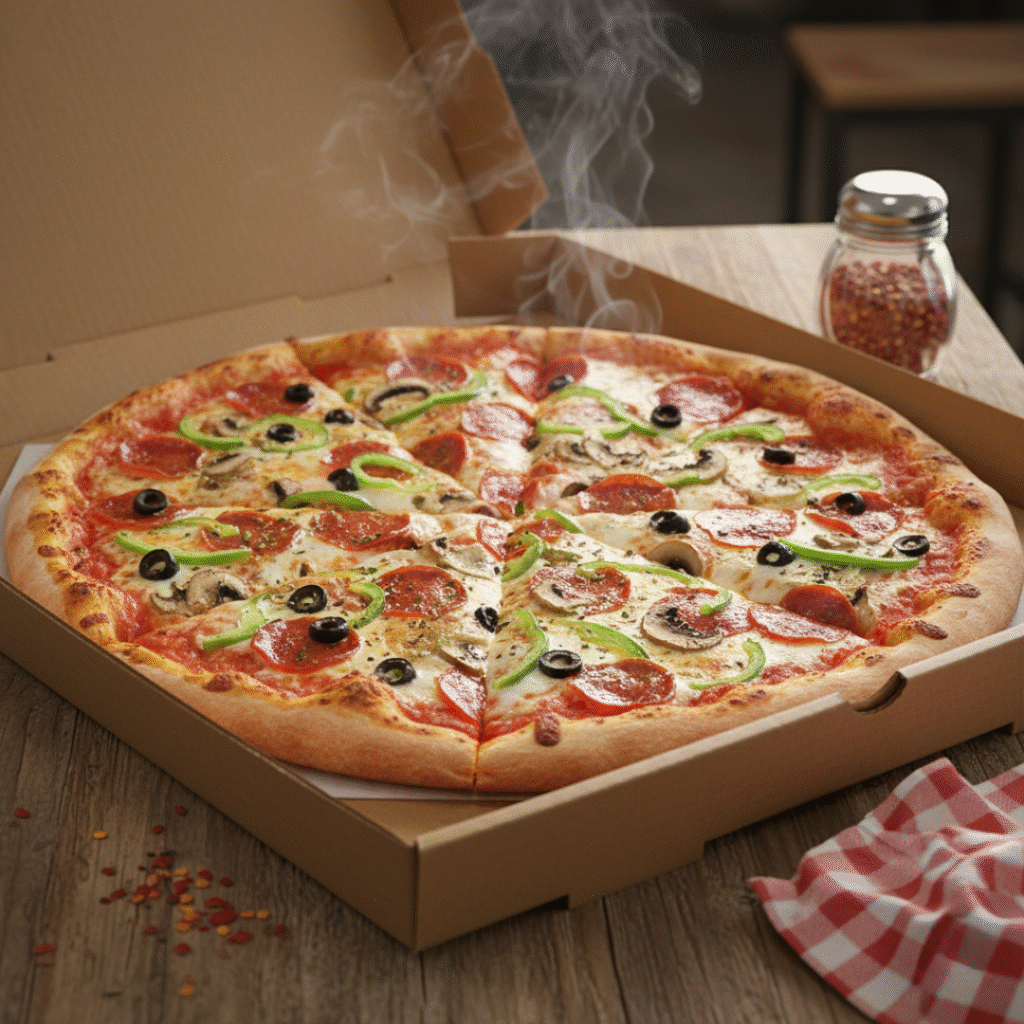
Here’s the short answer: a large pizza typically has 8 slices. But like everything else in life, it’s not quite that simple. Different pizza places cut their pies differently. Some do 10 slices. Others stick with 6 giant ones. And the size of what they’re calling “large” isn’t even standardized across the industry.
Let’s break down everything you need to know about pizza slices, sizes, and how to actually figure out how much pizza to order.
What Actually Counts as a Large Pizza
Most pizza chains consider a large pizza to be somewhere between 14 and 16 inches in diameter. That’s measured straight across the middle, not around the edges. But here’s where things get messy—different places have different standards.
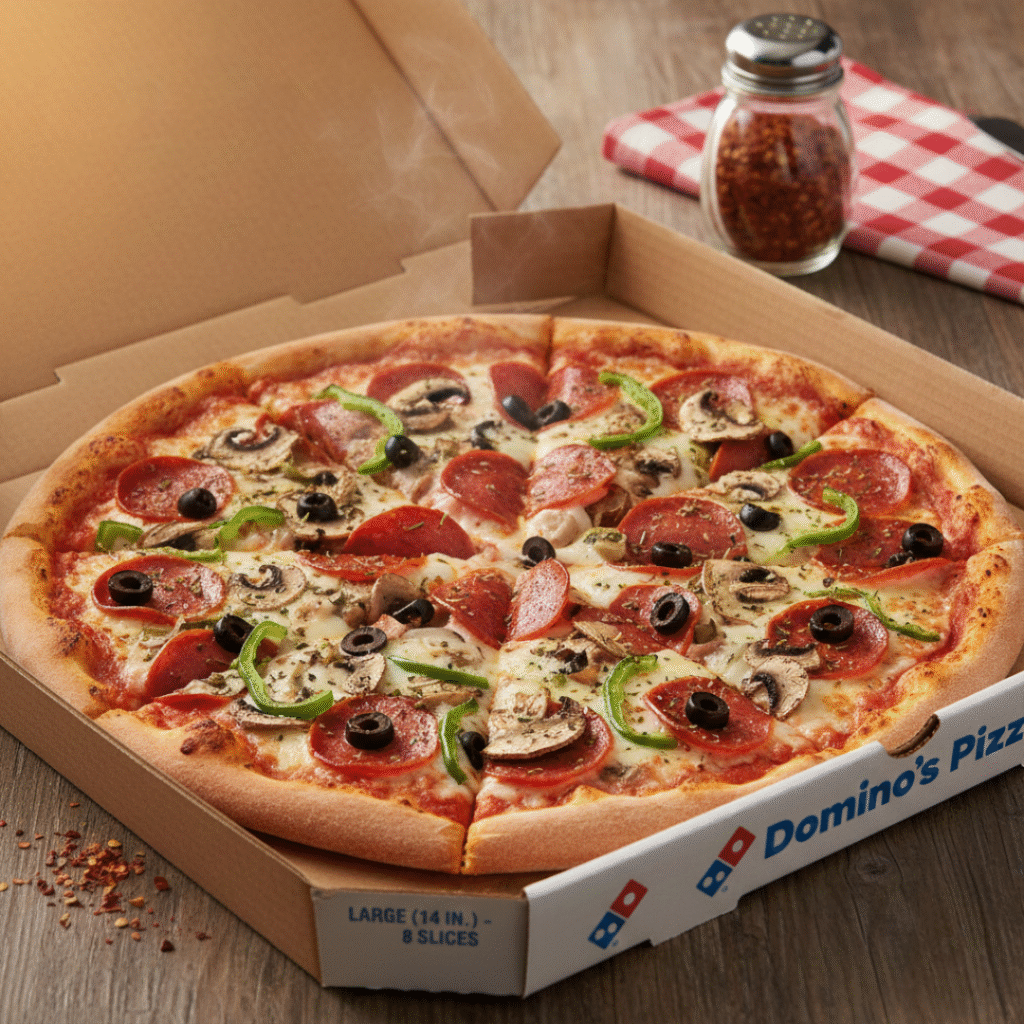
Domino’s: Their large is 14 inches and comes cut into 8 slices.
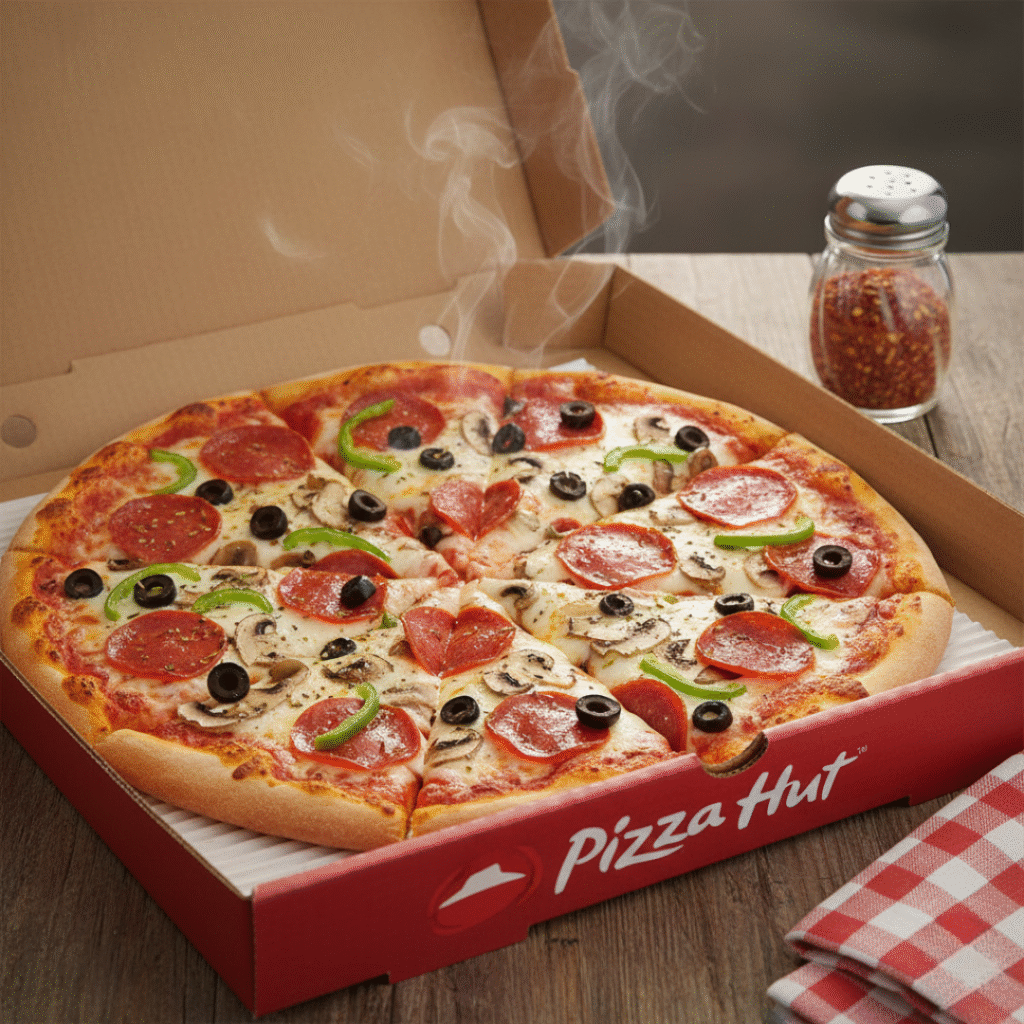
Pizza Hut: Also 14 inches, also 8 slices usually, though they’ll do 12 if you ask.
Papa John’s: 14 inches, 8 slices standard.
Local pizzerias: All over the map. Some cut 16-inch pies as their “large.” Others do 14 inches but slice it into 6 or 10 pieces depending on their style.
New York style places: Often 18 inches for a large, sliced into 8 enormous triangular pieces that you have to fold.
So when someone asks “how many slices in a large pizza,” the real answer is “which pizza place are we talking about?” But for planning purposes, assuming 8 slices gets you in the ballpark.
Why Pizza Places Cut the Way They Do
The standard 8-slice cut comes from practical geometry. Cut a circle in half, then in half again, then each quarter in half one more time—boom, eight equal triangular slices. It’s the easiest, most consistent way to divide a round pizza.
Some places do 10 slices to make each piece smaller, which works great for kids or people who want to sample multiple pizza types without getting stuffed. You’re eating less per slice but still getting that “I had three slices” satisfaction.
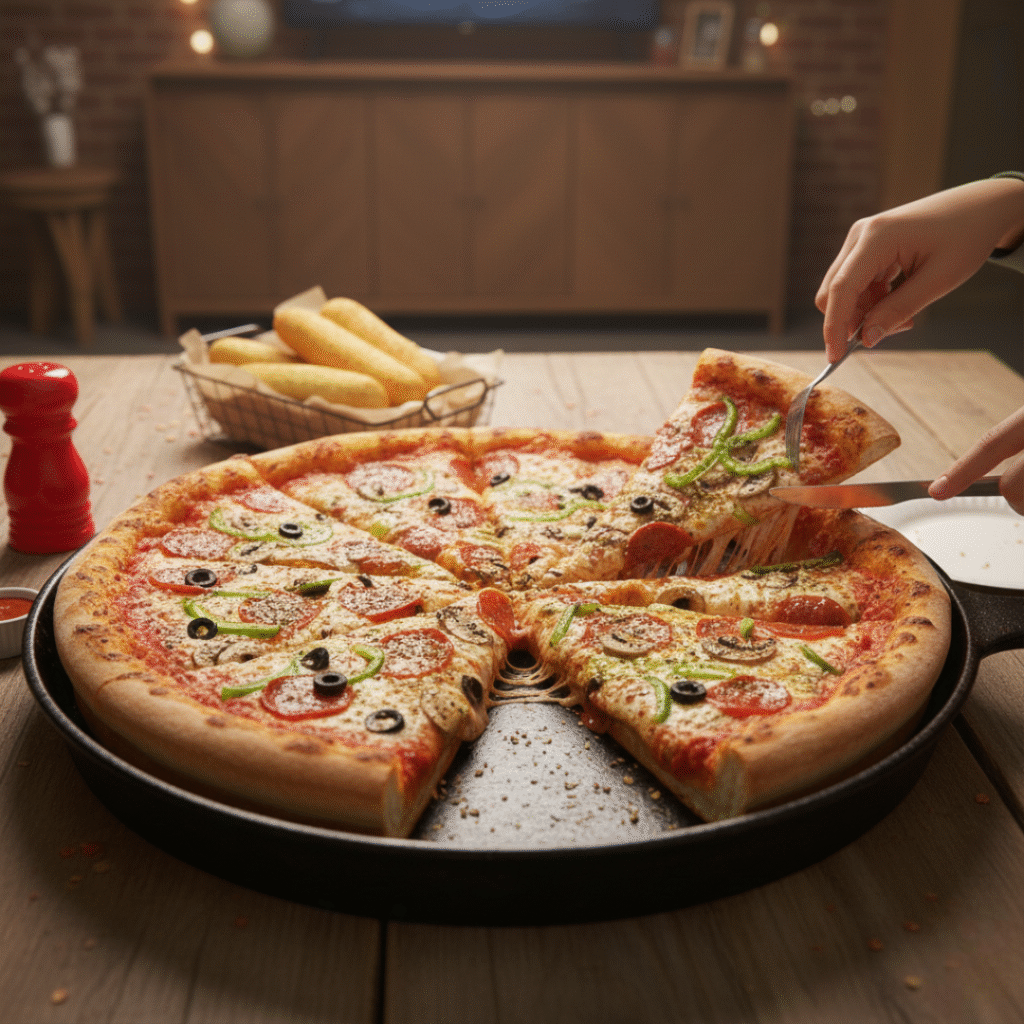
Six-slice cuts usually show up with thicker crust pizzas or when the pizza’s particularly loaded with toppings. Bigger slices mean each piece is more substantial—you’re not going to flop around trying to eat it. Deep dish almost always gets cut into squares or six hefty wedges because of how dense it is.
Then there’s the party cut, also called tavern style or square cut. Instead of triangular wedges, they cut the pizza into squares—anywhere from 16 to 30 little pieces depending on size. You get corner pieces with two crusty edges, edge pieces with one crusty side, and those middle pieces that are all topping and minimal crust. St. Louis loves this style. So does the Midwest in general.
Breaking Down Pizza Sizes and Slices
Let’s look at what you typically get across different sizes:
Small Pizza (10-12 inches): Usually 6 slices. Sometimes 4 if it’s a personal size. Feeds one hungry person or two people with small appetites. This is your “I’m eating alone and want leftovers” size.
Medium Pizza (12-14 inches): Standard 8 slices, though some places do 6. Feeds two to three people depending on how hungry everyone is. Good for couples or small families with young kids.
Large Pizza (14-16 inches): That classic 8 slices we keep talking about. Feeds three to five people if you’ve got sides. Just pizza? Figure three adults comfortably, four if they’re not starving.
Extra Large Pizza (16-18 inches): Could be 8, 10, or even 12 slices depending on the place. Some spots cut these bigger to keep slice size reasonable. Feeds five to six people easily.
Sheet Pizza/Party Pizza: Rectangular instead of round. Usually cut into 24-48 squares depending on size. These feed crowds—think 12-20 people.
Try these Recipes also:
The Math Nobody Thinks About
Here’s something wild: pizza sizes aren’t linear, they’re geometric. A 16-inch pizza isn’t just a little bigger than a 14-inch pizza—it’s significantly more food.
A 14-inch large has about 154 square inches of pizza. A 16-inch has about 201 square inches. That’s 30% more pizza for usually just a couple bucks more. This is why large pizzas are almost always better value than mediums.
Want to get really nerdy? Two 12-inch mediums give you about 226 square inches of pizza. One 16-inch large gives you 201 square inches. So two mediums actually give you more food, but they also cost more in most cases. One large is usually the better deal unless you want variety.
Quick Pizza Calculator
Here’s an easy formula that works pretty well:
Number of people x 3 slices = Total slices needed
Total slices needed ÷ 8 = Number of large pizzas
So for 10 people: 10 x 3 = 30 slices needed. 30 ÷ 8 = 3.75, so round up to 4 large pizzas.
For kids, cut that in half: 6 kids = 12 slices = 1.5 large pizzas, so round to 2.
Mix of adults and kids? Add them up separately. Four adults (12 slices) plus four kids (8 slices) = 20 slices = 2.5 large pizzas, so order 3.
Always round up. Leftover pizza is never a problem. Not having enough pizza? Absolute disaster.
Different Styles Mean Different Slice Counts
New York Style: Big, thin, foldable slices. Usually 8 per large, but those slices are substantial. Most people eat 2-3 and feel satisfied.
Chicago Deep Dish: Thick, heavy, almost like a pizza pie. Usually cut into 6 or 8 slices, but two slices is a full meal. One deep dish large feeds 3-4 people max, even though it’s technically the same number of slices as other styles.
Detroit Style: Rectangular and thick with crispy edges. Cut into squares, usually 8-12 pieces. The corner pieces are prized real estate.
Neapolitan: Traditional Italian style. Smaller pizzas meant for one person. Usually not sliced at all—you eat it with a knife and fork. If they do slice it, maybe 4-6 pieces.
St. Louis Style: Super thin cracker crust, cut into squares. One “large” might have 16-20 pieces, but each piece is small. You’ll easily eat 4-6.
Sicilian: Thick, square pizza. Cut into 9 or 12 square slices typically. Dense and filling.
Ordering for Different Occasions
Game Day / Sports Party: People graze over hours. Order more than you think—go with one large per 2-3 people. Mix up the toppings so everyone finds something they like. Have at least one plain cheese, one pepperoni, and one “loaded” option.
Kids’ Birthday Party: Kids eat less but are pickier. Order mostly cheese and pepperoni. Figure one large per 5-6 kids. They’ll eat two slices, max out on cake and soda, then run around screaming.
Office Lunch: One large per 3 people usually works. People are on lunch breaks and won’t stuff themselves. Go heavy on crowd-pleasers, light on controversial toppings like anchovies or pineapple.
Family Dinner: Really depends on your family. Teenagers? One large per two kids, minimum. Adults and small children? One large might feed four people if you add a salad.
Late Night Study Session: College students can destroy pizza. One large per 2-3 people, and honestly, order an extra just to be safe.
Leftover Pizza Strategy
If you’re deliberately ordering extra for leftovers, great plan. Pizza for breakfast hits different. But store it right:
Room temperature pizza is fine for two hours max after delivery. After that, it needs to go in the fridge or you’re risking food poisoning.
Refrigerate leftover slices in an airtight container or wrapped in foil. They’ll keep 3-4 days. Don’t just shove the box in there—takes up too much space and the pizza dries out.
Reheat in a skillet over medium heat for crispy crust, or use an air fryer at 350°F for 3-4 minutes. Microwave works but makes crust chewy and sad. If you must microwave, put a cup of water in there too—keeps the crust from getting rubbery.
Freeze leftover slices wrapped individually in plastic wrap, then all together in a freezer bag. They’ll keep 1-2 months. Reheat from frozen in the oven at 375°F for 10-12 minutes.
What to Do When You’re Unsure
Order online and you can usually see the exact diameter and slice count before checking out. Most pizza places list this info now.
Call and ask directly. “How many slices in your large?” takes five seconds and removes all guesswork.
Check reviews or their website. Pizza places often specify cuts and sizes in their FAQs.
When in doubt, order one extra pizza. Seriously, nobody’s ever been upset about having too much pizza. Being short on food when people are hungry? That’s when things get awkward.
Dietary Restrictions and Slice Planning
Vegetarians, vegans, gluten-free folks—they all need their own pizza usually. Cross-contamination matters to some people, so a shared pizza doesn’t always work.
Gluten-free pizzas typically come smaller (10-12 inches) and get cut into 6 slices. They’re also more expensive and don’t stretch as far.
Vegan pizzas without cheese sometimes get cut into more slices since they’re lighter and less filling. A vegan large might feed 2-3 people where a regular large feeds 3-4.
When you’ve got dietary needs in the mix, order those specialty pizzas separately and plan on them feeding fewer people than regular pizzas.
Questions Everyone Asks
Why do some pizza places cut into 6 slices and others do 8?
Depends on their style and what they think works best. Thicker pizzas often get 6 cuts so slices are more manageable. Thinner pizzas can handle 8 or even 10 slices without being too small.
Can I ask them to cut it differently?
Usually, yeah. Most places will cut into more or fewer slices if you ask. Some will do square cuts instead of triangles. Just ask when ordering.
Are corner slices smaller?
In square-cut pizzas, yes. Corner pieces have less total area than middle pieces. In triangle slices, they’re all theoretically equal, though the point of each slice has less topping than the crust end.
How many slices should I eat?
However many you want. Two or three is typical for a meal, but pizza math isn’t calorie math. Enjoy yourself.
Is it cheaper to order two mediums or one large?
Almost always cheaper per square inch to order the large. Check the prices though—sometimes pizza places run deals where two mediums cost less than one large.
Do stuffed crust pizzas have the same number of slices?
Usually yes, but the slices are more filling because of all that cheese in the crust. People tend to eat less of them.
The Pizza Order Masterclass
At the end of the day, knowing that a large pizza has 8 slices is useful, but understanding how to actually feed your specific group matters more.
Consider who’s eating, what else you’re serving, what time it is, and how hungry everyone probably is. Use that three-slices-per-person rule as a baseline, then adjust up or down based on reality.
When you’re hosting, generosity pays off. An extra pizza costs maybe 15 bucks. Running out of food and watching people leave hungry? That’s way worse than spending a bit extra. Plus leftover pizza is basically a gift to your future self.
Different pizza styles, different slice counts, different appetites—they all factor in. But the core truth remains: pizza feeds people, brings them together, and makes pretty much any gathering better. Whether you’re cutting 6 slices or 10, whether it’s a 14-inch or an 18-inch, whether it’s for three people or thirty, pizza works.
So next time someone puts you in charge of ordering, you’ll know exactly what to do. Calculate your people, multiply by three, divide by eight, round up, and add one more for good measure. You’ll be the hero who ordered the right amount of pizza, which honestly might be the most important job at any gathering.
Leave a Comment