
Okay so poutine gravy isn’t actually a big deal. Like, people act like it’s some secret recipe that takes forever and fancy stuff. It’s not. You’re basically just mixing butter and flour, adding some beef broth, and seasoning it. But when you get it right, it’s thick and creamy and makes the whole poutine thing actually work.
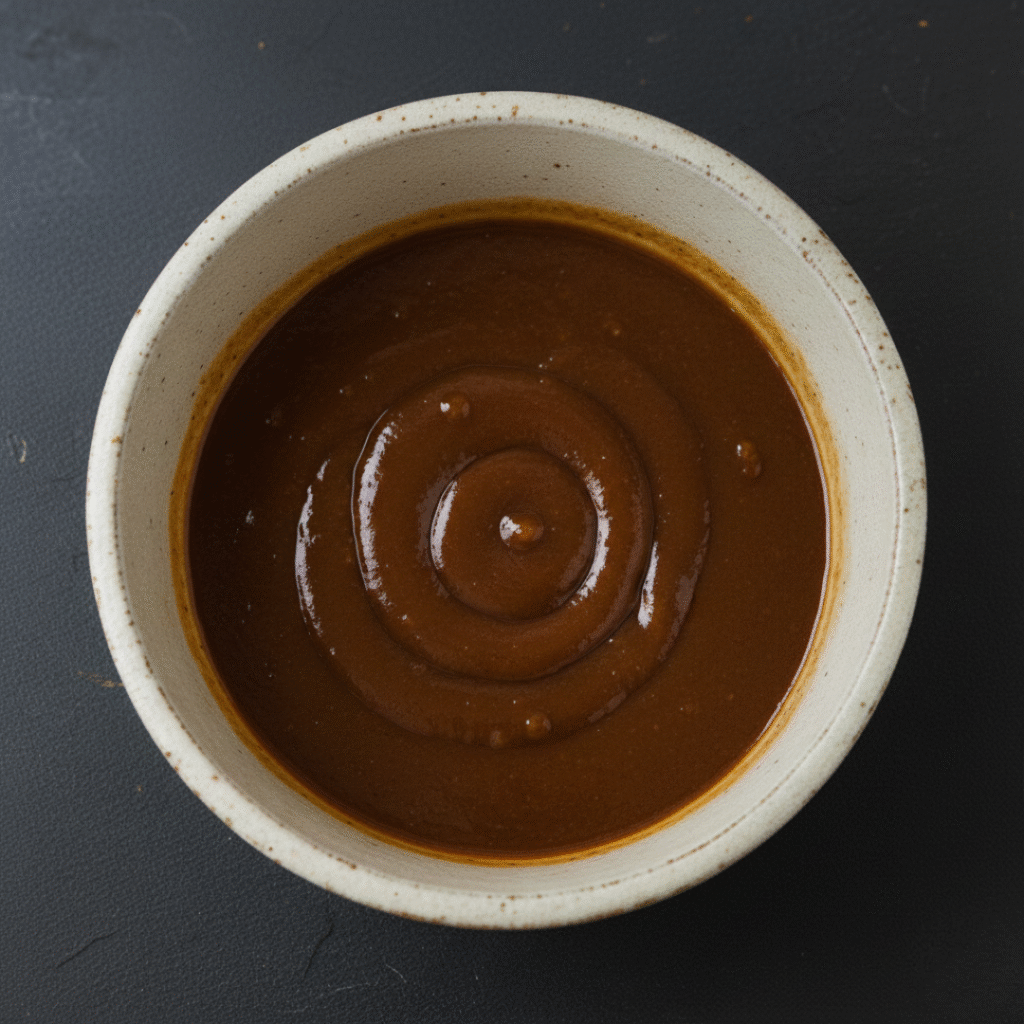
The gravy is honestly what makes or breaks poutine. You’ve probably eaten bad poutine – you know, where the gravy is watery and tastes like nothing, or it’s too salty, or it just ruins everything. That happens because someone didn’t make the gravy right. Good gravy changes the whole game.
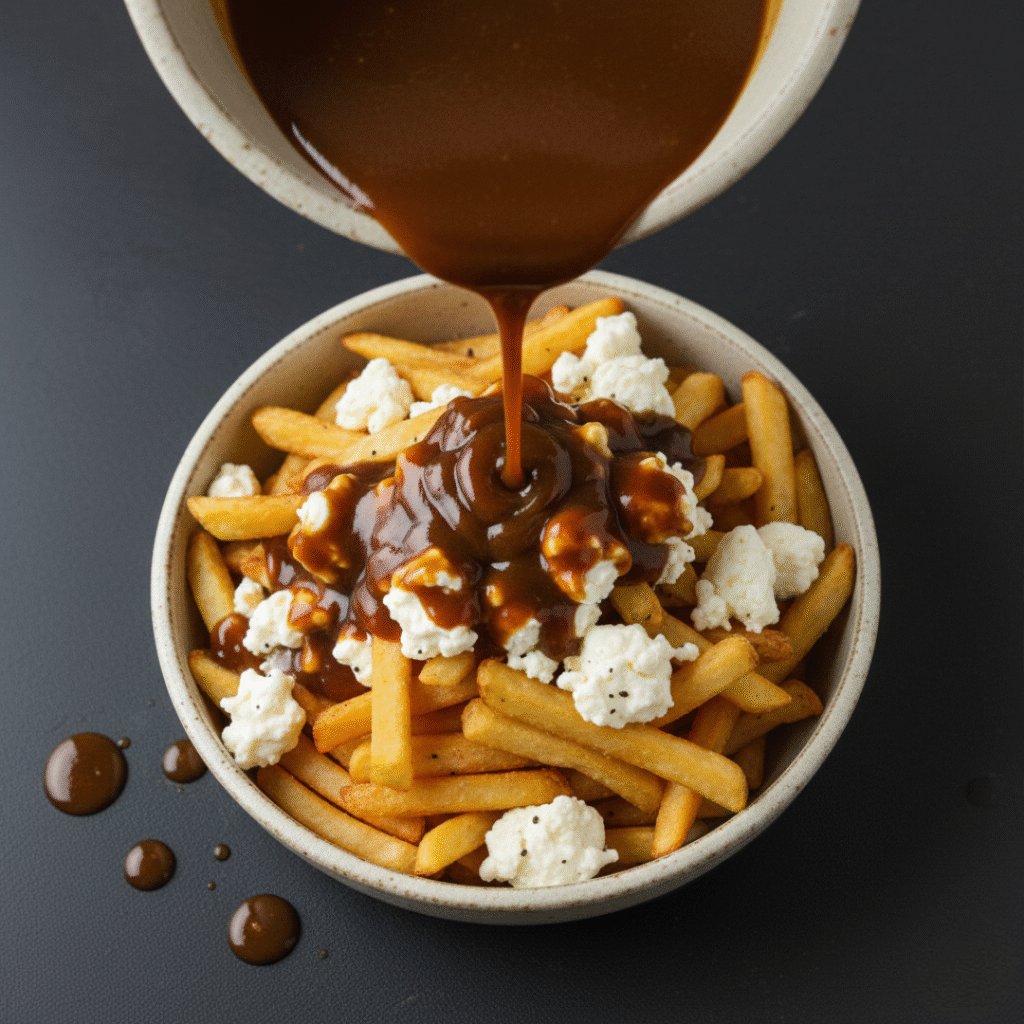
Here’s the weird part though – poutine gravy is literally just beef gravy. The same thing people pour over mashed potatoes or roast beef. The only difference is you use more seasoning and you pour it over hot fries so it sticks. That’s it. That’s the whole secret.
Why The Gravy Actually Matters
Poutine is three things – fries, cheese curds, and gravy. If one of them sucks, the whole thing sucks. Most people care about the fries and the cheese. But the gravy is just as important, honestly.
Good gravy coats stuff properly but isn’t thick like gloppy soup. It should taste beefy and salty and savory. Not greasy. Not lumpy. Just smooth and good.
When you pour hot gravy over hot fries and fresh cheese curds, the gravy warms the cheese up so it gets a little softer and the flavor gets stronger. Everything mixes together. It becomes one thing instead of just three separate items sitting on top of each other.
That’s where the magic is. That’s why poutine is amazing and not just fries with random stuff thrown on.
What Actually Goes In It
The base is beef broth. Not chicken. Beef. That’s not negotiable. You need actual beef flavor or the whole thing tastes like nothing.
Then butter and flour to thicken it. This stuff is called a roux and it’s what turns broth into actual gravy instead of just hot water.
Then you season it. Salt, pepper, garlic powder, onion powder, maybe some Worcestershire if you want to be fancy. Some people throw in beef bouillon powder if the broth tastes weak.
That’s honestly all there is. No secret ingredient. No magic. Just doing the basic thing right and not messing it up.
What You Need
For the thick part:
- 3 tablespoons butter
- 3 tablespoons flour
For the actual gravy:
- 2 cups beef broth (store-bought is fine)
- 1/2 cup extra stock if you want it richer (optional)
- 1/2 teaspoon salt
- 1/4 teaspoon black pepper
- 1/4 teaspoon garlic powder
- 1/4 teaspoon onion powder
- 1 tablespoon Worcestershire (optional but good)
- 1/2 teaspoon beef bouillon powder (only if the broth tastes weak)
Some people add cream or milk. Some people use cornstarch instead of flour. You don’t have to. Those are just variations that work.
How To Actually Make It
Get The Broth Hot First
Dump your beef broth into a pot and stick it on medium heat. Let it warm up. Don’t boil it yet. Just get it warm so it’s ready.
Why does this matter? If you dump cold broth into hot flour and butter, you get lumps. If both are warm, everything blends nice and smooth. It’s that simple.
Check if the broth tastes good by itself. Some store-bought stuff is salty as hell. Some is basically flavorless. Figure that out now so you know if you need to add extra seasoning later.
Quick tip: If the broth tastes weak and boring on its own, it’s gonna taste weak and boring in the gravy. Add bouillon powder or extra seasoning.
Make The Flour And Butter Thing
In another pot, throw in the butter and turn it to medium heat. Let it melt.
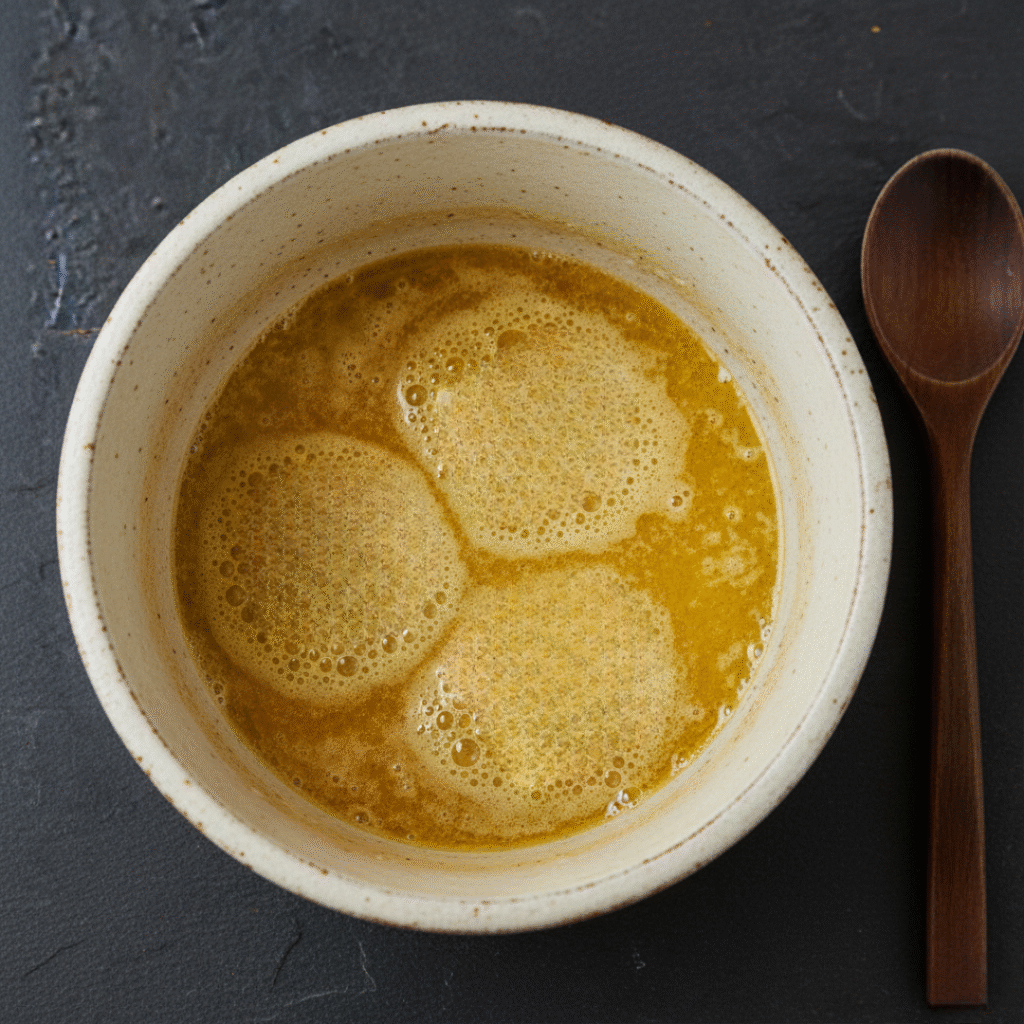
Once it’s melted, dump in the flour and stir it. Constantly. Don’t stop stirring.
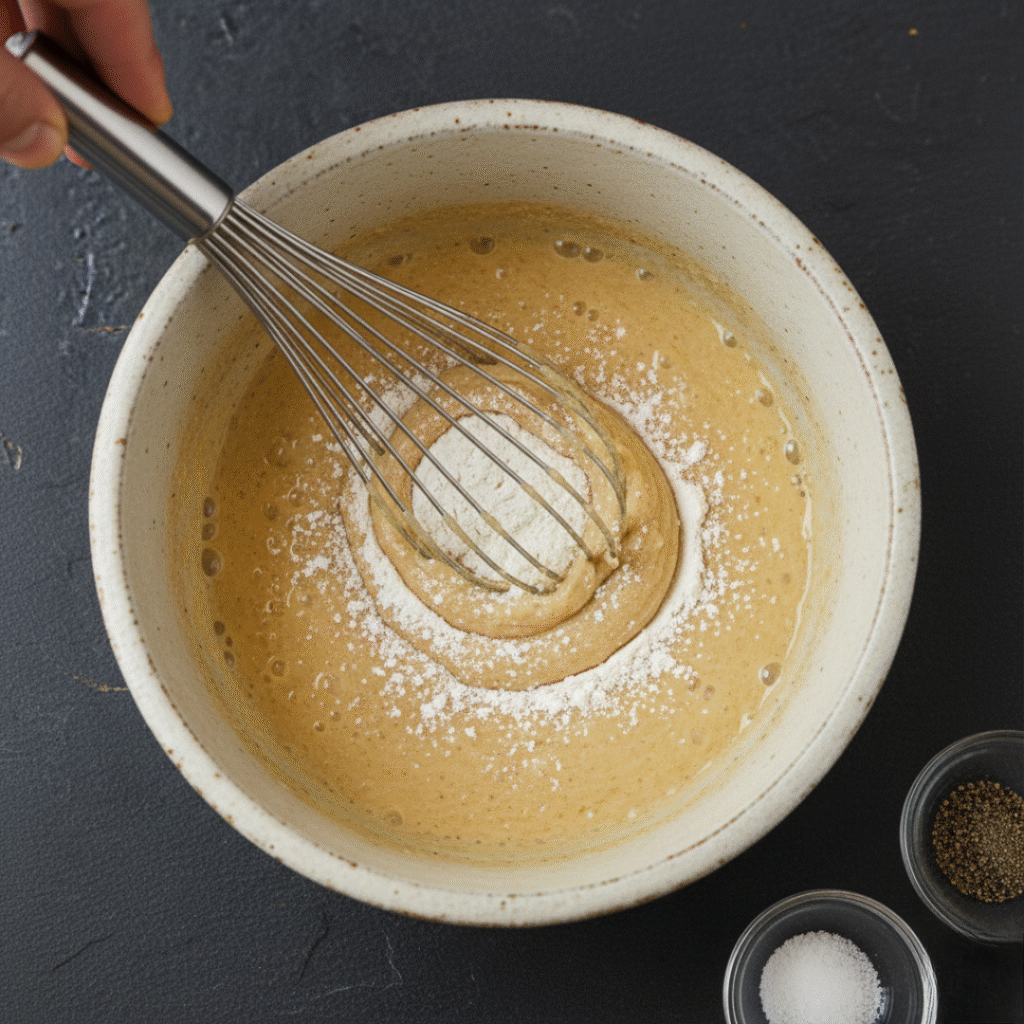
Cook this stuff together for like a minute or two. It’ll look like wet sand. It’ll smell kind of nutty and toasty. That’s perfect. That means the raw flour taste is going away.
Don’t let it get dark brown. Light tan color is what you want. Dark brown tastes weird.
Just keep stirring. If you zone out and let it sit, the flour clumps up and then you’ve got lumpy gravy and nobody wants that.
Quick tip: This flour and butter thing is called a roux and it’s literally the secret to not having lumps. When you cook them together first, the flour doesn’t clump when you add liquid later.
Pour The Broth In Slow
This is where most people mess up. They dump the whole pot of broth in at once. Don’t do that.
Pour it in slowly while stirring. Start with like a quarter cup. Stir it till it’s smooth. Then add more. Keep stirring the whole time.
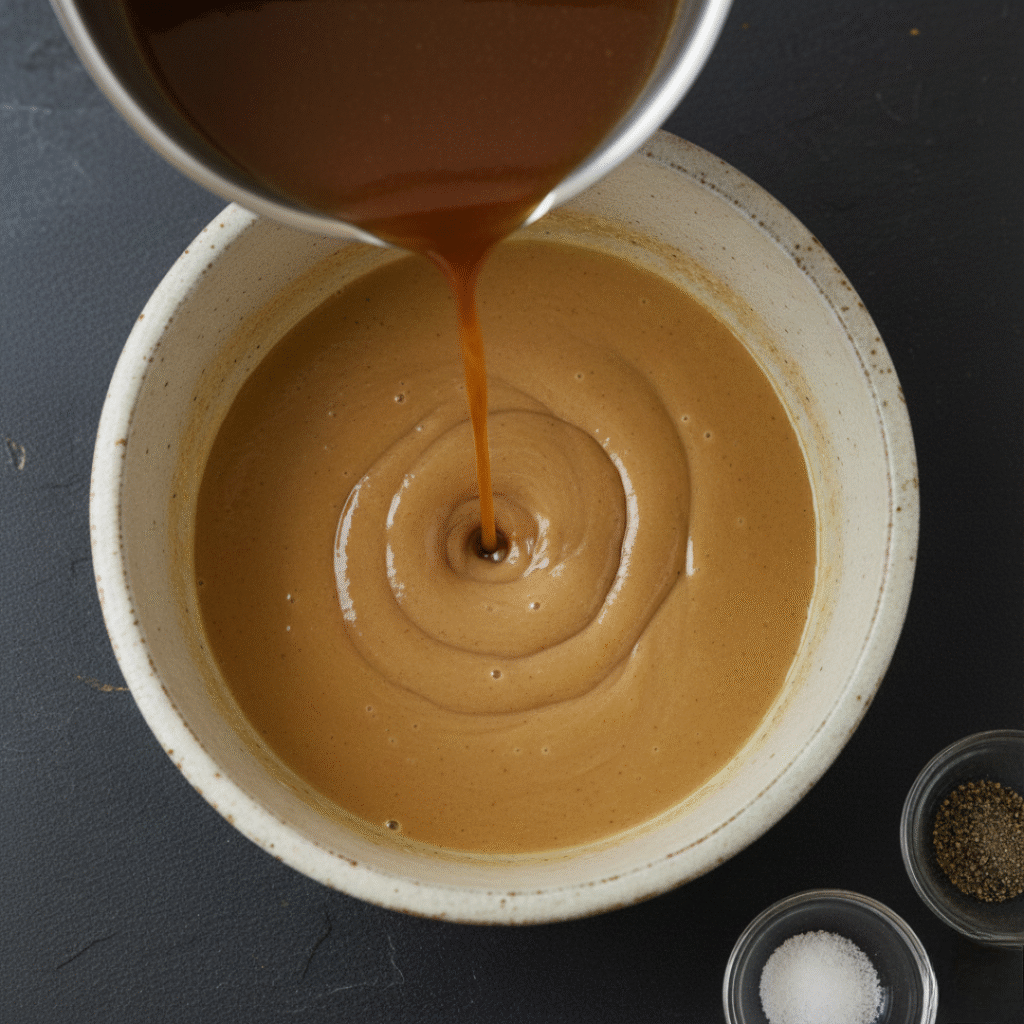
This slow mixing is what keeps it smooth. You’re basically making a paste at first, then thinning it out slowly. By the time all the broth is in, it’s all blended together nice.
It should look like thin brown liquid. No lumps. Not separated. Just normal gravy color.
Quick tip: Use a whisk if you’ve got one. It’s way better at breaking up lumps than a spoon. If you don’t have a whisk, a fork works.
Let It Bubble For A Bit
Once all the broth is in, turn up the heat a little so it starts bubbling. Little bubbles around the edges. Not a crazy rolling boil.
Let it bubble for like 2-3 minutes. This finishes cooking the flour so there’s no raw flour taste.
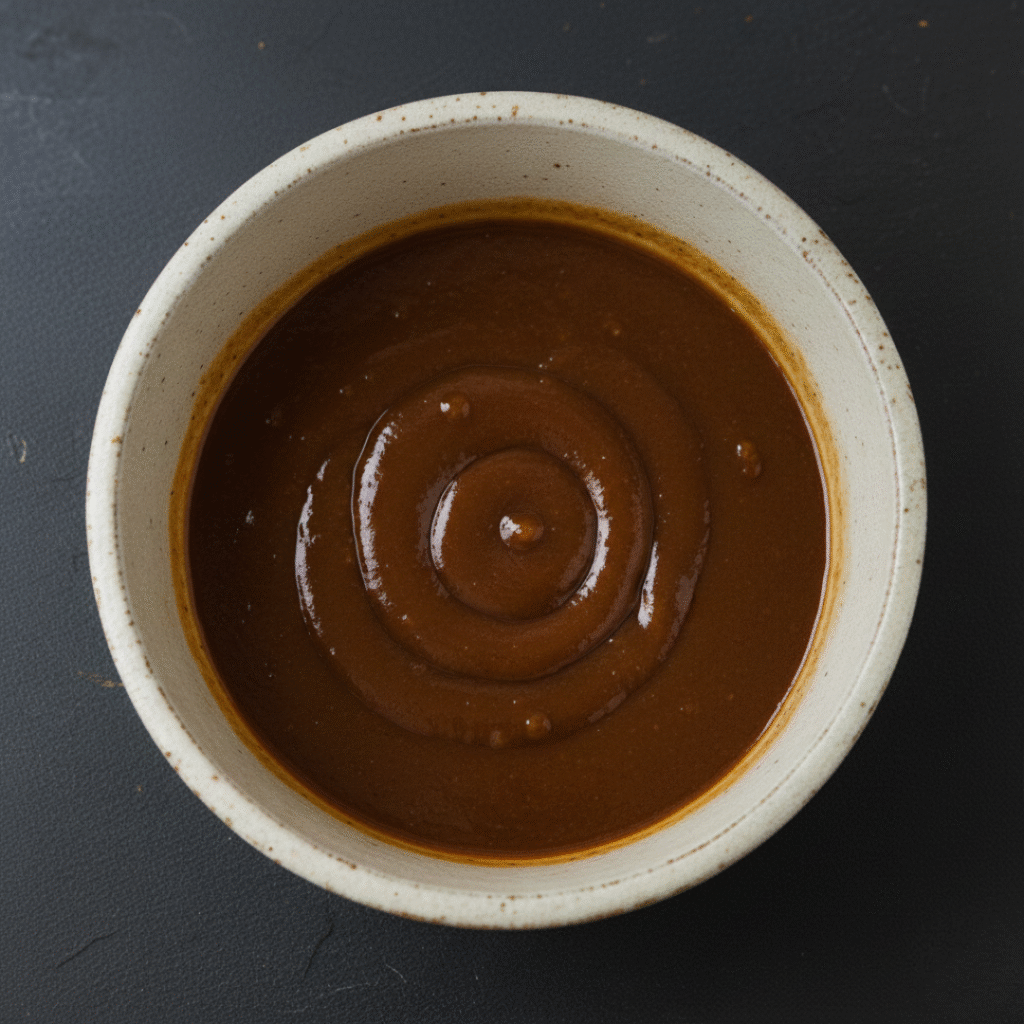
The gravy will get thicker as it heats up. You want it thick enough to coat a spoon but still pourable. Not like cement. Not like water. Somewhere in the middle.
Quick tip: You can always add more broth if it gets too thick. Can’t easily take it out if it’s too thin. So be careful.
Add Your Seasoning Stuff
Now taste it. How does it taste? Is it just broth? Does it need salt?
Add your salt, pepper, garlic powder, onion powder. Add Worcestershire if you’re using it. Add bouillon powder if the broth was weak.
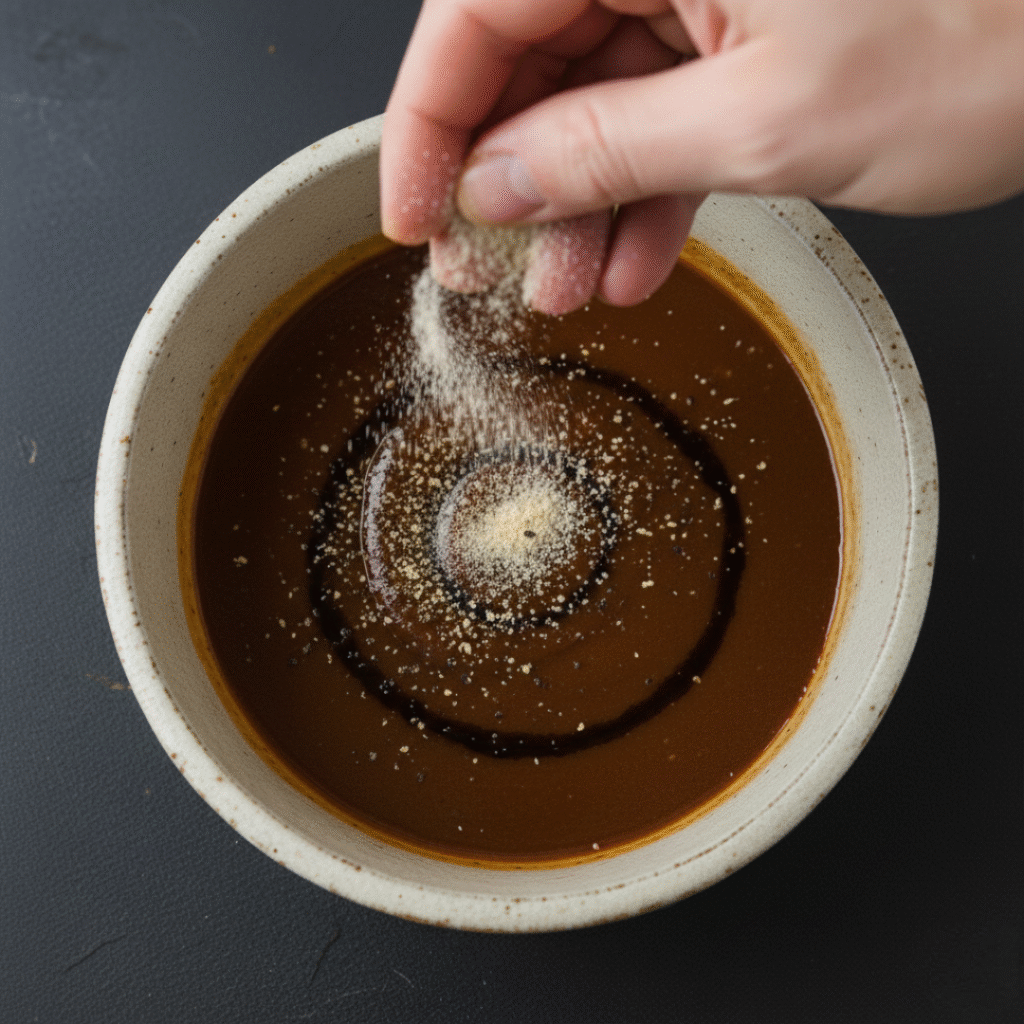
Stir it in and taste again. Keep tweaking it.
The goal is savory and beefy with just a hint of garlic and onion. It shouldn’t taste like one specific spice. It should taste like one flavor that’s rich and good.
Salt is the thing that varies the most. Some broths are already salty. Some aren’t. Some people like it really salty. Some don’t. Start low and add more if you want.
Quick tip: Season a little, taste, adjust. Way easier than accidentally making it way too salty and trying to fix it.
Taste It One More Time
This is important. Actually taste the finished gravy.
Does it taste good? Does it have beef flavor? Is the seasoning balanced? Is it thick enough or too thin?
If it’s too thin, mix 1 tablespoon cornstarch with 2 tablespoons cold water, stir it in, and let it bubble for 1 minute. Boom, thicker.
If it’s too salty, add more broth or water to dilute.
If it tastes boring and weak, add more Worcestershire or bouillon.
Don’t overthink this. It’s your gravy. Make it the way you like it.
Quick tip: Gravy gets thicker as it cools a bit. Don’t make it super thick right now or it’ll be gross when it sits.
Keep It Warm And Ready
If you’re making poutine, you want this gravy hot when the fries come out. Hot gravy on hot fries is the whole point. Keep it on low heat so it stays warm but doesn’t burn or get weird. Stir it sometimes so it stays even.
If you made it earlier, just reheat it gently before using. Low heat, stir it. Don’t let it boil hard or it separates.
Quick tip: Gravy stays good and warm for a couple hours. If you’re making poutine later, just make the gravy fresh. Takes ten minutes.
Stuff People Mess Up
- Bad broth – If the broth sucks, the gravy sucks. Buy decent broth or add bouillon powder.
- Pouring broth too fast – This is why you get lumps. Go slow. Be patient.
- Not cooking the roux enough – Skip this step and the gravy tastes like raw flour. Cook it for a minute or two.
- Cold broth mixed with hot roux – Temperature difference = lumps. Keep both warm.
- Oversalting – You can add salt but you can’t take it out. Start light and add more.
- Making it too thick – Thick gravy sits heavy in your stomach. Poutine gravy should pour, not scoop.
- Wrong type of broth – Chicken broth makes chicken gravy. Vegetable is weird. Beef is the only one.
Useful Things To Know
- Stir constantly. This prevents lumps and cooks stuff evenly. Don’t zone out.
- Warm stuff works better. Warm broth mixed with warm roux = smooth. Cold mixed with hot = lumps.
- Taste a lot. You’re adjusting seasoning as you go. Taste after you add stuff.
- Whisk is better than spoon. It blends better and breaks up lumps easier.
- Don’t make it way ahead. Gravy gets gross if it sits for hours. Make it close to when you eat.
- If you mess up, chill. Lumpy gravy? Strain it through a mesh thing. Thin gravy? Add cornstarch or time. You can fix most stuff.
- Taste the broth first. Tells you if you need more seasoning. Some broths are already perfect.
- Worcestershire is optional but good. Makes it taste richer without tasting like Worcestershire specifically.
Other Stuff You Can Use This On
You don’t have to just use this for poutine. It’s just beef gravy, man.
- Fries and gravy – Skip the cheese curds. Still bangs.
- Mashed potatoes – Classic. Works perfect.
- Chicken or turkey – Pour it on roasted chicken. Great.
- Meatloaf – Way better than ketchup on the side.
- Steak fries – Fancy version of fries and gravy.
- Roast beef sandwiches – Dip it or pour it on top.
It’s normal beef gravy. Poutine isn’t the only thing it works on.
Keeping It And Storing
Gravy lasts about 3-4 days in the fridge if you cover it up. Keep it in an airtight container so it doesn’t dry out or get weird fridge smell.
You can freeze it too. Pour it in an ice cube tray, freeze it, then stick the cubes in a freezer bag. Thaw and reheat whenever you want. Works great.
Don’t leave it sitting at room temperature for more than like 2 hours. It’s got broth and stuff that can go bad.
Reheat it slow over low heat, stir it sometimes. Add a splash of water or broth if it got too thick.
Quick tip: Frozen gravy is actually perfect. Make a big batch, freeze it, then you can make poutine whenever without doing this whole thing again.
Questions People Ask
Can you just use store-bought gravy? Yeah technically but it’s not the same. Homemade takes 10 minutes and tastes way better.
What if you don’t have Worcestershire? It’s optional. Gravy works without it. Just add more salt and pepper.
Can you use cornstarch instead of flour? Yeah. Mix 2 tablespoons cornstarch with 2 tablespoons cold water instead of the roux. Add it at the end and bubble for 1 minute.
Does it have to be beef gravy? For poutine? Yeah basically. Chicken gravy tastes wrong on poutine.
How do you fix lumpy gravy? Strain it through a fine mesh. Or use an immersion blender. Or just eat it. The lumps taste fine.
Can you make it ahead? Yeah but make it an hour or two before eating. Doesn’t keep forever.
Why is the gravy separating? Usually got too hot or sat too long. Reheat it gently and stir. Sometimes it comes back together.
Why This Actually Works
Poutine gravy works because it’s stupid simple. No fancy techniques. No mystery stuff. Just beef gravy made right.
The roux is the thing. That’s what makes it gravy instead of just seasoned broth. The roux thickens everything and makes it taste like actual food.
The seasoning is basic. Beef from broth and bouillon. Savory from salt and Worcestershire. Flavors from garlic and onion. That’s all it needs.
And the thickness has to be right. Thick enough to coat stuff, thin enough to pour. Substantial but not heavy. When those three things work together, the gravy is incredible. It’s not fancy or complicated. It’s just good.
Real Talk
Making poutine gravy seems harder than it is. You think it’s complicated. It’s not. It’s like ten minutes max.
Once you make it one time, you’ll never want store-bought again. Fresh gravy is so much better than packet stuff.
The cool part is once you know how to do it, you can mess with it. Different broths. Different seasonings. Different thickness. Make it yours.
And honestly, if you’re already making poutine at home, you did the hard part already. Frying the potatoes and finding good cheese curds. The gravy is easy and it makes everything come together.
Make good gravy. Your poutine will be way better.
Leave a Comment