
You know what’s interesting about butter chicken? It’s probably converted more people into curry lovers than any other dish out there. While chicken karahi is amazing for spice lovers and tikka masala has its own following, butter chicken just hits different. It’s mild enough for kids, fancy enough for dinner parties, and comforting enough for a regular weeknight meal.
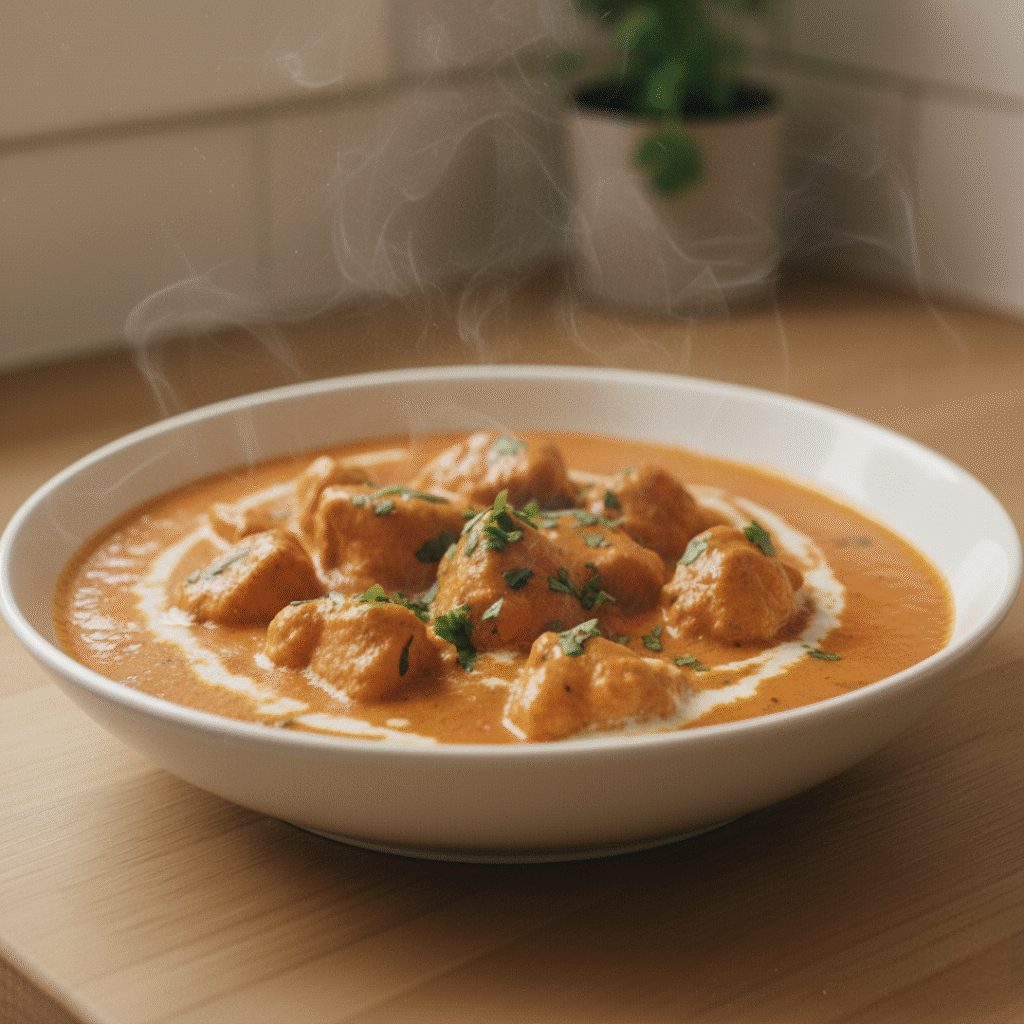
The whole idea that you need hours or some secret restaurant method to make butter chicken is honestly overblown. Sure, some recipes make you marinate overnight and use a dozen ingredients you’ve never heard of. But the truth? Good butter chicken is about technique more than complexity. You can make restaurant-quality butter chicken in under an hour with ingredients you probably already have.
What makes people nervous about cooking Indian food at home is usually the spice situation. Too many unfamiliar names, too many steps, too much room for error. This recipe cuts through all that noise. Simple spices, straightforward steps, and results that’ll make you wonder why you ever ordered takeout.
What Makes This Version Different?
Most traditional butter chicken recipes start with marinated, grilled chicken. That’s great if you have time and a grill. This version skips all that and still delivers that creamy, rich, slightly smoky flavor everyone loves. We’re building flavor through layering – cooking the chicken first, then building the sauce with aromatics, spices, and tomatoes, and bringing it all together at the end.
The result? Tender chicken pieces swimming in a velvety sauce that’s perfectly balanced between tangy tomatoes, warm spices, and rich cream. No tandoor needed, no overnight marination required, no complicated techniques to master.
Gathering Your Ingredients
Here’s everything you need for about 4-6 servings:
Main Components:
- 2 tablespoons cooking oil
- 1½ to 2 pounds boneless chicken breasts, cut into bite-sized chunks
- 6 tablespoons butter (this is butter chicken after all)
- 1 small onion, finely diced
- 2 tablespoons minced garlic (fresh is best, but jarred works)
- 2 tablespoons freshly grated ginger
- 15-ounce can diced tomatoes with all their juice
- 6-ounce can tomato paste
- 1 cup chicken broth
- 1 cup heavy cream
The Spice Mix:
- 1 tablespoon garam masala
- 1 teaspoon turmeric
- 1 teaspoon smoked paprika
- 1 teaspoon chili powder
- 1 teaspoon salt
For Finishing:
- ¼ cup fresh cilantro, roughly chopped (optional but recommended)
To Serve:
- Cooked basmati rice or warm naan bread
Getting Started – Prep Work Matters
Before you turn on the stove, get your prep done. Cut your chicken breasts into roughly equal chunks – aim for about 1 to 1½ inch pieces. They don’t need to be perfect cubes, just similar sizes so they cook evenly.
Dice that onion fine. Not chunky pieces, but small dice. This matters because we want the onion to basically melt into the sauce. Mince your garlic and grate your ginger. If you’ve never grated fresh ginger before, use the small holes on a box grater or a microplane. You want it almost paste-like.
Measure out all your spices into a small bowl and mix them together. Having them pre-mixed means you can dump them all in at once instead of fumbling with multiple containers while your onions are cooking.
Step 1: Cooking the Chicken
Take a large skillet – and I mean large, you’ll need the room later – and place it over medium-high heat. Add your oil and let it heat up for about 30 seconds. You’ll know it’s ready when the oil shimmers and moves easily around the pan.
Add your chicken pieces in a single layer. Don’t crowd them. If your pan isn’t big enough, cook the chicken in two batches. Crowded chicken steams instead of searing, and we want some color on these pieces.
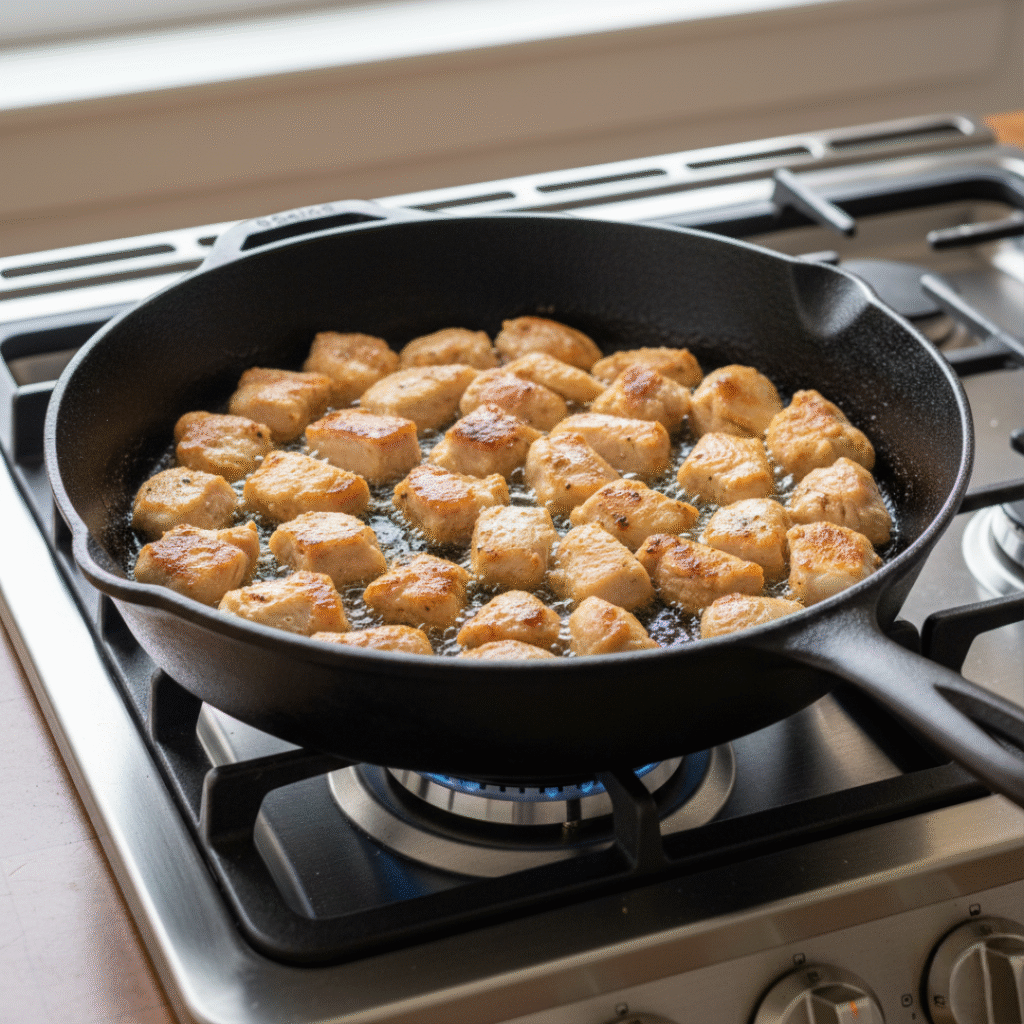
Let the chicken cook without messing with it too much. Give each side about 2-3 minutes. The pieces should turn white and get some light golden spots. They don’t need to be fully cooked through at this point – we’re looking at maybe 80% done. They’ll finish cooking in the sauce later.
Once your chicken looks good, use a slotted spoon to remove it from the skillet and set it aside in a bowl. Don’t clean the pan. Those little browned bits stuck to the bottom? That’s flavor we want to keep.
Step 2: Building the Aromatic Base
With your skillet still over medium-high heat, add all six tablespoons of butter. Yeah, it seems like a lot. But this is what makes butter chicken taste like butter chicken. Let the butter melt completely and start to foam just a bit.
Add your diced onion to the butter and stir it around. The onions should sizzle when they hit the pan. Keep stirring occasionally and let them cook until they turn translucent and soft. This takes about 3 to 5 minutes. You’re not looking for brown caramelized onions here – just soft, sweet, cooked onions.
Step 3: The Garlic and Ginger
Once your onions look good, add the minced garlic and grated ginger. Stir constantly for about a minute. The kitchen should start smelling incredible right about now. That combination of butter, onions, garlic, and ginger is just unbeatable.
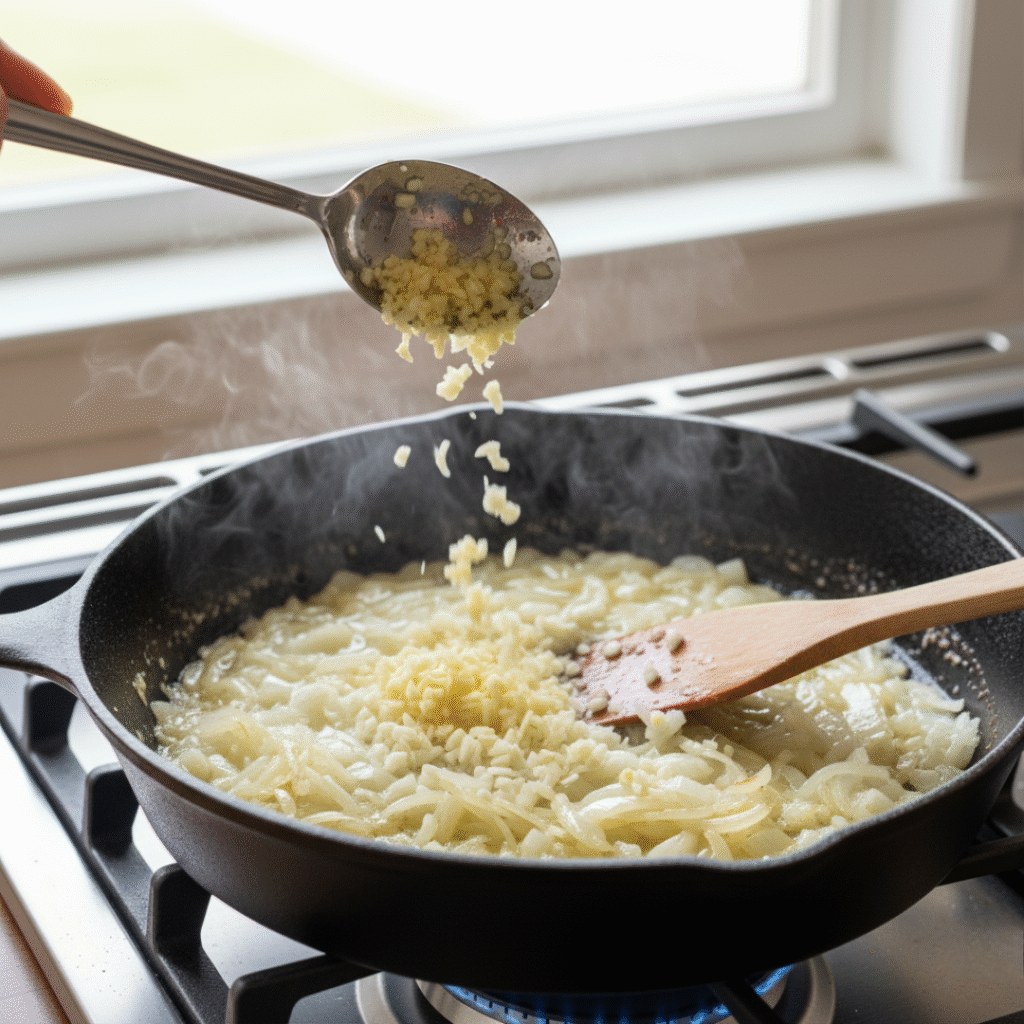
Be careful not to let the garlic burn. If your heat is too high and things are browning too fast, knock it down to medium. Burnt garlic turns bitter and there’s no coming back from that.
Step 4: Spice Time
Now dump in all your pre-mixed spices – the garam masala, turmeric, smoked paprika, chili powder, and salt. Stir everything together quickly. The spices need to hit that hot butter and bloom. This releases their essential oils and deepens their flavors.
Keep stirring for about a minute. The mixture will become fragrant and slightly darker. The spices should coat the onions, garlic, and ginger evenly. If things start sticking to the pan, that’s fine – we’re about to deglaze everything.
Step 5: Adding the Tomatoes
Open your can of diced tomatoes and pour the whole thing in – juice and all. Add the tomato paste and chicken broth. Now stir everything together, making sure to scrape up those browned bits from the bottom of the pan. Those bits dissolve into the sauce and add tons of flavor.
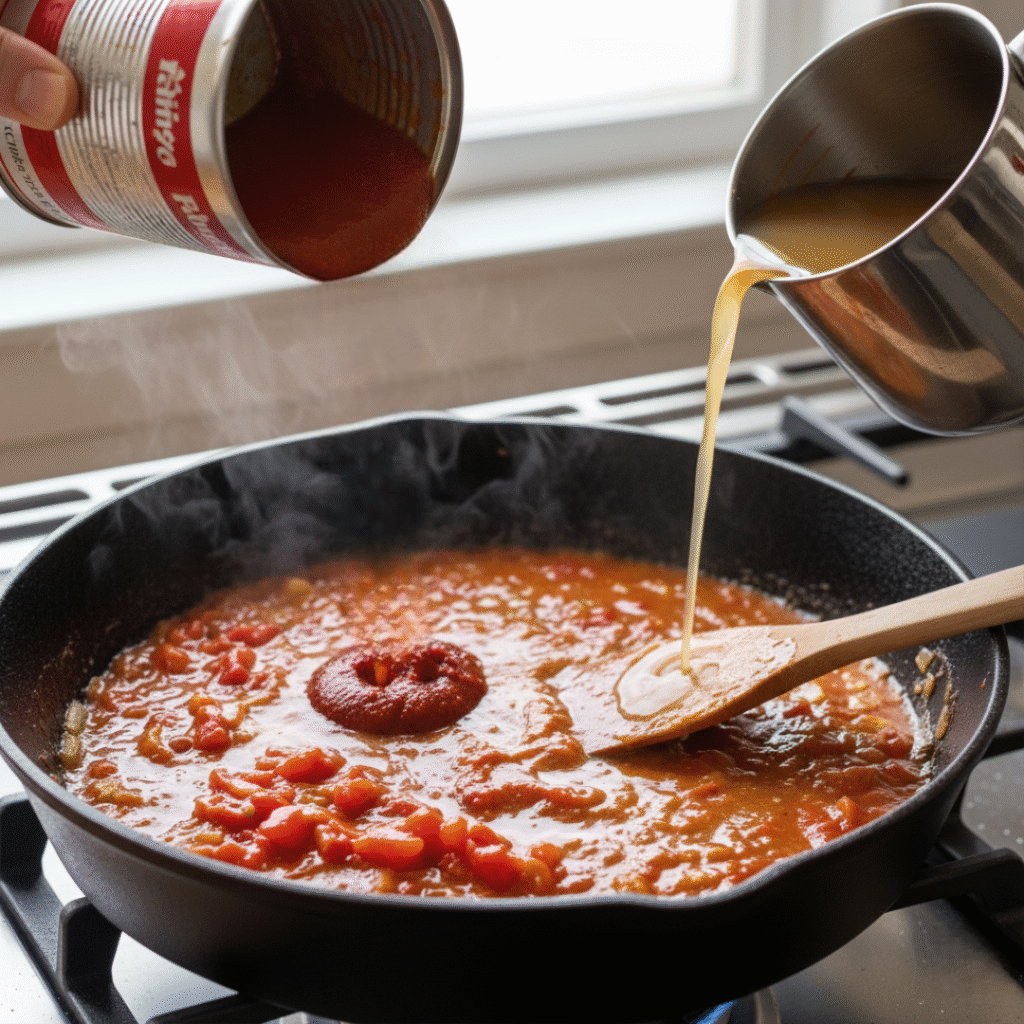
The sauce will look kind of thin and separated at first. That’s normal. Keep stirring and make sure the tomato paste is fully incorporated – you don’t want any clumps.
Step 6: Bringing Back the Chicken
Add your cooked chicken pieces back into the skillet along with any juices that collected in the bowl. Stir everything together so the chicken is coated with the sauce.
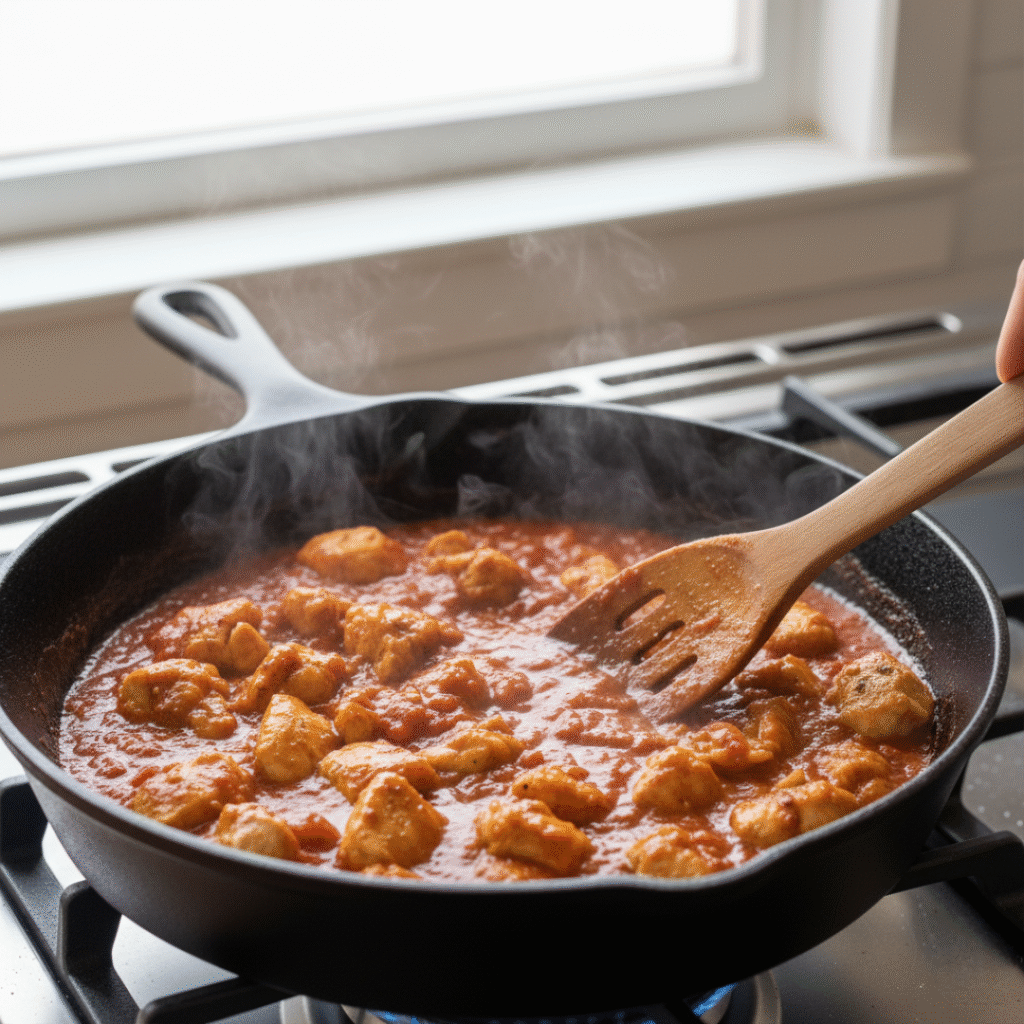
Turn up the heat and bring the whole thing to a boil. Once it’s bubbling, reduce the heat to low or medium-low. You want a gentle simmer, not a rolling boil.
Leave the skillet uncovered and let it simmer for 10 to 15 minutes. Stir occasionally to make sure nothing’s sticking to the bottom. You’ll notice the sauce getting thicker and the chicken finishing its cooking. The tomatoes break down more, the flavors meld together, and everything starts looking like proper butter chicken.
Step 7: The Cream Finish
After your 10 to 15 minutes of simmering, turn off the heat. This is important – add the cream with the heat off to prevent it from separating or curdling.
Pour in your heavy cream and stir it through the sauce. Watch as the color transforms from deep red to that signature orangey-pink that butter chicken is known for.
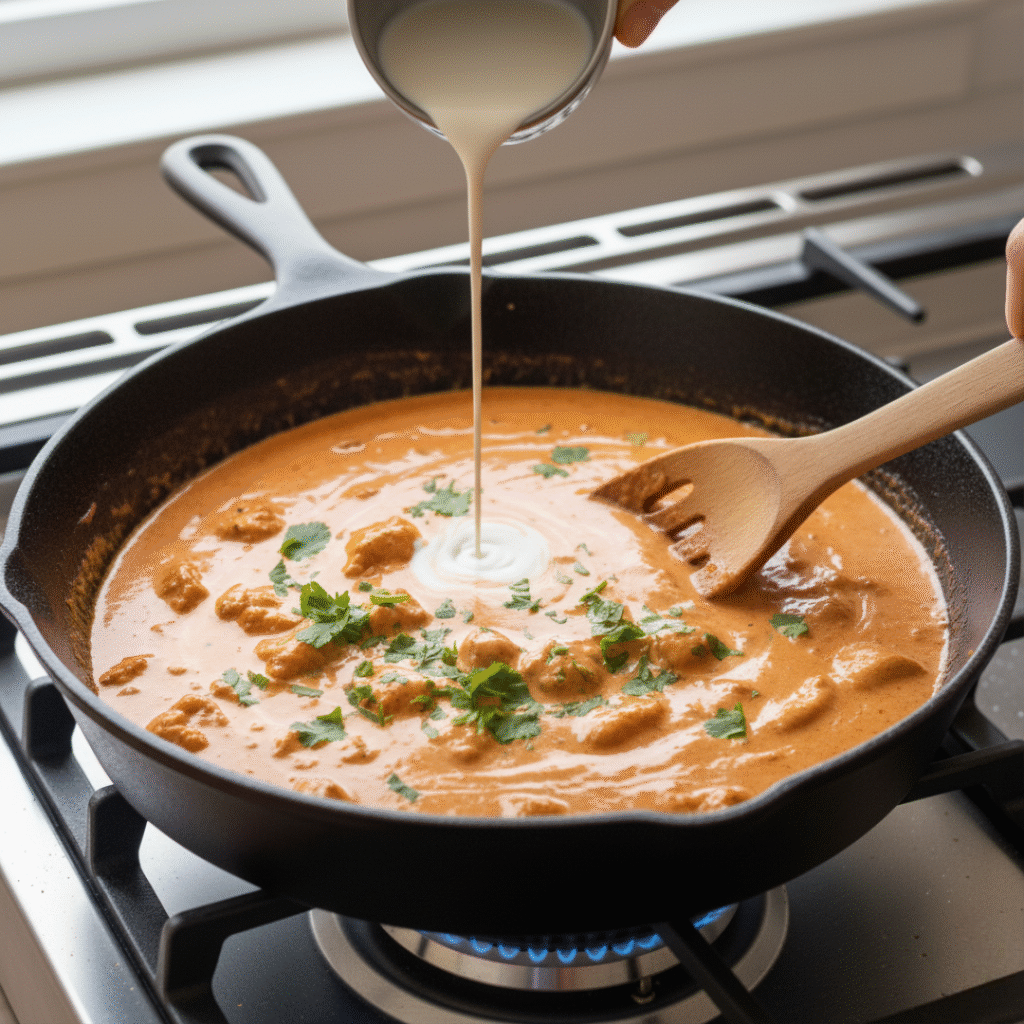
The cream doesn’t just add color though – it mellows out the tomato acidity and gives the sauce that silky, luxurious texture.
If you’re using cilantro, chop it roughly and stir most of it into the curry now. Save a little for garnishing later.
Taste your butter chicken. Need more salt? Add it now. Want more heat? A pinch more chili powder works. Too thick? Splash in a bit more chicken broth or cream.
Serving Your Butter Chicken
This curry is incredibly versatile when it comes to serving. The traditional way is over basmati rice – that fluffy, aromatic rice is perfect for soaking up all that sauce. Cook your rice with a little butter and maybe a cardamom pod or two for extra flavor.
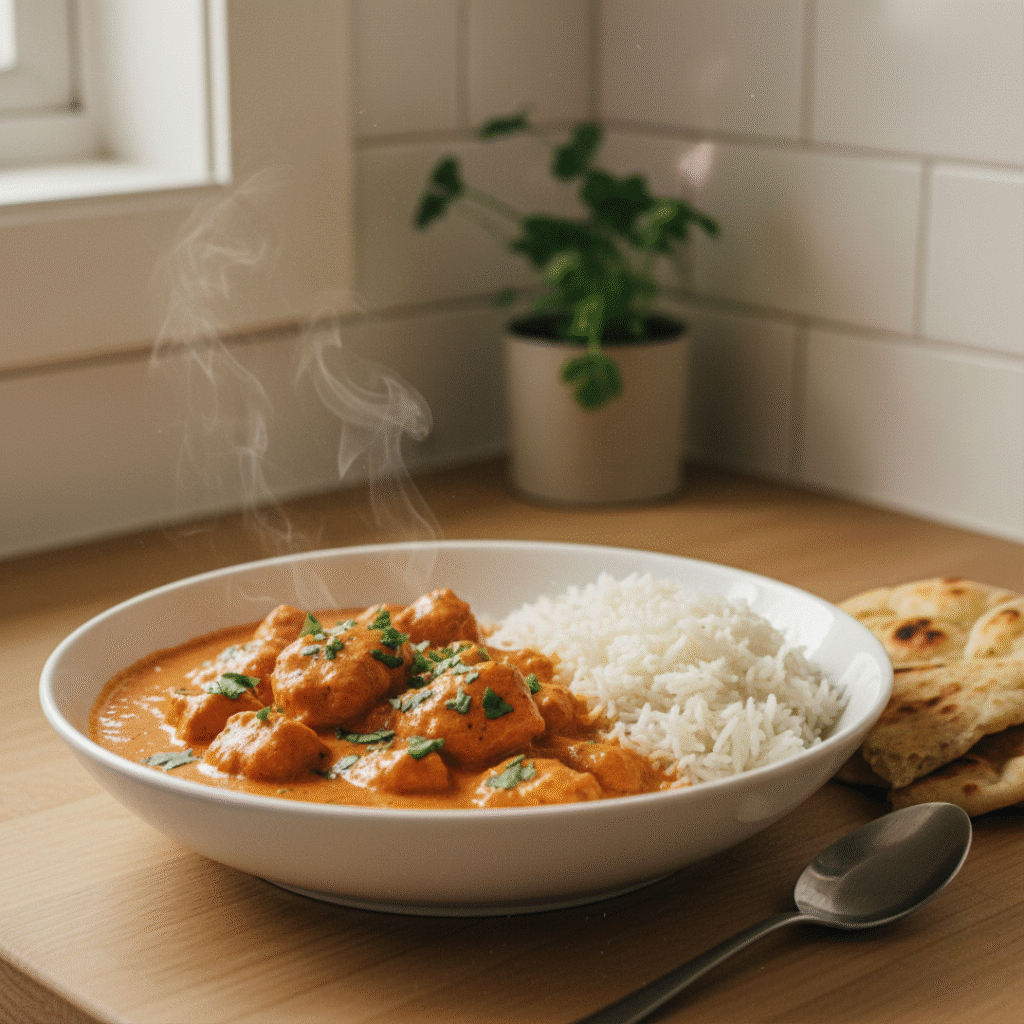
Naan bread is the other classic choice. That soft, pillowy bread is perfect for scooping up chunks of chicken and sauce. You can buy naan from most grocery stores these days, or make your own if you’re feeling ambitious.
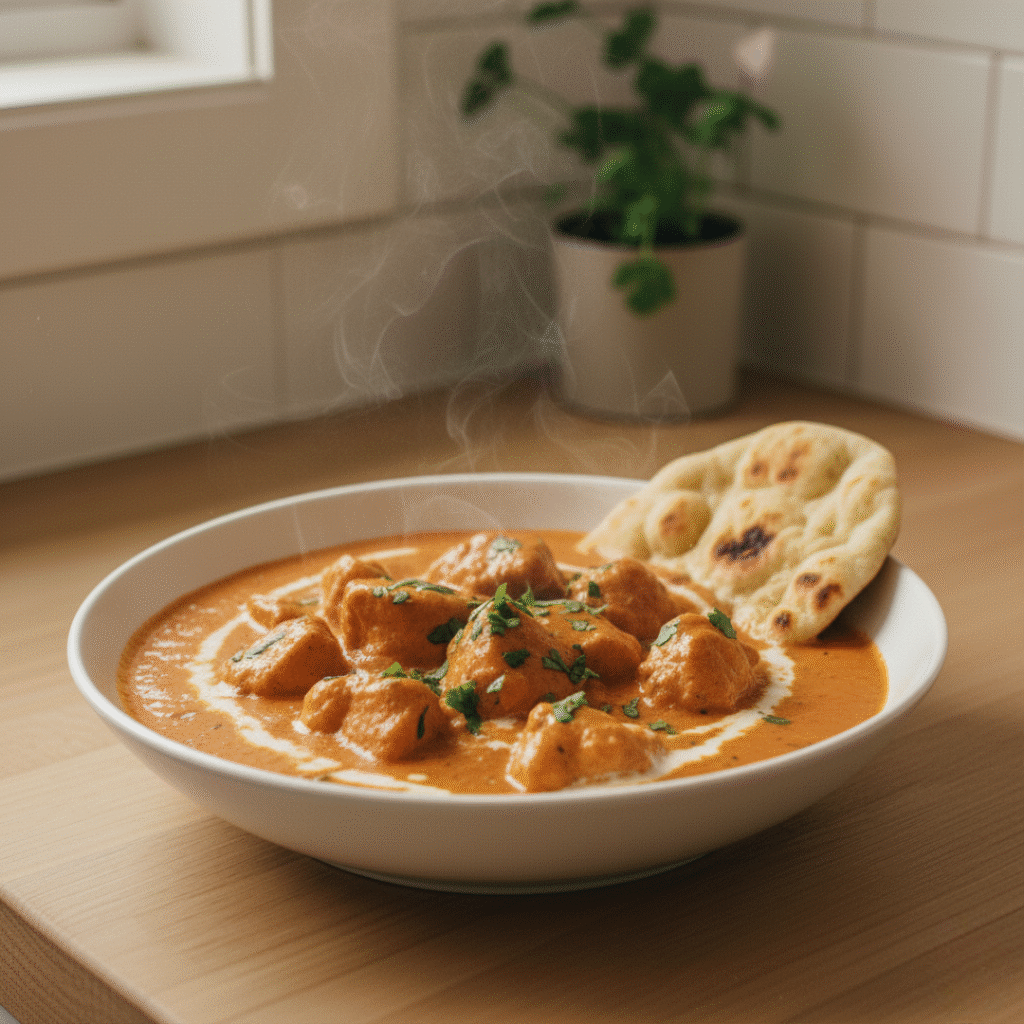
Roti or paratha work great too. Any flatbread really. The point is having something to soak up that amazing sauce because leaving any behind would be a crime.
For sides, keep things simple so the butter chicken stays the star. A cucumber and tomato salad with lemon juice and chaat masala. Maybe some raita – yogurt mixed with cucumber and mint. A few lime wedges on the side. That’s really all you need.
Try these Recipes also:
Tips for Success
Don’t skip the fresh ginger. Dried ginger powder isn’t the same. Fresh ginger has a brightness and zing that’s essential here. Keep a knob of ginger in your freezer – it grates easier when frozen anyway.
Room temperature cream prevents curdling. If your cream is straight from the fridge, let it sit out while you’re cooking everything else. Cold cream hitting hot sauce can sometimes separate.
Adjust the heat level to your preference. This recipe is moderately spiced. Want it milder? Cut the chili powder in half. Want more kick? Add some cayenne or more chili powder.
The sauce should coat a spoon. When you dip a spoon in the finished curry, the sauce should cling to it but still drip off. Too thin? Simmer it a bit longer uncovered. Too thick? Add more broth or cream.
Let it rest for 5 minutes before serving. Seriously, this makes a difference. The sauce settles, the flavors continue melding, and the chicken absorbs more of that creamy goodness.
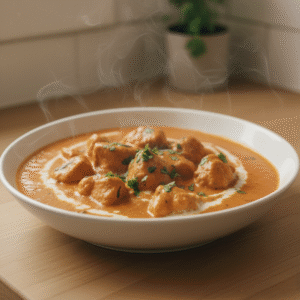
Rich and Creamy Butter Chicken Curry Served in a Bowl
Equipment
- Large skillet or deep frying pan (12-inch works best)
- Wooden spoon or spatula
- Sharp knife and cutting board
- Measuring spoons and cups
- Box grater or microplane (for ginger)
- Small mixing bowl (for spices)
- Slotted spoon
- Can opener
Ingredients
- 2 tablespoons oil
- 1½-2 pounds chicken breasts cut into bite-sized pieces
- 6 tablespoons butter
- 1 small onion finely diced
- 2 tablespoons minced garlic
- 2 tablespoons grated fresh ginger
- 1 tablespoon garam masala
- 1 teaspoon turmeric
- 1 teaspoon smoked paprika
- 1 teaspoon chili powder
- 1 teaspoon salt
- 15- ounce can diced tomatoes undrained
- 6- ounce can tomato paste
- 1 cup chicken broth
- 1 cup heavy cream
- ¼ cup chopped cilantro optional
INSTRUCTIONS
- Heat oil in large skillet over medium-high heat
- Add chicken pieces, cook until done (5-7 minutes)
- Remove chicken and set aside
- Melt butter in same skillet
- Add onion, cook until translucent (3-5 minutes)
- Add garlic and ginger, cook 1 minute while stirring
- Add all spices (garam masala, turmeric, paprika, chili powder, salt)
- Stir constantly for 1 minute to bloom spices
- Add diced tomatoes, tomato paste, and chicken broth
- Stir well, scraping up browned bits from pan bottom
- Return cooked chicken to skillet with any juices
- Bring to boil, then reduce heat to low
- Simmer uncovered 10-15 minutes until sauce thickens
- Remove from heat
- Stir in heavy cream and cilantro
- Let rest 5 minutes before serving
- Serve over rice or with naan bread
Notes
- Use fresh ginger for best flavor
- Don’t skip the simmering time – it thickens the sauce
- Add cream with heat off to prevent curdling
- Sauce should coat a spoon but still be pourable
- Tastes even better the next day
- Store in airtight container, refrigerate up to 3 days
- Freezes well for up to 3 months
- Can substitute chicken thighs for breasts
Making It Ahead and Storage
Butter chicken actually gets better with time. The flavors deepen and blend more as it sits. You can make the entire dish up to 2 days ahead. Just store it in an airtight container in the fridge and reheat gently on the stove.
When reheating, add a splash of cream or chicken broth because the sauce thickens up in the fridge. Heat it slowly on medium-low, stirring occasionally. Don’t crank up the heat or you might end up with separated cream.
You can also freeze butter chicken for up to 3 months. Thaw it in the fridge overnight before reheating. The texture might be slightly different but the flavor stays great.
FAQS
Can I use chicken thighs instead of breasts? Absolutely. Thighs are actually more forgiving because they stay juicier. Just remove the skin and bones first, cut into chunks, and follow the same method.
What if I don’t have heavy cream? Half and half works in a pinch, though the sauce won’t be quite as rich. Coconut cream is a dairy-free alternative that actually works surprisingly well.
My sauce is too spicy, what do I do? Add more cream. It tames the heat while keeping the sauce creamy. A spoonful of sugar or honey also helps balance spice.
Can I use pre-cooked rotisserie chicken? You can, but skip step 1. Just add the shredded rotisserie chicken when you’d normally return the cooked chicken to the sauce. It won’t have quite the same texture but it’s a decent shortcut.
What’s garam masala and where do I find it? It’s a spice blend used in Indian cooking, usually containing cardamom, cinnamon, cloves, and other warm spices. Every grocery store carries it now, usually in the international foods aisle. If you absolutely can’t find it, use equal parts cinnamon, cumin, and coriander powder as a substitute.
Why This Recipe Works
The technique here is all about layering flavors efficiently. Cooking the chicken first gives it color. Building the aromatics in butter creates a rich base. Blooming the spices in hot fat makes them more fragrant. Simmering everything together lets flavors meld. Adding cream at the end keeps it smooth and prevents curdling.
Nothing here is complicated. Nothing requires special equipment or hard-to-find ingredients. It’s just good technique applied to simple ingredients. That’s the secret to restaurant-quality food at home – understanding why each step matters and not rushing through them.
Final Thoughts
Look, butter chicken has this reputation for being difficult or time-consuming. It’s neither. Once you make it a couple times, you’ll have the flow down and won’t even need to look at the recipe. It’s just one of those dishes that seems fancy but is actually quite approachable.
The beauty of this version is that it’s quick enough for a weeknight but impressive enough for company. You can have dinner on the table in about 45 minutes, start to finish. That’s faster than most takeout orders and tastes way better.
Plus, once you get comfortable with this base recipe, you can start tweaking it. Add some crushed fenugreek leaves for earthiness. Throw in some cashew paste for extra richness. Finish with a drizzle of cream and some butter dots on top for that restaurant presentation.
But start with this version as written. Learn the technique. Understand how the flavors build. Then make it your own.
So grab a skillet and give it a shot. Your kitchen will smell incredible, your family will be impressed, and you’ll have proven to yourself that great Indian food at home is totally doable. And honestly, once you nail butter chicken, a whole world of curry recipes opens up because you’ve just mastered the fundamentals.