
Greek salad gets a bad rep like it’s just rabbit food or whatever. But actually Greek salad with chicken is genuinely one of the best meals you can make. Like seriously. It’s fresh, it’s filling, it’s healthy without being sad, and it tastes good.
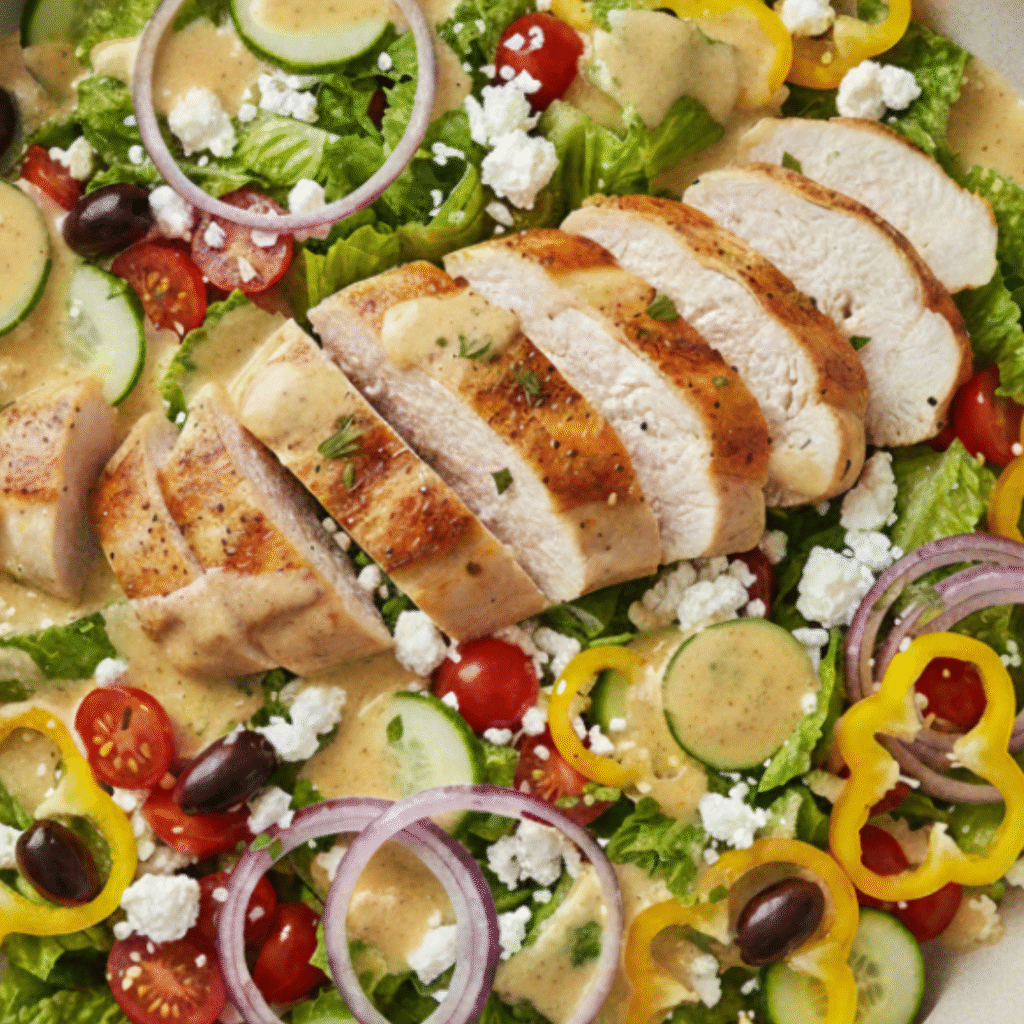
The thing about Greek salad is it’s not some boring iceberg lettuce situation. It’s got flavor going on. Tomatoes, cucumber, olives, feta cheese, good oil. These things actually taste like something. They’re not just filler.
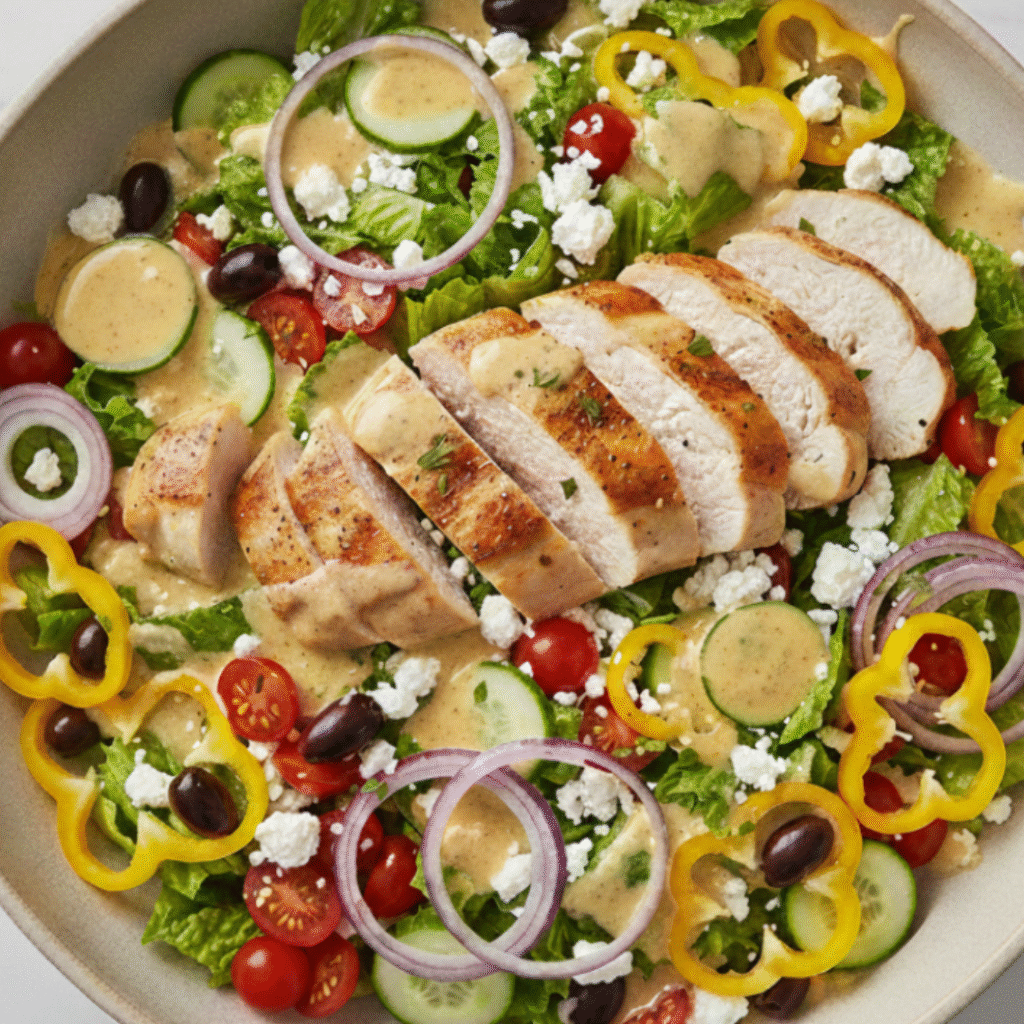
Add chicken to it and suddenly you’ve got a complete meal that doesn’t taste like you’re punishing yourself for eating. Which is like 90% of “healthy” food. It tastes like punishment. But this salad tastes good. Actually good.
Plus you can make it ahead and it keeps for like 3-4 days which means meal prep gets way easier. You make one salad on Sunday and you’ve got lunch ready for basically half the week.
Other Salad Recipes Worth Knowing About
Before we get into Greek salad specifically, there’s a bunch of other salads worth knowing about.
Like Caesar salad which is more complicated but classic. Caprese salad which is just tomato and mozzarella but somehow perfect. Cobb salad which has a bunch of stuff mixed together. Asian noodle salads. Grain salads like quinoa or couscous. Pasta salad for potlucks. Chicken Caesar which is similar to Greek but different. Taco salad which is heavier. Beet salad which is fancy. Basically if you understand how to make a good vinaigrette and chop vegetables you can make salads.
But Greek salad with chicken is probably the best one to start with. It’s straightforward, doesn’t require complicated cooking, and is actually worth eating.
What Makes A Good Greek Salad Actually Good
Okay so here’s the thing about Greek salad. A bad Greek salad is genuinely bad. Watery, flavorless, sad. But a good one is incredible.
The difference is like… quality ingredients and not drowning everything in dressing. You need good tomatoes. Not those mealy pale things from the supermarket in January. Actually ripe tomatoes that taste like something.
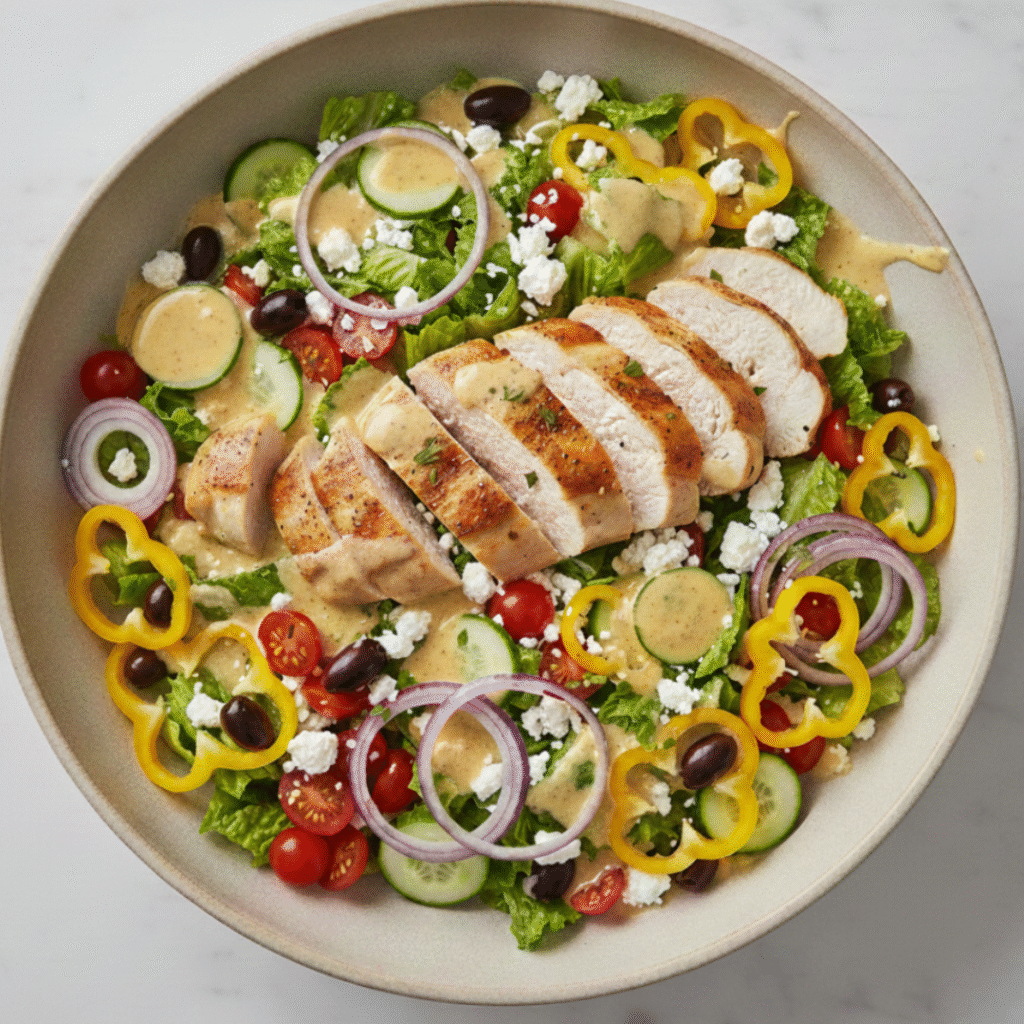
You need good olives. Real Kalamata olives not those canned things. They should be briny and salty and actually flavorful. You need good feta cheese. Real feta, not the crumbly dry stuff. It should be creamy and salty and taste like something.
And you need good olive oil. Not the super cheap stuff. Something decent that actually tastes like olives.
These things together create actual flavor. It’s not just green lettuce with toppings. It’s a combination of things that work together.
The Chicken Part
Okay so adding chicken to Greek salad is the move that makes it a meal instead of a side dish. The key is the chicken needs to be cooked right. Not dry. Not under. Cooked through and tender and actually good.
You can grill it, bake it, pan-fry it. All work. The method doesn’t matter as much as the result. Good chicken, seasoned well, cooked properly.
If your chicken is dry and sad your whole salad is dry and sad. So put some effort into the chicken.
What You Actually Need
For The Salad
Romaine lettuce – About 8-10 cups chopped. Or whatever lettuce you want. Romaine is classic for Greek salad but spinach or arugula work too.
Tomatoes – 2 large ones, diced. Or cherry tomatoes halved if you use those. You want ripe tomatoes that actually taste good.
Cucumber – 1 large one, diced. English cucumber is nice because it has fewer seeds.
Red onion – 1/2 of one, thinly sliced. Red onion adds color and bite. Use less if you don’t like raw onion.
Kalamata olives – About a cup. Pitted is easier to eat. Briny salty olives are the goal.
Feta cheese – About 8 ounces crumbled or cubed. Real feta if you can find it.
Bell pepper – 1 large one, any color, diced. Adds crunch and sweetness. Optional but nice.
For The Chicken
Chicken breasts – About 500-600 grams total. 2 medium sized ones. Or chicken thighs if you want more flavor.
Olive oil – 2 tablespoons for cooking.
Salt, pepper, garlic powder, oregano – For seasoning.
For The Dressing
Good olive oil – 1/4 cup. This is the base and it should be decent quality.
Red wine vinegar or lemon juice – 3 tablespoons. Red wine vinegar is more authentic Greek. Lemon juice works too.
Dijon mustard – 1 teaspoon. Helps emulsify and adds flavor.
Garlic – 2 cloves minced. Raw garlic in the dressing.
Oregano – 1 teaspoon dried. Greek salad has oregano in it.
Salt and pepper – To taste.
Optional water – Like 1-2 tablespoons. Thins the dressing if needed.
That’s the whole list.
Making The Chicken – Getting It Right
Step 1: Prepare Your Chicken
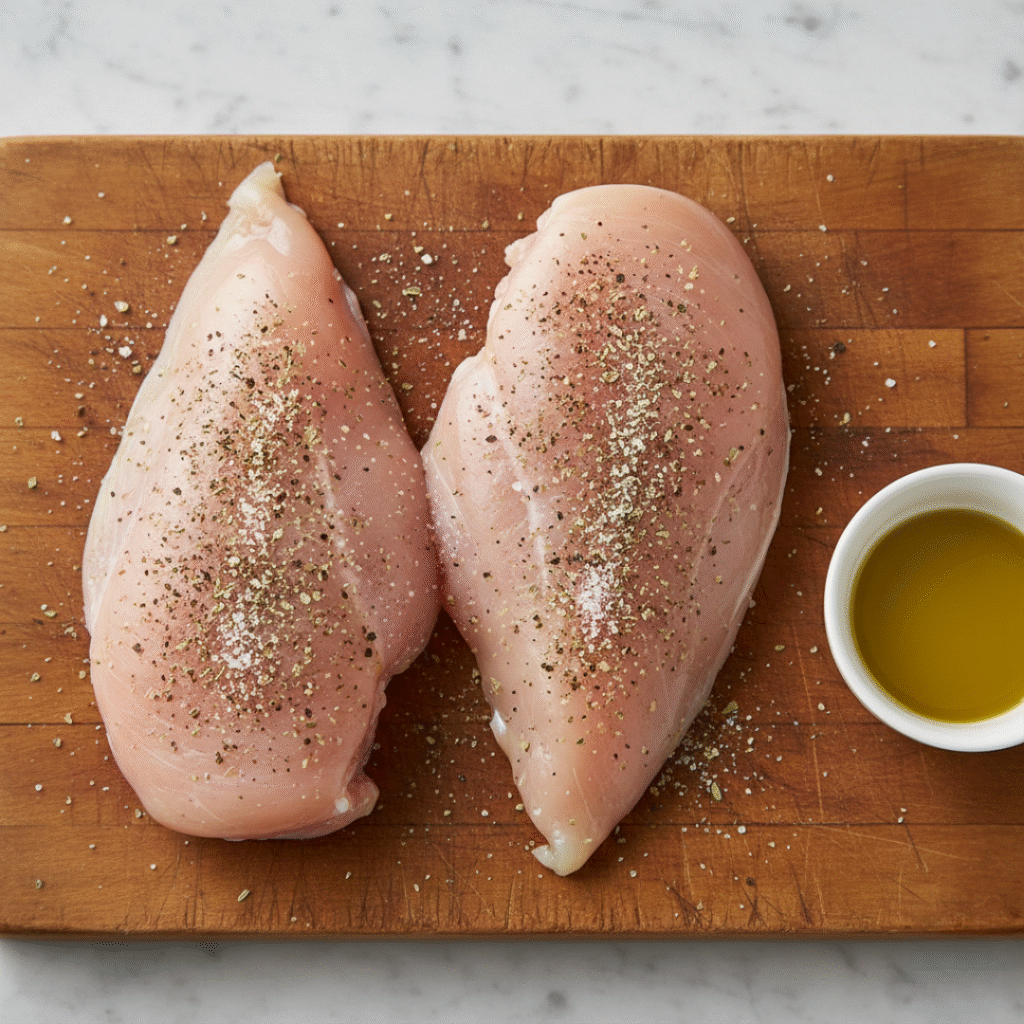
Take your chicken breasts and pat them dry with paper towels. Moisture is annoying when you’re trying to cook chicken.
Put them on a cutting board. Look at them. If one is super thick you can pound it flat a little bit so it’s even thickness. But not required.
Season both sides with salt, pepper, garlic powder, and oregano. Be generous with the seasoning. The outside is what people taste.
Step 2: Cook The Chicken
Heat 2 tablespoons of olive oil in a large skillet over medium-high heat. Let it get hot. You want the oil shimmering but not smoking.
Place your chicken in the pan. You should hear a nice sizzle. That means it’s the right temperature.
Let it cook for like 6-7 minutes on the first side. You’re looking for a golden brown color on the bottom. Don’t move it around while it’s cooking. Let it sit.
Flip it. Cook the other side for another 6-7 minutes. It’s done when the internal temperature is 165°F or when you cut into the thickest part and there’s no pink.
Let the chicken rest for a couple minutes on a cutting board. Then slice it or cut into chunks. Whatever you want.
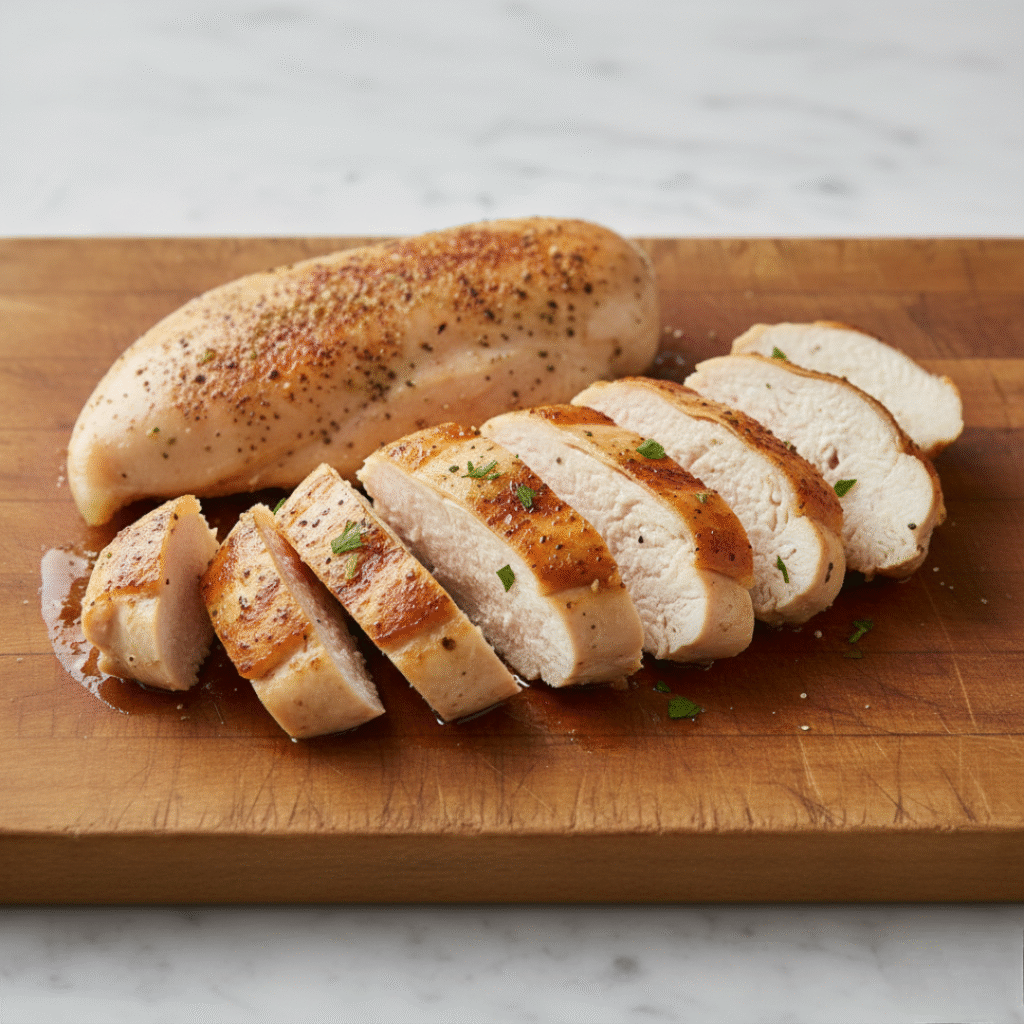
Step 3: Cool The Chicken
You can use the chicken warm on the salad or wait for it to cool. Both work. Cold chicken is better if you’re making the salad ahead because warm chicken makes everything soggy.
If you’re making it right away use warm chicken. If you’re meal prepping use cooled chicken.
Making The Dressing – It’s Actually Important
This is where most people mess up Greek salad. They either skip the dressing or use some bottled thing that’s not good.
Good dressing makes the whole salad. Bad dressing ruins it.
Making The Dressing
In a bowl, combine your minced garlic, oregano, salt, and pepper. Let that sit for a minute so flavors start to blend.
Add your red wine vinegar or lemon juice. Stir. Add your Dijon mustard. Whisk this together so the mustard dissolves. Now slowly pour in your olive oil while whisking. You’re trying to emulsify it so it gets creamy instead of staying separated.
Taste it. Adjust. Too salty? Add more oil. Too vinegary? Add water or oil. Too bland? Add more garlic or oregano. The dressing should taste tangy and salty and garlicky and good. Like something you’d want to eat.
Assembling Your Greek Salad With Chicken
Step 1: Chop Everything
Chop your lettuce into bite-sized pieces. Not confetti tiny but not whole leaves either.
Dice your tomatoes. Dice your cucumber. Slice your red onion thin. Dice your pepper. Have your olives ready. Have your feta ready.
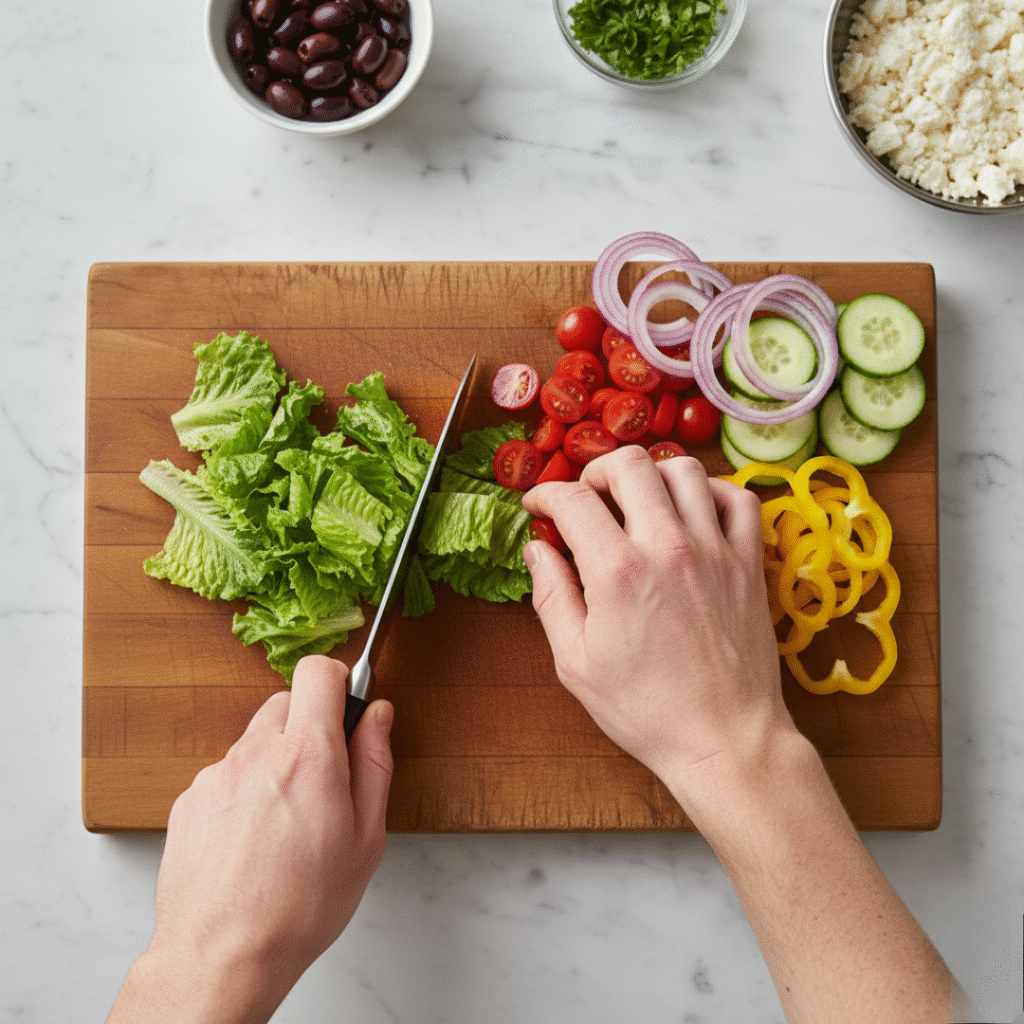
Slice or chunk your cooked chicken.
Step 2: Combine Everything
In a large bowl, put all your vegetables. Then add the chicken. Don’t add the dressing yet if you’re eating it right now. Add it right before eating.
If you’re meal prepping and storing it, you can add some dressing but save the rest to add later. Too much dressing too early makes everything soggy.
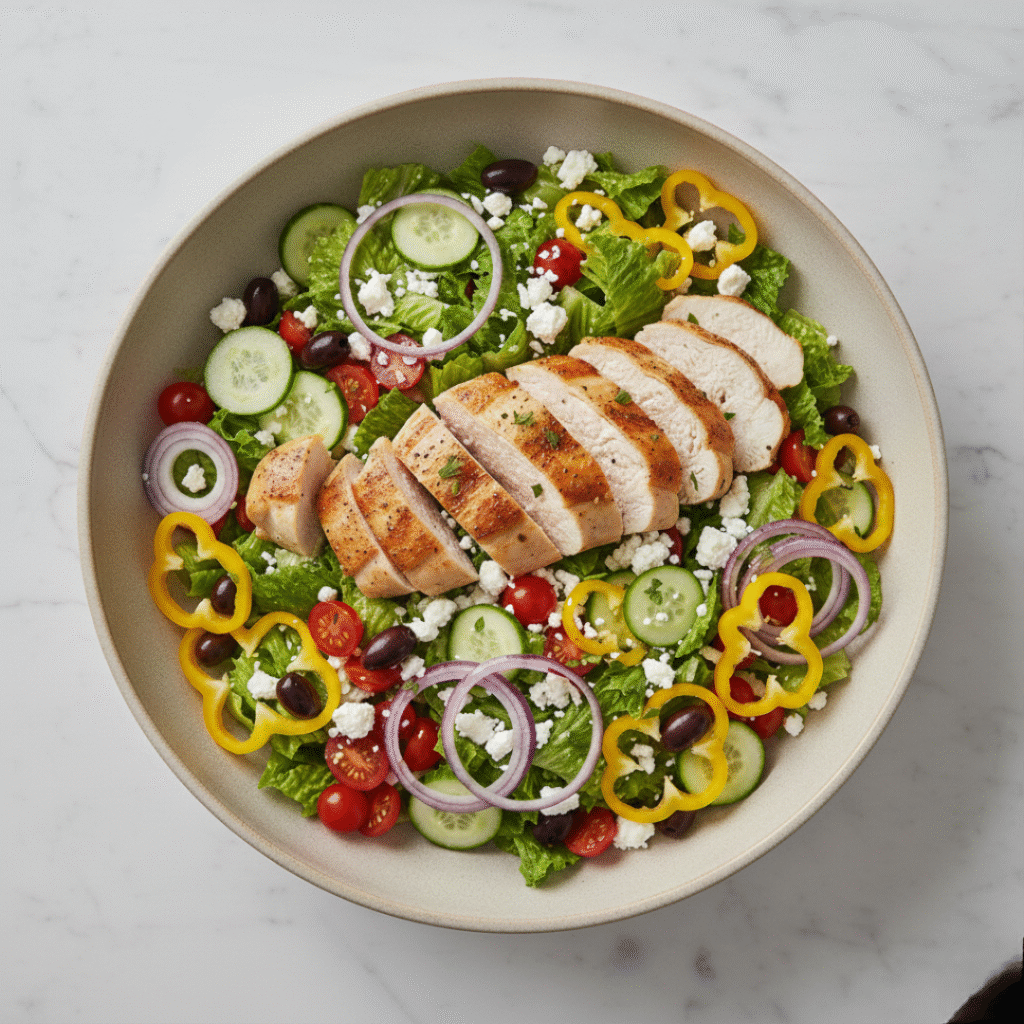
Step 3: Add The Dressing
Pour your dressing over everything. Toss gently so all the pieces get coated but nothing gets destroyed.
Add more dressing or less depending on how much you like. Some people like it really dressed. Some people like just a light coating.
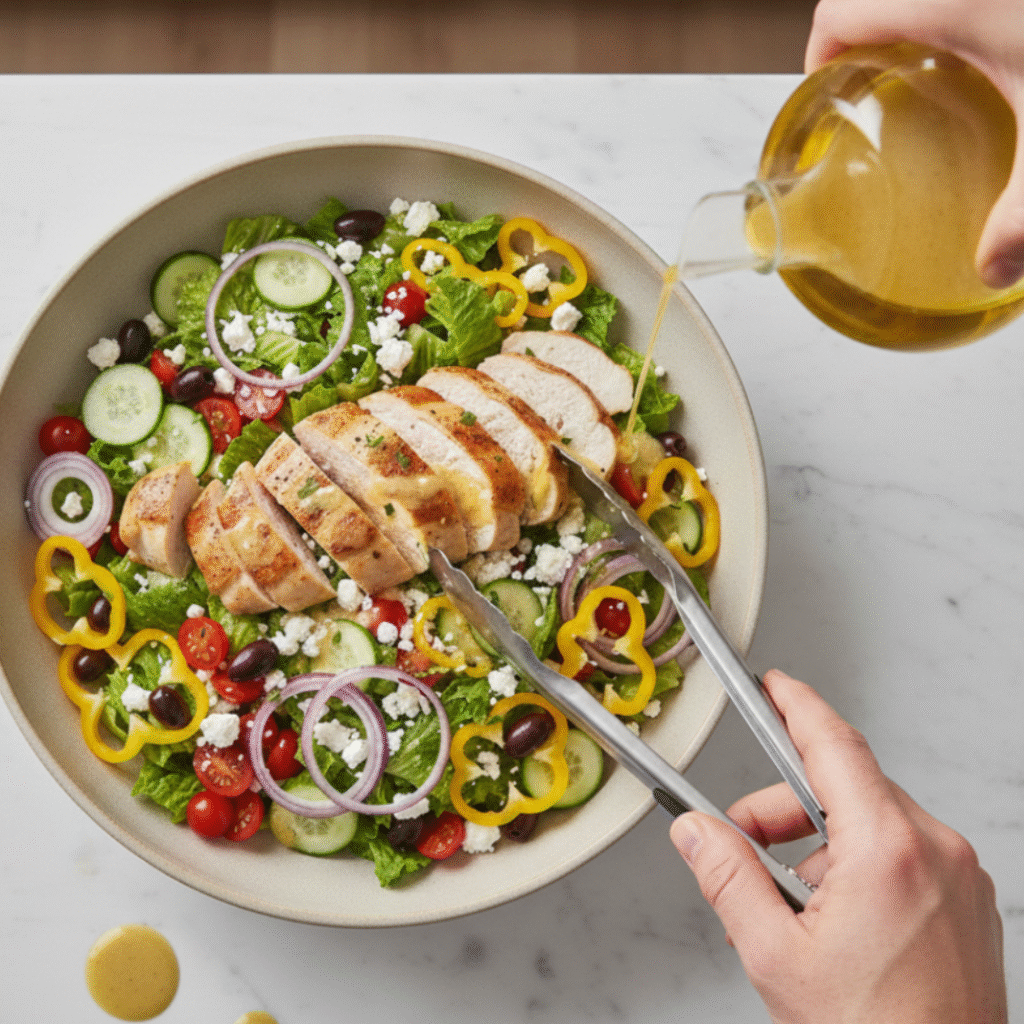
Step 4: Serve
Serve immediately if you like it crunchy. The lettuce will stay crunchier if you eat it right away.
If you’re meal prepping or making it ahead, store in an airtight container and add extra dressing when you eat it.
Why This Salad Actually Fills You Up
The protein from the chicken keeps you full. The vegetables add fiber. The healthy fats from the olives and olive oil keep you satisfied. It’s actually nutritious and it actually fills you up unlike most salads which are like 90% water and lettuce.
You eat this salad and you’re not hungry 30 minutes later. Which is the whole point of eating lunch.
Other Salad Proteins You Can Try
Shrimp works really well with Greek salad. Cook it the same way as chicken. Feta or goat cheese can be the only protein if you want vegetarian. Grilled vegetables if you’re going full vegetarian. Chickpeas if you want plant-based protein. Tuna if you want something fishy. Really any protein works with Greek salad.
But chicken is the classic and honestly the best option.
Pro Tips That Actually Help
Use ripe tomatoes. Winter tomatoes are sad and watery. Use summer tomatoes or cherry tomatoes that actually taste good.
Don’t chop everything too small. You want pieces big enough to taste. Finely chopped salad is sad.
Real feta matters. Crumbly pre-packaged feta is different from actual feta cheese. It’s worth finding real stuff.
Good olive oil in the dressing. This is where you can splurge. The dressing is tasted in every bite so good oil matters.
Chill your salad bowl. Cold salad tastes fresher. Put your bowl in the fridge for a bit before assembly.
Don’t over-dress immediately. Add dressing and toss then taste. You can always add more. Can’t take it away.
Season the chicken properly. Underseasoned chicken makes the whole salad bland.
Let chicken cool before storing. Hot chicken creates condensation which makes everything soggy.
Kalamata olives are worth seeking out. Briny salty olives are so much better than generic canned ones.
Keep dressing separate if meal prepping. Add dressing right before eating so stuff doesn’t get soggy.
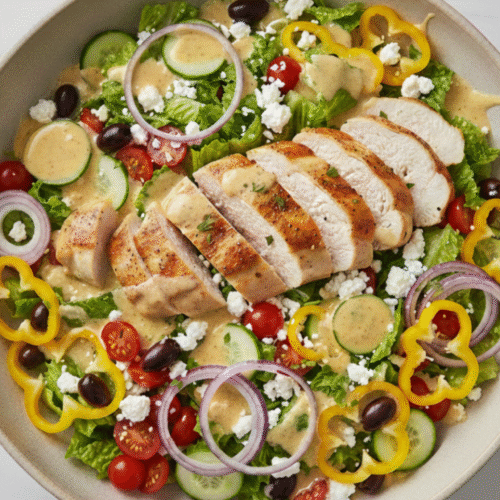
Easy Greek Salad with Chicken Recipe
Equipment
- Large skillet or grill
- Cutting board
- Sharp knife
- Large mixing bowl
- Small bowl (for dressing)
- whisk
- Measuring cups and spoons
- Tongs or spatula
- Airtight containers (for storage)
Ingredients
For The Salad:
- 8-10 cups romaine lettuce chopped
- 2 large tomatoes diced
- 1 large cucumber diced
- ½ red onion thinly sliced
- 1 large bell pepper any color, diced
- 1 cup Kalamata olives pitted
- 8 oz feta cheese crumbled or cubed
- 500-600 g chicken breasts 2 medium, cooked
For Seasoning The Chicken:
- 2 tbsp olive oil
- Salt and pepper to taste
- 1 tsp garlic powder
- 1 tsp oregano
For The Dressing:
- ¼ cup good quality olive oil
- 3 tbsp red wine vinegar or fresh lemon juice
- 1 tsp Dijon mustard
- 2 cloves garlic minced
- 1 tsp dried oregano
- Salt and pepper to taste
- 1-2 tbsp water if needed for consistency
INSTRUCTIONS
1. Prepare Chicken For Cooking:
- Pat chicken breasts dry with paper towels. This helps them brown better. If one breast is significantly thicker than the other, gently pound it to even out the thickness so they cook evenly. Season both sides generously with salt, pepper, garlic powder, and oregano.
2. Heat Your Cooking Pan:
- Heat 2 tablespoons of olive oil in a large skillet over medium-high heat. Let it get hot for about 1-2 minutes. You want the oil shimmering and hot but not smoking. If it’s smoking, lower the heat slightly.
3. Cook First Side Of Chicken:
- Place chicken breasts in the hot pan. You should hear an immediate sizzle. Don’t move them around. Let them sit undisturbed for 6-7 minutes so they develop a golden brown crust on the bottom. This is where flavor happens.
4. Flip And Cook Second Side:
- After 6-7 minutes, carefully flip the chicken using tongs. Cook the second side for another 6-7 minutes. You’re looking for an internal temperature of 165°F with a meat thermometer, or no pink inside when you cut into the thickest part.
5. Rest Your Chicken:
- Remove chicken from pan and place on a cutting board. Let it rest for 2-3 minutes. This keeps it from being dry when you slice it. The internal temperature will rise a couple degrees which is fine.
6. Slice Or Chunk The Chicken:
- Once rested, slice the chicken into strips or cut into chunks depending on preference. Chunks work better for salad mixing. Set aside.
7. Chop Your Lettuce:
- While chicken cooks, chop your romaine lettuce into bite-sized pieces. Not too small. Not whole leaves. Just reasonable salad-sized pieces.
8. Dice Your Vegetables:
- Dice your tomatoes into medium-sized chunks. Dice your cucumber. They don’t have to be perfect. Thinly slice your red onion. Dice your bell pepper. The goal is bite-sized pieces that are roughly similar in size so you get a bit of everything in each bite.
9. Prepare Other Ingredients:
- Have your Kalamata olives ready (pitted if possible), your feta cheese crumbled or cubed, and your cooked chicken in chunks or slices.
10. Make Your Dressing:
- In a small bowl, combine minced garlic with oregano, salt, and pepper. Let sit for 30 seconds. Add red wine vinegar or lemon juice and whisk. Add Dijon mustard and whisk until smooth. Now slowly add olive oil while whisking constantly. This helps it emulsify. If it looks too thick or oily, add 1-2 tablespoons of water and whisk again. Taste and adjust seasonings.
11. Combine Your Salad:
- In a large bowl, combine your chopped lettuce with diced tomatoes, cucumber, onion, and bell pepper. Add your olives and crumbled feta cheese. Gently toss to mix.
12. Add The Chicken:
- Add your sliced or chunked chicken to the salad bowl. Gently toss so everything is distributed throughout.
13. Dress Your Salad:
- If eating right away, pour dressing over the salad and toss until everything is coated. Add more or less dressing depending on preference. Some like it really dressed, some like light coating.
14. Serve:
- Divide into serving bowls or plates. Serve immediately while lettuce is still crispy. If you want it extra cold, chill the bowl for a few minutes before assembling.
Notes
- Store chicken, vegetables, and dressing in separate airtight containers
- Keep refrigerated for up to 4 days
- When ready to eat, assemble with fresh dressing for best texture
- The vegetables soften over time but are still good
- Keep chicken separate from vegetables for 3-4 days
- Keep dressing separate in airtight container for up to 1 week
- Assemble salad right before eating for crunchiness
- Don’t freeze – vegetables get mushy
- Calories: 420-480
- Protein: 35-40g
- Fat: 24-28g (mostly from olive oil and feta)
- Carbs: 18-22g
- Fiber: 5-6g
- Sugar: 6-8g
Storage – Because You’re Making A Batch
Right After Making It
If you’re eating it right away it’s best fresh. Eaten within a few hours is ideal.
Keep the dressing separate and only use what you need. Add more when you want.
Room Temperature
Don’t leave salad sitting out at room temperature for more than a couple hours. Vegetables get sad and dressing gets weird.
Refrigerator
This is where Greek salad with chicken shines for meal prep.
Store in an airtight container for up to 3-4 days. The lettuce will soften a bit over time but it’s still good. Keep the dressing in a separate container and add right before eating. This keeps the salad crunchy.
Actually you could keep the dressing separate and even have components separate. Like chicken in one container, vegetables in another, dressing in another. Then assemble when you want.
Freezing
Don’t freeze Greek salad. The vegetables get mushy when thawed and nothing works. The chicken is fine frozen but the salad vegetables are ruined.
What Keeps Better
Chicken keeps well for 3-4 days. Vegetables keep okay but get softer. Dressing keeps indefinitely.
So if you’re doing meal prep, make the chicken and dressing ahead but do fresh vegetables when possible.
Thawing
If you froze chicken, thaw in the fridge overnight. Don’t thaw on the counter or you get bacteria issues.
Questions People Ask
Can you use different lettuce? Sure. Spinach works. Arugula works. Mixed greens works. Romaine is traditional but use what you like.
What if you don’t like olives? Then don’t put them in. Or use less. Some people don’t like olives and that’s fine.
Can you use boneless thighs instead of breasts? Yes thighs are actually better because they’re harder to dry out. They have more flavor too.
How do you cook chicken if you don’t have a skillet? Bake it. 375°F for about 20-25 minutes. Pan-fry, grill, however. Method doesn’t matter as much as the result.
What if you don’t like feta? Use goat cheese or regular cheese or nothing. Feta is traditional but not required.
How long does it keep? Chicken and dressing keep 3-4 days. Vegetables soften over time but still good. Total salad keeps about 3-4 days max.
Is this actually healthy? Yeah. Vegetables, protein, healthy fats. It’s actually nutritious unlike some salads.
What if the dressing breaks and gets separated? Happens sometimes. Just whisk it back together or add a tiny bit of water and whisk.
Can you use bottled dressing? Sure but fresh is way better. Takes like 5 minutes to make real dressing.
Does the chicken have to be warm? No cold chicken works. Actually better for meal prep because warm salad gets soggy.
Why This Salad Actually Works As A Meal
Most salads are side dishes. They’re not filling. You eat a salad and an hour later you’re hungry again.
This salad is actually a complete meal. Vegetables for fiber and nutrients. Chicken for protein. Olives and feta for fat that keeps you satisfied. Good dressing that tastes good.
You eat this and you’re actually full. You’re not hungry in 30 minutes looking for snacks.
That’s why people actually eat it instead of just ordering something else.
Why You’ll Love This Recipe
Okay so real talk. There’s a bunch of reasons this recipe actually works and why you should make it.
First, it tastes good. Like actually tastes good. Not like you’re punishing yourself. Not like cardboard with ranch dressing. Tastes good enough that you want to eat it instead of ordering something else.
Second, it fills you up. The protein from chicken, fiber from vegetables, healthy fats from olives and olive oil. You eat this and you’re actually full. Not hungry 30 minutes later looking for snacks.
Third, it’s flexible. Don’t like olives? Leave them out. Don’t like feta? Use different cheese. Want to use shrimp instead of chicken? Go for it. The base is solid enough that variations work.
Fourth, it’s actually healthy. Like genuinely healthy. Not some sad diet thing. You’re eating fresh vegetables, quality protein, healthy fats. Your body gets actual nutrition instead of empty calories.
Fifth, meal prep is so easy. Make it Sunday, eat it all week. Keep components separate so you get fresh crunch when you eat. Way better than sad leftovers.
Sixth, it’s impressive but simple. Look like you know what you’re doing without actually spending a ton of time. 35 minutes total and you’ve got something that looks fancy.
Seventh, summer favorite. It’s fresh and light but still a real meal. Perfect for hot days when you don’t want heavy food. Perfect for parties where you need something that looks good and tastes good.
Eighth, budget friendly. Chicken, vegetables, olives, cheese. Not expensive ingredients. Makes multiple servings. Cost per serving is way less than restaurant.
Ninth, no complicated techniques. You’re not making fancy sauces or using weird equipment. Just knife skills and basic cooking. If you can chop vegetables and cook chicken you can make this.
Tenth, feels fancy without being fussy. It’s Mediterranean. It’s elegant. But it’s also straightforward and not pretentious. You can eat it at lunch at your desk or serve it at a dinner party.
That’s why this recipe works. It hits all the boxes. Good taste, actually fills you, flexible, healthy, easy to prep, looks impressive, tastes good, budget friendly, simple technique.
It’s one of those meals that seems simple but actually teaches you fundamentals. How to cook chicken properly. How to make vinaigrette. How to balance flavors.
And it’s actually good. Not like… it’s healthy so you force yourself to eat it. Actually tasty enough that you want to eat it.
Once you make it once and realize how good it is you’ll make it again. Then you’ll experiment with variations. Then you’ll understand why Greek food is popular.
Leave a Comment